
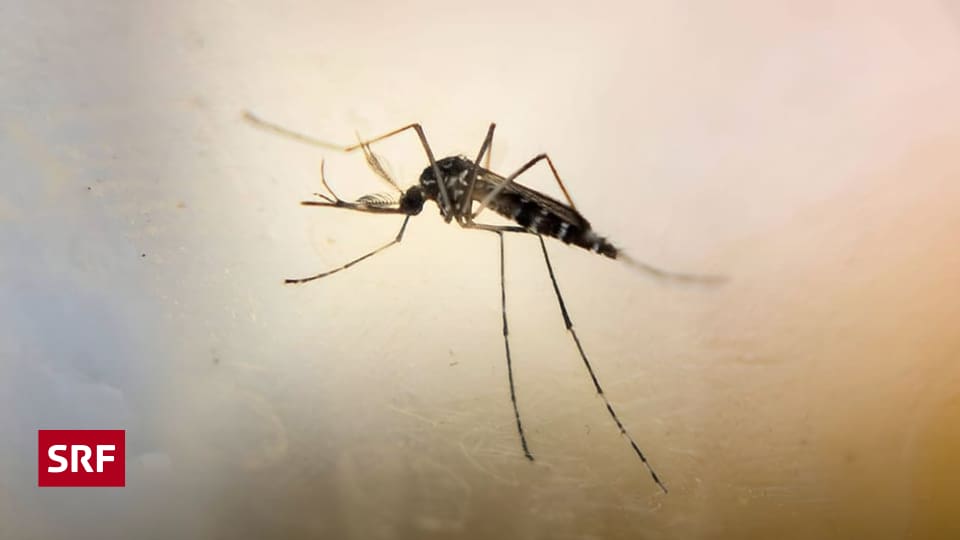
A case of locally transmitted Chikungunya fever, confirmed in Lipsheim, France, approximately 100 kilometers from Basel, Switzerland, has raised concerns about the potential for the virus to spread within Europe. The individual contracted the disease through the bite of an Asian tiger mosquito without having traveled to regions where the virus is typically endemic, according to Swiss health officials.
Chikungunya, named after a Tanzanian word meaning “that which bends up,” refers to the hunched posture adopted by sufferers due to severe joint pain. Even as less lethal than Dengue fever – also transmitted by the Asian tiger mosquito – Chikungunya can cause debilitating pain lasting weeks or even months. Symptoms typically include high fever, rash, and intense joint pain.
Recent research from the Swiss Tropical Public Health Institute (Swiss TPH) indicates the Asian tiger mosquito can transmit the Chikungunya virus at temperatures as low as 14 degrees Celsius – significantly lower than previously believed. This finding, coupled with increasingly mild European winters, expands the potential geographic range for the virus. “The warmer the weather, the better the virus transmission works through the tiger mosquito,” explained Pie Müller, a mosquito expert at Swiss TPH. “At 30 degrees Celsius, the mosquito needs less than two days to develop enough virus to infect someone during a blood meal.”
The number of imported Chikungunya cases in Switzerland nearly quadrupled from 23 in 2024 to 89 in 2025, all contracted abroad. However, the case in Lipsheim, and additional local transmissions in Italy – including 308 cases in the province of Modena – demonstrate the virus is establishing a foothold within Europe. Further cases were identified in Ostwald, France, also in the Bas-Rhin department.
The study from Swiss TPH calculates that roughly half of Europe offers suitable conditions for Chikungunya transmission during July and August. Southern Europe, including Italy, Spain, Greece, and Portugal, faces the highest risk, with potential transmission windows spanning six months from May to November. Central Europe, including France, Germany, and Switzerland, now experiences a three- to five-month period conducive to transmission.
Müller cautioned that increased transmission isn’t automatic. The number of infected travelers introducing the virus into the region, and the subsequent rate of mosquito bites, remain critical factors. Swiss authorities are urging residents to eliminate potential mosquito breeding grounds, such as standing water in gardens, to reduce local mosquito populations. Emptying these sources weekly can prevent eggs from hatching and larvae from developing into adult mosquitoes.
The virus requires a mosquito to first turn into infected by biting an individual with Chikungunya in their bloodstream. The virus then replicates within the mosquito before being transmitted to another person through a subsequent bite, completing the infection cycle.
