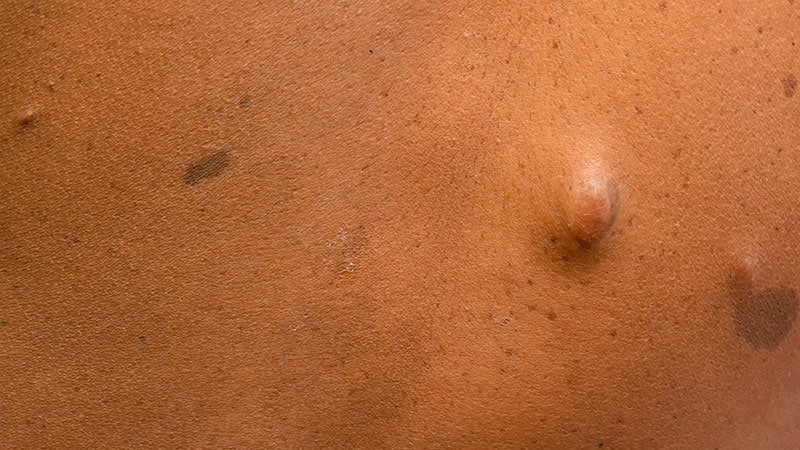
Cherry Angiomas Identified as New Vascular Manifestation of NF1
Cherry angiomas have been identified as a frequent, unrecognized vascular manifestation of neurofibromatosis type 1 (NF1). A cross-sectional study published in JAMA Dermatology reports that these lesions occur significantly earlier and more often in individuals with NF1 than controls.
Key Clinical Takeaways:
- Cherry angiomas appear with higher frequency and at an earlier age in individuals with NF1 compared to controls.
- The study identifies biallelic NF1 inactivation in endothelial cells and telocytes as a primary driver, linking these skin lesions to NF1-related vasculopathy.
- These findings suggest that NF1-associated tumorigenesis extends beyond neural crest–derived tissues.
Pathogenesis and Genetic Mechanisms of NF1-Associated Angiomas
The research, involving Laura Fertitta, MD, of the Service de Dermatologie at Hôpital Henri Mondor in France, investigated the cellular underpinnings of why cherry angiomas manifest in the NF1 cohort. Through genetic analysis, the study found that most of these angiomas harbor somatic NF1 loss-of-function second hits. These mutations frequently co-occur with activating GNAQ variants. The biallelic inactivation of the NF1 gene appears to occur primarily within endothelial cells and telocytes, triggering hyperactivation of the rat sarcoma–mitogen-activated protein kinase pathway.
This mechanism places cherry angiomas within the broader spectrum of NF1-related vascular complications. This study extends the clinical understanding of the disease, establishing these vascular lesions as a model for NF1-related vasculopathy.
Clinical Implications for Dermatologic Screening
Funding and Research Transparency
The study, titled “Cherry Angiomas in Individuals With Neurofibromatosis Type 1,” was conducted by a multi-institutional team.
Future Trajectories in Vascular Surveillance
Disclaimer: The information provided in this article is for educational and scientific communication purposes only and does not constitute medical advice. Always consult with a qualified healthcare provider regarding any medical condition, diagnosis, or treatment plan.