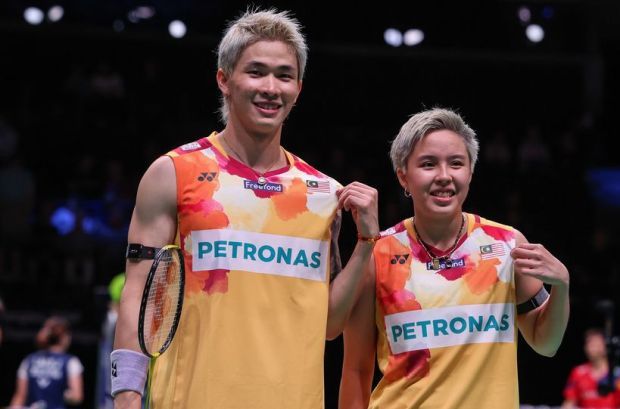
Chen Tang Jie-Toh Ee Wei Reach Asian Championships Quarter-Finals
Chen Tang Jie and Toh Ee Wei, the reigning mixed doubles world champions and world number four, advanced to the quarter-finals of the 2026 Badminton Asia Championships in Ningbo, China, on April 9, 2026, after defeating India’s Dhruv Kapila and Tanisha Crasto 21-13, 21-14 in a 37-minute second-round match.
The clinical efficiency displayed at the Ningbo Olympic Sports Centre highlights a critical divide in the current Malaysian national squad. While Tang Jie and Ee Wei are operating at a world-class cadence, the broader team is struggling with consistency. This disparity creates a high-pressure environment for the top pair, who now carry the weight of being the sole Malaysian mixed doubles hope in the tournament. The physical demand of maintaining this trajectory requires a rigorous approach to periodization and load management to avoid the burnout often seen in the grueling Asian circuit.
Tactical Efficiency and the 37-Minute Blitz
Looking at the raw match data from the second round, the 37-minute duration is the most telling metric. In elite mixed doubles, the ability to close out a match quickly is not just about skill; it is about energy conservation and tactical dominance. By brushing aside Dhruv Kapila and Tanisha Crasto with scores of 21-13, 21-14, Tang Jie and Ee Wei minimized their court coverage requirements and reduced the risk of acute muscle strain. This level of efficiency is a hallmark of their current form as reigning world champions.

The tactical whiteboard for this match likely focused on aggressive front-court interception by Toh Ee Wei and heavy baseline pressure from Chen Tang Jie. This synergy allows them to dictate the shuttlecock trajectory, forcing opponents into defensive lifts that can be punished immediately. For amateur athletes attempting to replicate this high-intensity rotation, the physical toll on the joints is immense. Those aspiring to reach this level must secure vetted local orthopedic specialists and rehab centers to manage the chronic inflammation associated with professional-grade lateral movement.
The Burden of the World Champion Label
The historical weight on Chen Tang Jie’s shoulders is significant. According to his BWF profile and career records, he and Toh Ee Wei made history as the first-ever world badminton champions in mixed doubles from Malaysia, and only the second pair of world champions in any category from the nation after Aaron Chia and Soh Wooi Yik. This status transforms every match from a mere competition into a defense of their global ranking.
Chen’s trajectory from the 2016 World Junior Championships—where he helped Malaysia secure a silver medal in the mixed team event—to a world number three peak on January 14, 2025, demonstrates a disciplined ascent. However, the current world number four ranking (as of January 20, 2026) suggests a volatile top-tier landscape where a single poor tournament can lead to a significant slide in the BWF standings. This volatility often impacts endorsement valuations and sponsorship contracts, necessitating the involvement of specialized sports contract lawyers to ensure athlete protections during ranking fluctuations.
Analyzing the Malaysian Campaign Collapse
The contrast between the top pair and the rest of the Malaysian contingent is stark. While Tang Jie-Ee Wei stormed into the quarter-finals, the other national pairs faced clinical exits. Goh Soon Huat and Shevon Lai fell in a three-game battle (21-10, 15-21, 16-21) to Taiwan’s Chen Cheng Kuan and Hsu Yin-Hui. Simultaneously, Wong Tien Ci and Lim Chiew Sien were overwhelmed 8-21, 14-21 by China’s Guo Xin Wa and Chen Fang Hui. Even the women’s singles effort faltered, with K Letshanaa losing 14-21, 8-21 to South Korea’s Sim Yu Jin.
This suggests a systemic issue with depth in the Malaysian squad. When the gap between the number one pair and the secondary pairs is this wide, the tactical burden on the leads increases. They cannot rely on momentum from teammates; they are the sole engine of the national campaign. This isolation increases psychological load, making their 37-minute victory over the Indian pair even more vital for mental preservation heading into the final eight.
Economic Impact and the Ningbo Infrastructure
The hosting of the 2026 Badminton Asia Championships in Ningbo provides a significant economic stimulus to the region. The concentration of elite athletes and international delegations at the Ningbo Olympic Sports Centre creates a massive logistical demand. From premium hospitality to high-security transport, the event drives substantial revenue into the local service sector.
Large-scale tournaments of this nature often create a vacuum for specialized logistics. The organizational committee must source regional event security and premium hospitality vendors to manage the overflow of fans and VIPs, ensuring that the athlete village remains a controlled environment conducive to performance. The success of the event in Ningbo not only elevates the city’s profile as a sports hub but also tests the city’s infrastructure capacity for future BWF-sanctioned events.
The Road Ahead: South Korean Resistance
The quarter-finals present a more formidable challenge. Tang Jie and Ee Wei are scheduled to face South Korea’s Kim Jae Hyeon and Jang Ha Jeong. South Korean mixed doubles pairs are historically known for their dogged defense and superior endurance, which will test whether the Malaysians can maintain their clinical pace or if they will be dragged into a protracted war of attrition.
If Tang Jie and Ee Wei can maintain their current efficiency, they remain the favorites to climb back toward their peak world number three ranking. Their ability to neutralize the South Korean defense will depend on their capacity to maintain high-intensity intervals without compromising their shot accuracy. The trajectory of their 2026 season depends entirely on this run in Ningbo.
As the tournament progresses, the need for professional support—from medical recovery to legal management—becomes paramount for athletes at this echelon. Whether you are a professional navigating the BWF circuit or a developing athlete, finding vetted professionals is the only way to sustain a career at the top. The World Today News Directory remains the premier resource for connecting sports entities with the legal, medical, and logistical experts required to maintain an elite edge.
Disclaimer: The insights provided in this article are for informational and entertainment purposes only and do not constitute medical advice or sports betting recommendations.