CENTCOM says Iran proxies remit money back to Tehran
The economic blockade enforced by the United States has choked off Iranian oil exports and frozen digital assets, forcing groups like Hezbollah and the Houthis to delay militant payrolls and remit money back to the Iranian regime.
Financial Strain Forces Fund Transfers to Tehran
For decades, the Islamic Revolutionary Guard Corps (IRGC) functioned as the financial metropolis for regional proxy forces, bankrolling operations in Lebanon, Yemen, and Iraq. That financial pipeline has inverted. According to data released by the 12 channel and cited by CENTCOM, the U.S. maritime blockade has prevented the Islamic Republic from exporting $25 billion in crude oil. Concurrently, the U.S. Department of the Treasury and Central Command collaborated in recent weeks to block $350 million in cryptocurrency assets tied to the Iranian regime.
Those twin economic pressures have created an acute cash shortage inside Iran’s armed forces. Regional proxies now face demands to send money back up the chain. “And they, in turn, are also delaying salaries to their fighters.”
Tehran currently struggles to maintain regular payrolls for its broader public sector, which encompasses domestic security forces, energy infrastructure personnel, regular army soldiers, and IRGC combatants.
Shipping Disruptions in the Strait of Hormuz
The cash crunch inside the military apparatus directly explains a surge in attacks targeting commercial vessels navigating the Strait of Hormuz. CENTCOM attributes these maritime assaults to desperation within the Iranian command structure. The strategic objective behind the renewed attacks is to disrupt petroleum traffic lanes and worsen the political standing of the Republican Party ahead of upcoming congressional midterm elections.
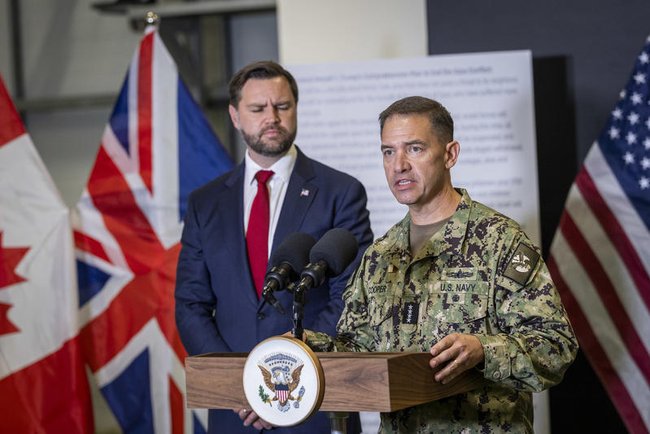
Despite the intensified targeting by regional proxies, commercial shipping traffic through the critical waterway remains steady. Admiral Cooper reported that over the preceding week, 400 vessels transited the Strait of Hormuz safely, carrying an estimated 100 million barrels of crude oil.