
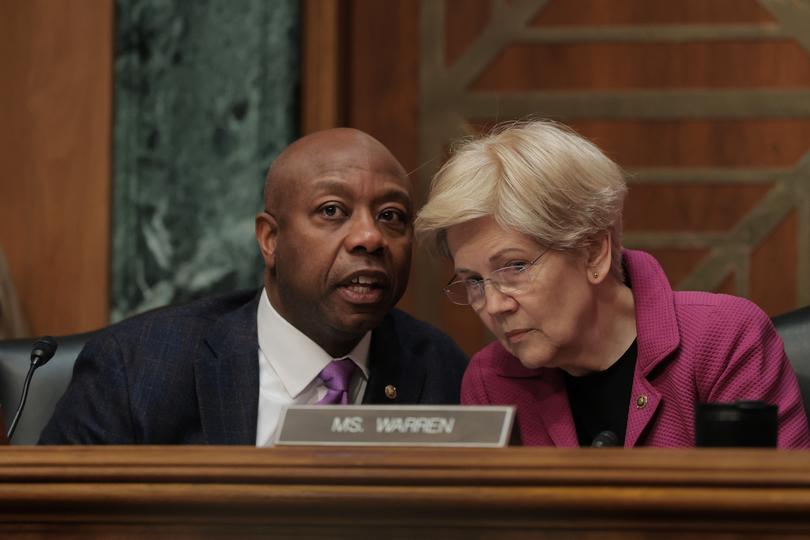
A bipartisan bill aimed at expanding housing opportunities in the United States includes a temporary prohibition on the Federal Reserve issuing a central bank digital currency (CBDC), a provision that has drawn support from the White House. The “21st Century ROAD to Housing Act,” introduced Monday by Senate Banking Committee Chairman Tim Scott (R-S.C.) and Ranking Member Elizabeth Warren (D-Mass.), focuses primarily on easing regulatory hurdles and lowering costs for new construction.
While the bill’s core objective is to increase housing supply and access to homeownership, particularly for those with limited economic means, the inclusion of the CBDC ban marks a continuation of legislative efforts to restrict the Fed’s exploration of digital currencies. Scott stated the bill is intended to “make sure people like the single mom who raised me in North Charleston, South Carolina, have even greater access to economic opportunity and the American dream of homeownership.” Warren added that the package “takes a good first step to rein in corporate landlords that are squeezing families out of homeownership.”
The CBDC provision, spanning two pages of the 303-page bill, prevents the Federal Reserve Board of Governors or any Federal Reserve bank from issuing or creating a central bank digital currency, either directly or through intermediaries. The ban is scheduled to expire on December 31, 2030. An exception is carved out for privately issued, dollar-denominated digital currencies that maintain the same privacy protections as physical cash.
This is not the first time lawmakers have attempted to block the development of a CBDC. The House of Representatives passed a standalone bill with a similar prohibition last year, though it did not advance further in Congress. The current provision builds on those earlier efforts, reflecting ongoing concerns about the potential impact of a CBDC on financial privacy and liberty.
The White House signaled its support for the bill, and specifically highlighted the CBDC provision in a Statement of Administration Policy. The statement emphasized the administration’s concerns that a central bank digital currency “could pose significant threats to personal privacy and liberty.”
The move comes amid heightened scrutiny of the Federal Reserve, including recent ethics concerns. In November 2025, Chairman Tim Scott issued a statement following reports that former Federal Reserve Governor Adriana Kugler was under investigation for allegedly violating the Fed’s trading rules when she resigned, a situation he described as eroding public trust in the central bank. Senator Warren has as well been critical of the Fed, and in February 2026, pressed former President Trump regarding a Department of Justice probe into current Fed Chair Jerome Powell. Scott has publicly stated he does not believe Powell broke the law.
Concerns about accountability within the Federal Reserve have also fueled bipartisan calls for an independent Inspector General. In May 2025, Senators Warren and Rick Scott (R-Fla.) introduced legislation to establish a presidentially appointed and Senate-confirmed Inspector General for both the Federal Reserve System and the Consumer Financial Protection Bureau, aiming to address conflicts of interest inherent in the current system where the IG is appointed by those they oversee. The previous Fed Board-appointed Inspector General, Mark Bialek, resigned earlier in 2025 after facing criticism for failing to adequately address ethics concerns and regulatory failures.
