
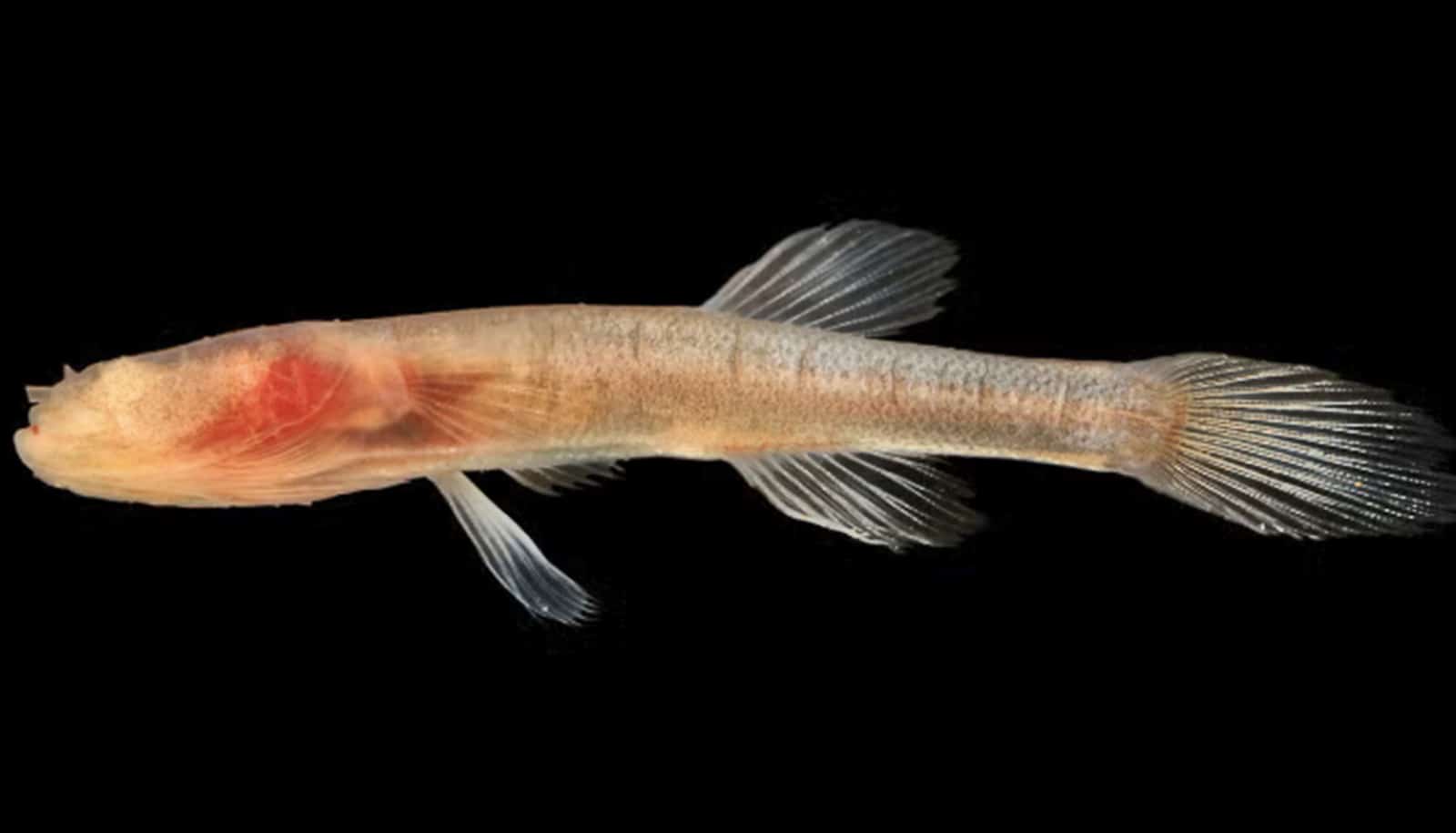
Unlocking Ancient Cave Histories Through the Eyes of Fish
Conventional methods for dating caves in North America face limitations, proving unreliable for formations older than 3 to 5 million years.However, a new study led by researchers at Yale University and the Max Planck Institute for Biological Intelligence offers a novel approach, utilizing the evolutionary history of cave-adapted fish to estimate the age of these subterranean environments. The research, published recently, suggests some caves may be over 11 million years old – significantly older than previously thought.
The team, co-led by Chase Brownstein of Yale’s Graduate School of Arts and Sciences and Maxime Policarpo of the Max Planck Institute and University of Basel, focused on amblyopsids, a group of freshwater fish belonging to the ancient Percopsiformes order. By reconstructing a detailed, time-calibrated evolutionary tree using fossil records, genomic data, and high-resolution scans of living species, they were able to infer minimum cave ages. The logic is straightforward: fish losing their eyesight would only do so within the darkness of a cave,meaning the cave must predate the onset of this adaptation.
Interestingly, all cavefish species share similar physical traits – elongated bodies, flattened skulls, and reduced or absent pelvic fins. This morphology is also seen in Cuckoo chologaster, a surface-dwelling “swampfish” closely related to cavefish. While still possessing sight and pigmentation, the swampfish exhibits softening of the bones around the eyes, hinting that the ancestor of cavefish was already adapted to low-light conditions.
To pinpoint when cavefish began colonizing caves, researchers analyzed the genomes of these species, specifically examining 88 genes related to vision for mutations. They discovered that different cavefish lineages had accumulated distinct sets of genetic mutations responsible for vision loss. This indicates that multiple species independently colonized caves and adapted to the subterranean habitat, rather than a single event.
From this genomic data, the researchers developed a method to estimate the number of generations as cavefish began adapting to cave life by losing functional vision genes. Their analysis revealed cave adaptations occurred between 2.25 and 11.3 million years ago in Ozark cavefish, and between 342,000 to 1.70 million years ago (minimum) and 1.7 to 8.7 million years ago (maximum) for othre lineages. These maximum age estimates surpass the capabilities of traditional cave-dating techniques like isotope analysis of cosmogenic nuclides.
beyond geological implications, the study also holds potential for medical advancements. According to Thomas Near, Yale professor and senior author, mutations causing eye degeneration in cavefish are strikingly similar to those responsible for ocular diseases in humans.”Ther is the possibility for translational medicine,” Near explains, ”through which by studying this natural system in cavefishes, we can glean insights into the genomic mechanisms of eye diseases in humans.”
The research involved collaboration with scientists from the South Carolina Department of Natural Resources, the American Museum of Natural History, Florida State University, and Paris-Cité University. This innovative approach demonstrates the power of evolutionary biology to unlock secrets hidden within the darkness of ancient caves.
