Case Report: Complete Response After Chemoradiotherapy for Epiglottic Verrucous Carcinoma
A 51-year-old man with verrucous carcinoma of the epiglottis achieved a complete clinical and radiological response after definitive chemoradiotherapy, researchers reported in Cureus.
The case, published as a case report, describes a locally advanced supraglottic tumor staged cT3N0M0 that was treated with volumetric modulated arc therapy delivering 69.96 Gray to the primary target volume alongside three cycles of high-dose cisplatin. At one-year follow-up, the patient was asymptomatic with resolution of dysphonia and improvement in obstructive sleep apnoea parameters.
Verrucous carcinoma comprises 1% to 3.4% of all laryngeal cancers, with supraglottic involvement occurring in roughly 12.4% of laryngeal cases, according to the report. Epiglottic primary tumors are described as exceptionally rare. The disease carries a low risk of nodal metastasis, and cervical lymphadenopathy when present is typically reactive rather than malignant.
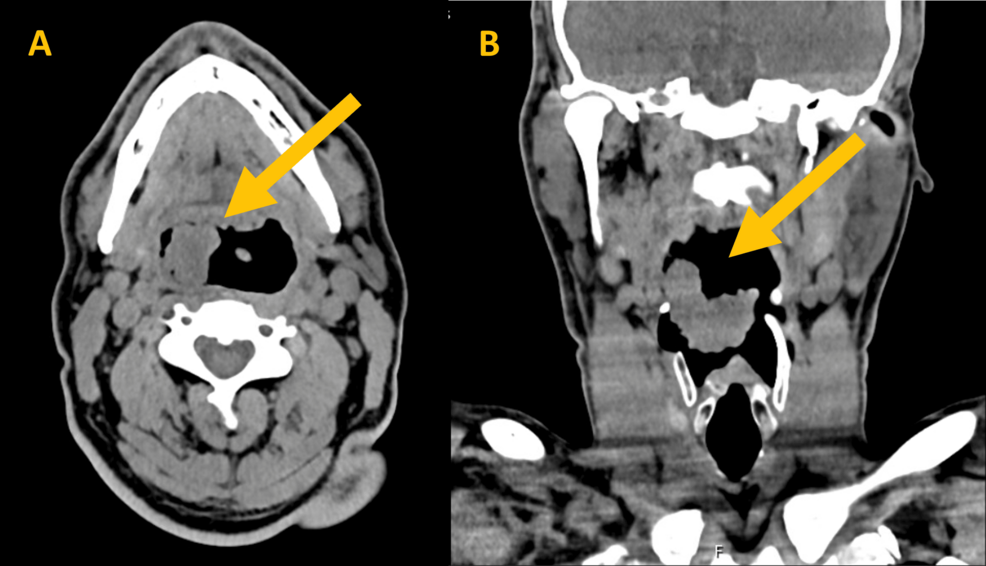
The patient, a former smoker with a 10 pack-year history, presented in early 2025 with two months of progressive dysphonia. Nasofibrolaryngoscopy showed a large exophytic mass on the lingual surface of the epiglottis with preserved mobility. Contrast-enhanced CT revealed a 39 x 40 x 29 mm lesion extending to the vallecula, base of tongue, right aryepiglottic fold, and right pyriform sinus, with invasion of the pre-epiglottic and right superior paraglottic spaces.
Biopsy confirmed p16-negative verrucous carcinoma with pronounced acanthosis, parakeratosis, and broad, bulbous rete ridges without diffuse cellular atypia. The multidisciplinary tumor board recommended definitive concurrent chemoradiotherapy as an organ-preserving strategy given the bulky T3 primary and the functional morbidity expected with radical surgery.
Radiotherapy was delivered in 33 fractions over 6.5 weeks using a simultaneous integrated boost technique. Bilateral elective nodal irradiation of levels II, III, and IV received 54.12 Gy. Daily image-guided radiotherapy with kilovoltage cone-beam CT was performed prior to each fraction. The patient completed all three cisplatin cycles (100 mg/m² on days 1, 22, and 43) without dose reduction or treatment interruption.
Acute toxicities included Grade 2 radiodermatitis and Grade 2 mucositis per CTCAE v6.0, both managed with standard supportive care. Dosimetric analysis showed the spinal cord maximum dose at 29.45 Gy, well below the 45 Gy constraint. Bilateral submandibular glands and the thyroid gland exceeded standard sparing thresholds due to anatomical proximity to the high-dose target volumes.
A follow-up CT scan at seven weeks post-treatment confirmed complete radiological response. The report notes that historical concerns regarding anaplastic transformation after radiotherapy have been largely debunked by modern radiation oncology, with true post-radiation dedifferentiation described as extremely rare.
The case was presented as an e-poster at the 15.º Simpósio Nacional Cancro da Cabeça e Pescoço on September 20, 2025, at the Instituto Português de Oncologia do Porto. The authors conclude that definitive chemoradiotherapy is a feasible organ-preserving option for carefully selected patients with locally advanced supraglottic verrucous carcinoma, though they acknowledge limited evidence and no comparative studies demonstrating superiority over radiotherapy alone or surgery.