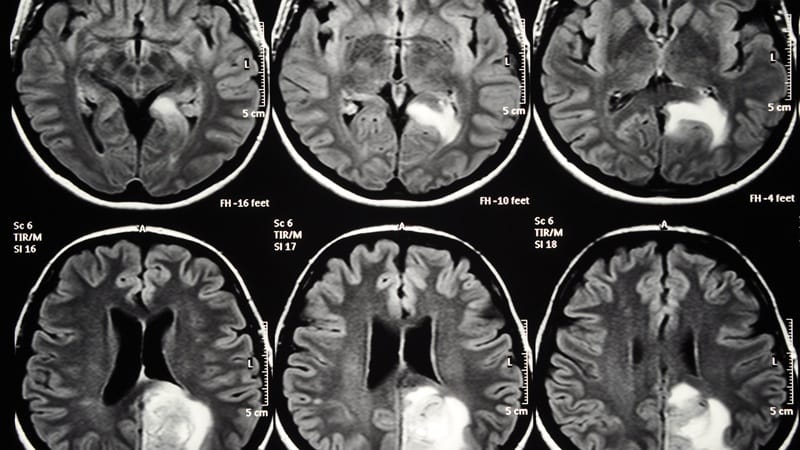
Stupp Protocol Still Gold Standard for Glioblastoma After 21 Years, Creator Says
The Stupp protocol — surgery, radiation and temozolomide — has been the global standard for glioblastoma for 21 years, its creator told a medical conference in Rio de Janeiro this month.
Roger Stupp, MD, chief of neuro-oncology in the Department of Neurology and the Paul C. Bucy professor of Neurological Surgery at Northwestern University, said the regimen — six weeks of chemoradiation followed by six monthly temozolomide cycles — offers clinical benefit but leaves most patients with recurrences and only one in ten surviving beyond five years, Medscape reported.
Pembrolizumab struggles to cross blood-brain barrier
Stupp discussed pembrolizumab, a PD-1 inhibitor designed to “release that brake” on immune cells so they can attack the tumor. He said the drug has shown limited efficacy in glioblastoma because of an immunosuppressive tumor microenvironment and difficulty crossing the blood-brain barrier.
Tissue access compounds the problem. “We’ve made great strides in leukemia and lymphoma — conditions in which we have circulating tumor cells and can simply test the blood. In early-stage breast cancer, we also find circulating tumor cells. But when it comes to the brain, we must avoid repeated biopsies as much as possible,” Stupp told Medscape’s Portuguese edition.

Anti-migration strategy falls short in Phase 3
Controlling diffuse invasion through brain parenchyma remains another hurdle. Stupp and his team tested cilengitide, an experimental antiangiogenic agent, alongside the Stupp protocol and observed reduced tumor infiltration in early work. The CENTRIC Phase 3 study, published in The Lancet Oncology, found that adding cilengitide to chemoradiotherapy did not improve outcomes. “The anti-migration strategy was good, but we probably weren’t using the best drug,” Stupp said.
Ultrasound and yttrium-90 radioembolization under study
To temporarily open the blood-brain barrier, Stupp’s team used ultrasound with microbubbles to deliver a small dose of doxorubicin combined with immune checkpoint-blocking antibodies. The study, published in Nature Communications, formed the basis for the first clinical trial using ultrasound to deliver immunotherapies for glioblastoma. “There are advances in therapeutic ultrasound that we can explore further; it’s certainly something we’ll continue to pursue,” Stupp said.
In the FRONTIER Phase 1 study across four U.S. institutions involving 30 patients, Stupp is evaluating yttrium-90 radioembolization — microspheres injected intra-arterially via microcatheter into tumor-feeding vessels — for recurrent glioblastoma. The approach is approved for liver tumors. “The results are better than I expected, but this applies to a selected group of patients,” Stupp told Medscape.
Stupp urges faster progress at Brazilian oncology congress
Roger Stupp, MD, chief of neuro-oncology and Paul C. Bucy professor of Neurological Surgery at Northwestern University, told Medscape’s Portuguese edition that the Stupp protocol — developed in 2005 and still the global gold standard — has not been surpassed after 21 years.
Conventional treatment offers clinical benefit, yet most patients suffer tumor recurrences and only one in ten survives beyond five years, Stupp said.
Vorasidenib approved for low-grade glioma, not glioblastoma
For grade 2 gliomas with isocitrate dehydrogenase mutations, the oral targeted therapy vorasidenib recently gained approval from the U.S. Food and Drug Administration and Brazil’s health regulatory agency, Medscape reported. In trials, vorasidenib cut the risk of progression or death by 61 percent and delayed the need for chemotherapy and radiation. Because glioblastoma lacks these mutations, the drug has no molecular target in that disease.
Stupp declined to predict when a comparable breakthrough might arrive for glioblastoma. “I hope it doesn’t take another 20 years before we see another breakthrough like temozolomide,” he said.
- South Korea Cuts Rare Disease Co-Payment to 7% from Dec. 1, Saving Patients 220,000 Won Annually
- Amazon and Cdiscount Slash Apple Prices Weeks Before Black Friday, Undercutting Apple Gift Card Offers
- 3.6% for Social Security, 2.6% for FERS, and a Bill Still Pending for VA (daybreakwire.com)
- Phil Taylor Returns After 8 Years at MODUS Super Series; Warns Crowds May Drive Luke Littler Away (archyde.com)