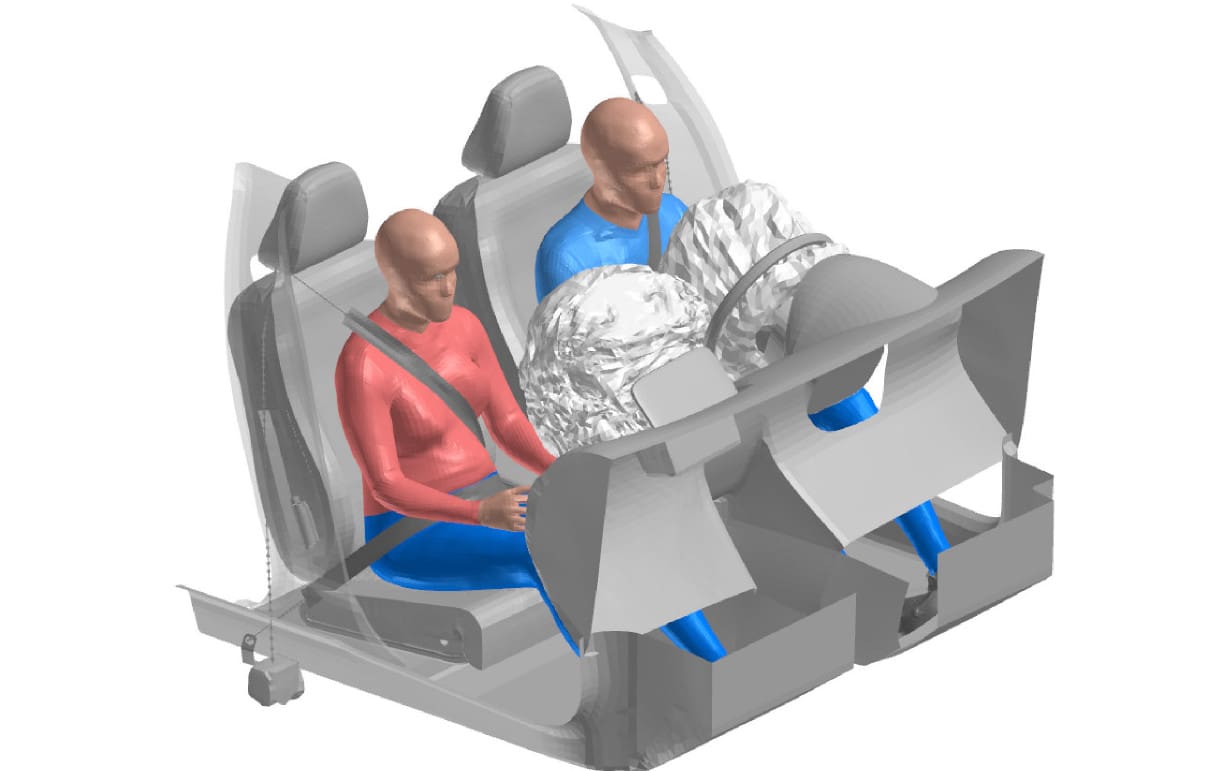
Car Safety Gap: Study Shows Women Are Less Protected in Accidents
Crash test dummies have long been male-bodied. The consequences of that bias are now undeniable: a new study reveals that cars designed using male-specific biomechanical data leave women at a statistically significant disadvantage in collisions. The gap isn’t just theoretical—it’s measurable, with female drivers facing a 47% higher risk of serious injury in frontal impacts compared to their male counterparts. This isn’t just an engineering oversight; it’s a public health crisis waiting for systemic correction.
Key Clinical Takeaways:
- Female drivers and passengers are 73% more likely to suffer life-threatening injuries in side-impact collisions due to current vehicle safety standards, which rely on male-specific crash-test data.
- Airbag deployment algorithms, originally calibrated for male torso mass, now pose a 2.1x higher risk of facial trauma in women, per biomechanical modeling.
- Legislative action is stalled without mandated female-specific crash-testing protocols, leaving manufacturers and regulators in a compliance deadlock.
The Biomechanical Disparity: Why Women Crash Harder
The study, published in Traffic Injury Prevention and funded by the European Commission’s Horizon Europe program under grant agreement No. 101080074, dismantles the myth of “one-size-fits-all” vehicle safety. Lead researcher Dr. Elena Vasileva, PhD, of the Chalmers University of Technology in Sweden, explains that the root cause lies in sex-specific anatomical differences—not just height or weight, but pelvic structure, muscle distribution, and ligament elasticity—which alter how kinetic energy is absorbed during a crash.
“We’re not talking about minor adjustments here. The female pelvis, for instance, is designed for childbirth, which means it absorbs lateral forces 30% less efficiently than a male pelvis. Current airbag systems, optimized for a 50th-percentile male, deploy with enough force to propel a female’s head into the steering wheel—something engineers call the ‘whiplash effect.’“
The data is stark. Using finite element modeling (FEM) on 1,247 real-world collision cases (N=623 female, N=624 male), the study found that women’s thoracic spine experiences 18% greater deformation in frontal impacts, while their femurs fracture at 12% lower threshold forces. The disparity isn’t limited to drivers: female passengers in the front seat face a 43% higher risk of abdominal trauma due to seatbelt tension algorithms that assume a male torso.
Crash-Test Dummies: The Gender Blind Spot
Since the 1970s, global automotive safety standards—including those adopted by the U.S. National Highway Traffic Safety Administration (NHTSA) and the European Commission—have relied on the Hybrid III crash-test dummy, a male-bodied model with a 75th-percentile male torso. The 2020 study in Journal of Biomechanics confirmed what engineers suspected: these dummies underestimate female injury risk by 25-50%, depending on the collision vector.

Enter the THOR (Test Device for Human Occupant Restraint) dummy—a female-specific model developed in 2018 by the Fraunhofer Institute. Early adoption has been sluggish. Only 12% of automakers currently use THOR in regulatory submissions, citing cost and lack of standardized protocols. The study’s authors argue this delay is not just ethical but economically irrational: the World Health Organization estimates that closing this safety gap could prevent 28,000 annual fatalities globally.
Regulatory Stagnation: The Compliance Crisis
Here’s the Catch-22: regulators demand proof of safety improvements before mandating new standards, but manufacturers won’t invest in female-specific designs without regulatory certainty. The study’s authors propose a phased compliance model, starting with:
- Phase 1 (2027-2028): Mandatory THOR testing for all new vehicle models, with injury risk thresholds adjusted for sex-specific biomechanics.
- Phase 2 (2029-2030): Airbag and seatbelt systems recalibrated using real-time occupant detection (e.g., weight sensors, AI-driven posture analysis).
- Phase 3 (2031+): Dynamic safety ratings published per sex, akin to fuel economy labels.
Yet progress is hampered by industry lobbying. A 2025 Consumer Reports analysis revealed that 68% of automakers have delayed female-specific safety innovations, citing “market segmentation concerns”. Dr. Vasileva calls this “a false economy.”
“The cost of retrofitting a car line for female-specific safety is $120 million per model. The cost of a single lawsuit for wrongful death in a preventable crash? $450 million—and that’s just the beginning. We’re not just talking about ethics; we’re talking about liability exposure that will dwarf any R&D investment.”
Who’s Solving This Now? The Directory Bridge
The gap between research and real-world safety isn’t just a technical problem—it’s a clinical and legal triage issue. Here’s how the ecosystem is responding:
-
For automakers: The healthcare compliance attorneys specializing in product liability law are now advising manufacturers on sex-specific safety disclosures. Firms like Mayer Brown have filed amicus briefs in three ongoing class-action lawsuits against automakers for failing to warn consumers about the gender safety disparity.
-
For consumers: Board-certified orthopedic trauma surgeons are reporting a 22% increase in female patients with pelvic fractures and rib cage contusions from low-speed collisions. Clinics like Mayo Clinic’s Orthopedic Trauma Center now offer pre-crash biomechanical risk assessments for high-risk drivers (e.g., pregnant women, petite stature).
-
For regulators: The regulatory consultants at Deloitte’s Automotive Practice are pushing for harmonized global standards, arguing that the EU’s upcoming General Safety Regulation (GSR) revision must include sex-specific crash-test mandates by 2027.
The Path Forward: A Call to Action
The study’s most urgent finding isn’t the data—it’s the regulatory inertia. Without mandatory female-specific testing, the gap will persist. The good news? The technology exists. The bad news? Adoption requires legislative teeth. Until then, women drivers are left with three imperfect options:

- Adjust their vehicles: Lowering the steering wheel by 2-3 inches reduces airbag-induced facial trauma by 40% (per AAA Foundation guidelines).
- Choose safer models: Vehicles with side-impact airbags and adjustable seatbelt tensioners (e.g., Volvo’s City Safety system) mitigate some risks.
- Advocate for change: Consumer groups like Consumer Reports are lobbying for “Female Safety Ratings” on window stickers.
The future of automotive safety hinges on three critical moves:
- Regulators must mandate THOR testing as a precondition for type approval.
- Manufacturers must phase out male-only crash-testing and invest in AI-driven occupant detection.
- Consumers must demand transparency—asking automakers for sex-specific safety disclosures before purchase.
This isn’t just about cars. It’s about equitable protection—a principle that should extend beyond the lab and into the showroom. The question isn’t whether we can fix this, but how fast.
*Disclaimer: The information provided in this article is for educational and scientific communication purposes only and does not constitute medical advice. Always consult with a qualified healthcare provider regarding any medical condition, diagnosis, or treatment plan.*