Canton Fair Highlights China’s Shift to High-Tech Exports
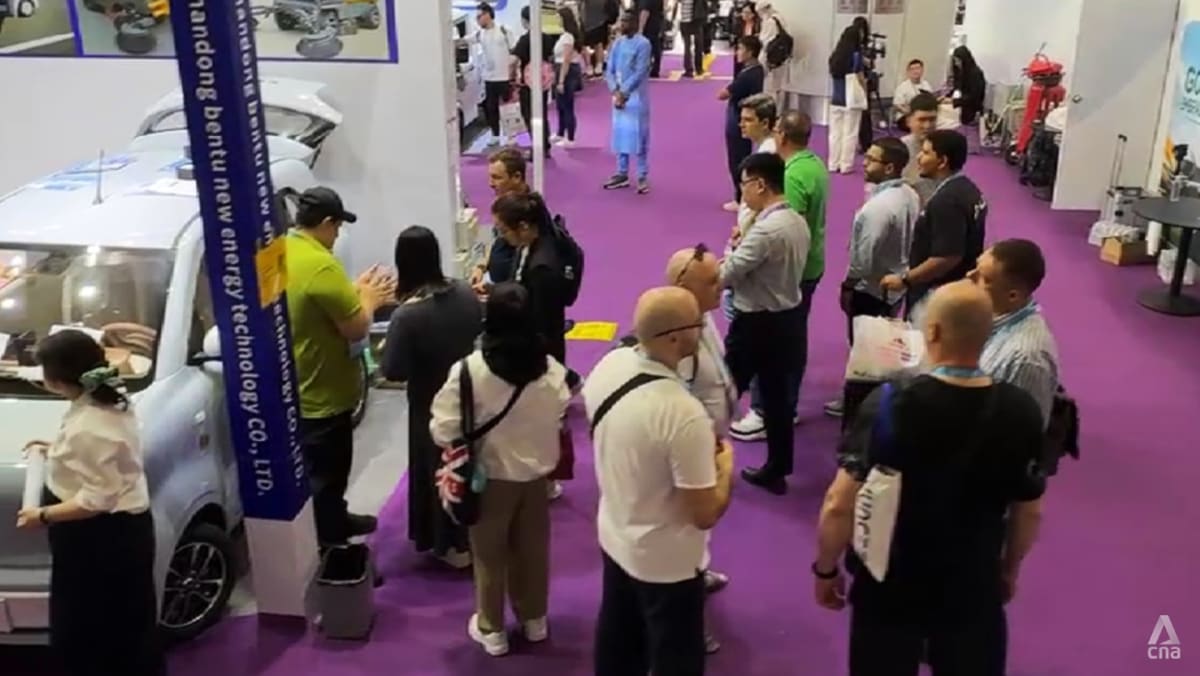
At the 139th Canton Fair, Chinese exporters unveiled a high-tech offensive—AI-driven manufacturing, smart healthcare devices, and green energy systems—signaling a strategic pivot from volume-led exports to innovation-centric trade as foreign buyer attendance surged 22% year-on-year in Q1 2026, according to China’s Ministry of Commerce. This shift reflects Beijing’s response to lingering tariff pressures and weakening demand in traditional markets, compelling firms to upgrade value chains amid rising RMB strength and supply chain fragmentation. The move exposes gaps in global distribution networks, creating urgent demand for B2B logistics platforms, trade compliance advisors, and digital procurement specialists capable of navigating complex cross-border tech transfers.
How Tech Intensity Is Rewriting China’s Export Playbook
The Canton Fair’s transformation mirrors broader macro trends: China’s share of high-tech exports rose to 34% of total shipments in 2025, up from 28% in 2023, per World Bank trade data. Firms like TAILG, which showcased AI-powered e-mobility solutions at the fair, reported a 40% YoY increase in overseas inquiry volume during Phase One, with conversion rates jumping to 18% from 12% the prior year. This isn’t incremental—it’s structural. As Western markets reshore critical inputs, Chinese exporters are doubling down on proprietary R&D to avoid commoditization traps, a shift validated by the 15% YoY growth in patent filings from Guangdong-based manufacturers in Q4 2025, per CNIPA statistics.
“We’re not just selling products anymore—we’re selling integrated systems backed by software updates and remote diagnostics. Buyers now expect SLAs, not just invoices.”
—Li Wei, CTO of Shenzhen-based smart healthcare firm Lepu Medical, speaking at Canton Fair Phase Two.
The implications ripple through global supply chains. Traditional freight forwarders face margin compression as clients demand real-time tracking, customs pre-clearance, and bonded warehouse integration—services legacy players struggle to bundle. Meanwhile, Chinese tech exporters encounter new hurdles: IP protection fears in EU markets, divergent safety certifications (CE vs. FCC), and financing gaps for long-cycle healthcare equipment. These frictions are opening lanes for specialized B2B enablers. Firms needing end-to-end export orchestration are turning to platforms like global trade compliance advisors to navigate evolving dual-use regulations, while others seek enterprise logistics providers with cold-chain and IoT monitoring capabilities for high-value medical devices.
Why B2B Partners Are Now Critical to Export Success
Consider the smart healthcare segment: export value for Chinese medical devices hit $42B in 2025, growing at 9.3% CAGR since 2021, yet after-sales service costs now consume up to 22% of revenue for complex systems like imaging equipment, per Frost & Sullivan analysis. Buyers in Germany and Brazil increasingly require local service networks—a capability few Chinese OEMs possess natively. This drives demand for third-party maintenance providers and regional hub operators who can offer multilingual support and spare parts logistics. Similarly, EV makers like TAILG face battery passport requirements under EU’s new regulation, necessitating blockchain-based traceability solutions—a niche where supply chain transparency firms are seeing rapid uptake from Asian exporters targeting European tenders.
Financing remains another pressure point. While China’s policy banks extended $110B in export credit in 2025, SME tech exporters report average payment cycles of 120 days overseas—up from 90 days pre-pandemic—straining working capital. Supply chain finance platforms and insuretech providers specializing in political risk coverage are thus becoming indispensable, particularly for firms navigating volatile markets in Latin America and Africa. The Canton Fair’s data confirms this: 38% of foreign buyers indicated willingness to pay premiums for vendors offering integrated financing and warranty bundles, up from 29% in 2024.
The Canton Fair’s evolution isn’t a temporary tactic—it’s a leading indicator of how China intends to compete in a deglobalizing world. As tech intensity becomes the new currency of trade, the winners won’t just be the most innovative manufacturers, but those who pair their products with seamless, compliant, and financially engineered global delivery. For businesses scanning the horizon, the directory isn’t just a list—it’s the operational toolkit for turning export strategy into executable advantage.