
‘Cannibal’ star System Poised for spectacular Supernova, Potentially Visible in Daytime
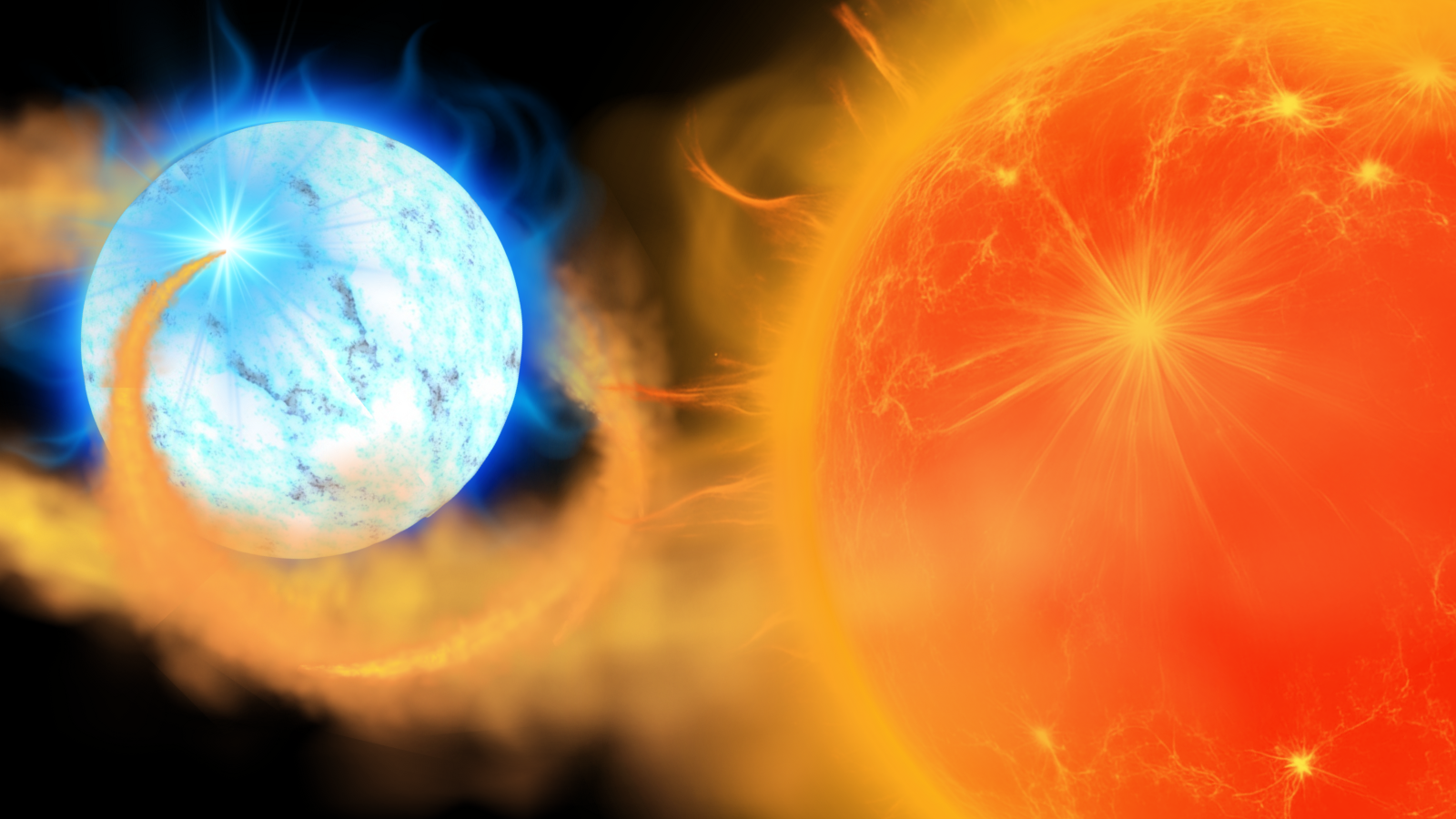
A white dwarf star relentlessly stripping material from a companion star is rapidly approaching a cataclysmic end, potentially resulting in a supernova luminous enough to be seen during the day. Astronomers studying the V Sagittae system, located roughly 5,500 light-years from Earth, have discovered a massive halo of gas surrounding both stars - evidence of the white dwarf’s aggressive “cannibalism” and a sign that a violent explosion is likely imminent.
The research, published Thursday (Sept. 11) in the Monthly Notices of the Royal Astronomical Society, reveals the white dwarf is accumulating matter at a rate it cannot sustain. This process is creating a system-wide gas halo and accelerating the stars toward a final, destructive collision. While the exact timing remains uncertain, scientists predict the system will either erupt in a bright nova within the next few years or ultimately detonate as a supernova visible even in daylight.
The team’s findings were made using the Very large Telescope (VLT) in the Atacama Desert of northern Chile, comprised of four individual telescopes located almost 9,000 feet (2,636 meters) above sea level. The VLT observations revealed the extent of material stolen from the companion star, now wrapped around both stars in a giant halo fueled by the energy released during the white dwarf’s feeding frenzy.
“The white dwarf cannot consume all the mass being transferred from its hot star twin, so it creates this bright cosmic ring,” explained Pasi Hakala from the University of Turku. “The speed at which this doomed stellar system is lurching wildly, likely due to the extreme brightness, is a frantic sign of its imminent, violent end.”
According to Pablo Rodríguez-Gil from Spain’s Instituto de Astrofisica de Canarias, the accumulating matter on the white dwarf is likely to trigger a nova outburst in the coming years, making V Sagittae visible to the naked eye. However, the ultimate fate of the system is a supernova explosion of such magnitude it could be observed from Earth even during daylight hours.
