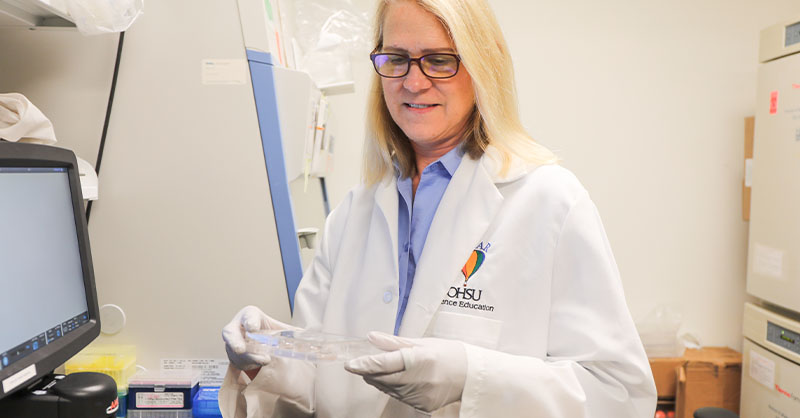
Cancer-Causing Protein Aids Tumor DNA Repair
The fight against malignancy has long been a war of attrition, where clinicians deploy cytotoxic agents to shatter cancer DNA, only to find the tumor evolving a sophisticated defense system to repair the damage in real-time. New research from Oregon Health & Science University (OHSU) has uncovered a biological paradox: a single protein that drives the initial development of cancer also serves as the primary mechanism the tumor uses to survive chemotherapy.
Key Clinical Takeaways:
- A specific protein identified by OHSU researchers acts as a “double agent,” promoting tumor growth while simultaneously enhancing the cell’s ability to repair DNA.
- This dual functionality creates a significant barrier to standard-of-care treatments, as the protein protects cancer cells from the genomic instability induced by radiation, and chemotherapy.
- Targeting this protein with inhibitory agents could potentially “disarm” the tumor, making it significantly more vulnerable to existing therapeutic interventions.
The persistence of chemoresistance remains one of the most daunting hurdles in clinical oncology. While traditional chemotherapy is designed to induce massive double-strand breaks in the DNA of rapidly dividing cells—triggering apoptosis—many tumors exhibit an innate or acquired ability to bypass this programmed cell death. This resilience is often rooted in the upregulation of DNA damage response (DDR) pathways, which act as a molecular “cleanup crew,” stitching the genome back together before the cell can be eliminated.
The Dual-Role Pathogenesis of the “Protector” Protein
The OHSU study reveals a sophisticated mechanism of pathogenesis where a protein, typically associated with oncogenic transformation, also optimizes the tumor’s internal repair machinery. In a healthy cellular environment, DNA repair is a tightly regulated process ensuring genomic stability. However, in the presence of this specific protein, cancer cells can maintain a high rate of proliferation while effectively neutralizing the lethal effects of DNA-damaging agents.

This biological synergy ensures that the tumor does not succumb to the very genomic instability that originally allowed it to form. By facilitating efficient DNA repair, the protein prevents the accumulation of lethal mutations that would otherwise lead to tumor regression. For clinicians, So that the more aggressive a tumor becomes in its growth phase, the more robust its defense mechanisms may be, creating a vicious cycle of progression and resistance.
Understanding this mechanism is critical for patients who have failed first-line chemotherapy. When standard protocols cease to be effective, it is often because the tumor has optimized these repair pathways. In such cases, it is imperative to consult with board-certified medical oncologists who specialize in precision medicine to determine if the patient’s tumor profile suggests a high reliance on these specific repair proteins.
Comparative Analysis: Protein Influence on Cellular Survival
To understand the clinical impact of this protein, one must contrast the behavior of cancer cells with and without its influence during therapeutic stress. The following table outlines the divergent outcomes observed in experimental models.
| Cellular State | Growth Signaling | DNA Repair Efficiency | Chemotherapy Response | Clinical Outcome |
|---|---|---|---|---|
| Protein Absent/Inhibited | Reduced Proliferation | Low/Impaired | High Sensitivity | Increased Apoptosis |
| Protein Overexpressed | Accelerated Growth | High/Optimized | Significant Resistance | Tumor Persistence/Recurrence |
The data suggests that the protein does not merely assist in repair but actively coordinates the cell’s survival strategy. By linking growth signals with repair capacity, the protein ensures that the tumor remains viable even under the extreme stress of high-dose chemotherapy or ionizing radiation.
Funding and Research Transparency
The integrity of this research is bolstered by its foundational funding and institutional oversight. This study was supported by grants from the National Institutes of Health (NIH), ensuring that the findings underwent rigorous peer review and adhered to strict ethical guidelines for biomedical research. By utilizing NIH-funded frameworks, the OHSU team was able to employ high-resolution genomic sequencing to map the protein’s interaction with the DNA repair complex.
“The discovery that a single molecular driver can both ignite the fire of cancer and then act as the fire extinguisher for the damage caused by chemotherapy changes our approach to therapeutic vulnerability,” notes a lead researcher involved in DNA repair studies. “We are no longer just looking for ways to kill the cell, but for ways to strip the cell of its armor before we strike.”
This shift toward “sensitization therapy”—where a drug is used not to kill the cancer directly, but to make another drug more effective—represents a burgeoning frontier in oncology. This approach minimizes the need for escalating chemotherapy doses, which often increases systemic morbidity and reduces the patient’s quality of life.
Clinical Implications for Precision Diagnostics
The transition from bench science to bedside application requires a robust diagnostic pipeline. Before a patient can benefit from inhibitors targeting this protein, clinicians must first identify its expression levels within the tumor biopsy. This necessitates a multidisciplinary approach involving molecular pathology and genetic screening.
For families with a history of hereditary cancer syndromes, the presence of these repair-enhancing proteins may be linked to specific germline mutations. It is highly recommended that patients undergo comprehensive screening with certified genetic counselors to map their risk profile and identify potential therapeutic targets early in the diagnostic process.
the development of small-molecule inhibitors targeting this protein is currently moving toward preclinical validation. If these inhibitors prove safe in human trials, they could be paired with standard platinum-based chemotherapies to overcome resistance in lung, ovarian, and breast cancers—areas where DNA repair mechanisms are notoriously efficient.
The Future of Synthetic Lethality
This research feeds into the broader concept of “synthetic lethality,” a strategy where two non-lethal mutations or inhibitions combine to create a lethal effect on the cancer cell. By inhibiting the protein that provides the “safety net” for DNA repair, clinicians can create a state of extreme genomic fragility. When combined with a DNA-damaging agent, the cancer cell finds itself unable to recover, leading to rapid collapse.
As we move toward a more nuanced understanding of the cancer genome, the goal is to move away from the “blunt instrument” approach of systemic chemotherapy and toward a surgical molecular strike. The OHSU findings provide a roadmap for identifying these vulnerabilities, potentially turning a tumor’s greatest strength—its ability to heal itself—into its greatest weakness.
Navigating these complex options requires access to the highest tier of specialized care. Patients and providers are encouraged to utilize our vetted network of comprehensive cancer centers to access the latest clinical trials and molecular diagnostic tools that can identify these protein markers.
Disclaimer: The information provided in this article is for educational and scientific communication purposes only and does not constitute medical advice. Always consult with a qualified healthcare provider regarding any medical condition, diagnosis, or treatment plan.