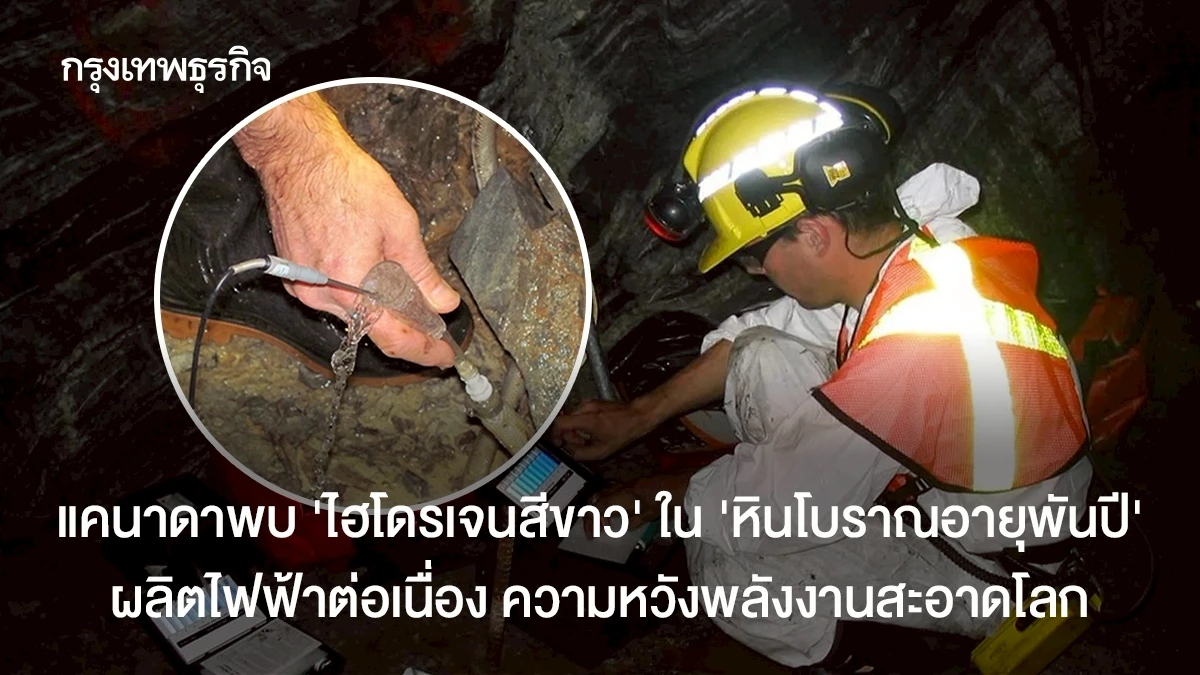
Canada Discovers ‘White Hydrogen’ in 1,000-Year-Old Ancient Rock, Paving the Way for Continuous Renewable Energy
Researchers in Canada have identified significant deposits of “white hydrogen” trapped within ancient geological formations, offering a potential new pathway for sustainable energy production. Unlike traditional fossil fuels, this naturally occurring hydrogen is generated through subterranean geochemical reactions rather than industrial manufacturing processes. The discovery centers on the presence of white hydrogen—also referred to as geologic or gold hydrogen—which is found in its pure form within deep rock strata. Geologists note that these ancient formations act as natural reservoirs, where the gas has accumulated over millennia. Because this hydrogen is produced continuously by the earth’s crust, it is being evaluated as a source of clean energy that could theoretically provide a steady, long-term power supply. Advocates for the development of these sites highlight that extracting hydrogen directly from the earth avoids the high carbon footprint associated with “grey hydrogen,” which is typically produced from natural gas. It bypasses the energy-intensive electrolysis required for “green hydrogen” production. The ability to harness a naturally occurring fuel source has drawn attention to the potential for lowering the costs and environmental impact of transitioning to a hydrogen-based energy economy. While the discovery represents a shift in how energy resources are classified and explored, the technical challenges of extraction remain a primary focus for the sector. Industry experts are currently assessing the permeability of the rock formations and the feasibility of scaling recovery operations to meet commercial electricity demands. The next phase of development involves comprehensive site mapping and pilot extraction programs to determine the volume of recoverable gas. Institutional stakeholders are currently reviewing the geological data to establish regulatory frameworks for exploration, with further assessments scheduled to evaluate the economic viability of integrating these subterranean reserves into the regional power grid.