
AI: A Pathway to a More Equitable Future for People with Disabilities
Artificial intelligence is increasingly recognized not as a threat to employment, but as a powerful tool for empowerment, particularly for individuals with disabilities.when designed with accessibility and lived experience at its core,AI offers the potential to dismantle long-standing barriers and unlock new opportunities for learning,work,and full societal participation.
Surashree Rahane, founder and CEO of Yearbook Canvas, embodies this shift. Born with physical disabilities, including club foot and polymelia, she champions the idea of creating opportunities rather than simply seeking them.Rahane’s company focuses on accessible digital yearbooks, and she’s currently collaborating with newton School of Technology to develop AI-powered learning tools that adapt to individual student needs. She cautions, though, that AI’s potential will only be realized if it’s intentionally trained to understand and accommodate diverse learners, warning against the risk of perpetuating existing biases through “a shinier version of the same old bias.”
This sentiment underscores a crucial point: technology alone isn’t enough. True inclusion requires a fundamental shift in mindset and a commitment to shared design.
The impact of AI is already being felt. Assistive technologies, ranging from voice-to-speech applications to gesture-controlled wheelchairs, are breaking down barriers previously considered insurmountable. Prateek Madhav, CEO of AssisTech Foundation, describes AI as “the great equaliser,” highlighting that while broader anxieties exist about job displacement, AI is actively creating employment opportunities for people with disabilities.
Ketan Kothari, a consultant at Xavier’s Resource Center for the visually Challenged in Mumbai, provides a concrete example. He demonstrates how AI tools now enable him to perform tasks previously inaccessible,including document formatting,participation in meetings with live captions,and generating visual descriptions of images. “AI has turned inventiveness into function,” he explains.
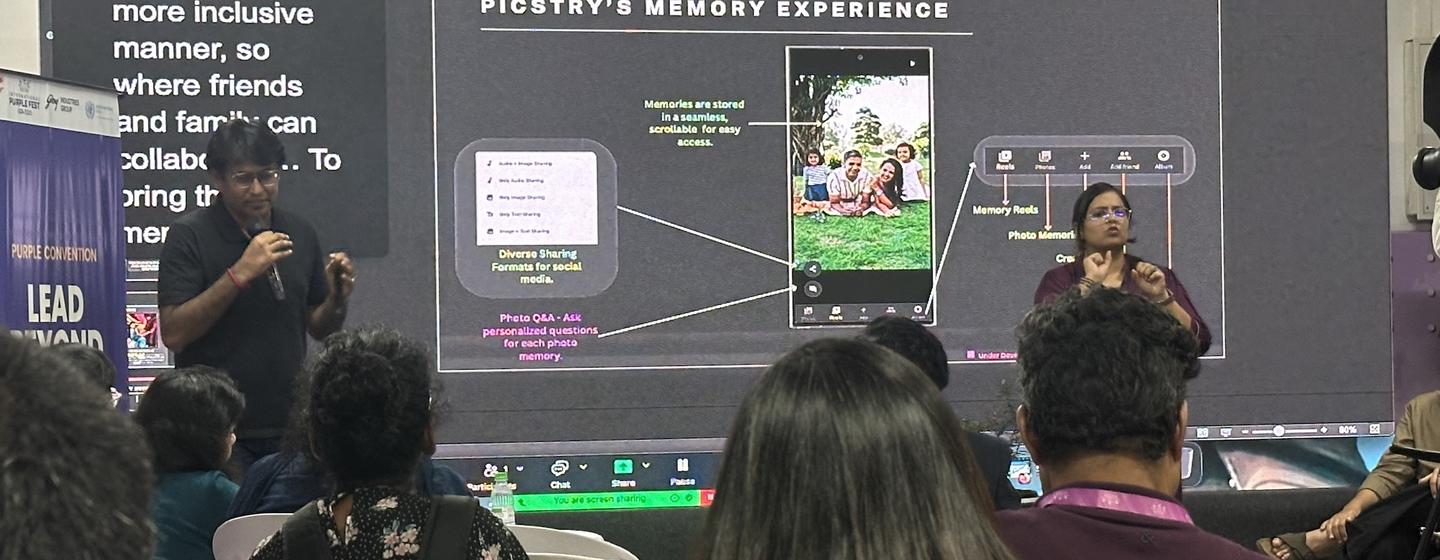
The discussion surrounding this transformative potential was prominently featured at Purple Fest, an event showcasing Indian entrepreneurs and business leaders in the disability space. Tshering Dema,from the UN Advancement Coordination Office,emphasized that this isn’t a localized trend. “this is not a single-country story - it’s a global transition,” she stated. “Inclusion isn’t only about laws or infrastructure; it’s about mindset and shared design. The future of work must be built not just for people,but with them.”
Ultimately, the promise of AI lies in its ability to move beyond simply providing access and towards fostering genuine agency and contribution for people with disabilities worldwide.
