
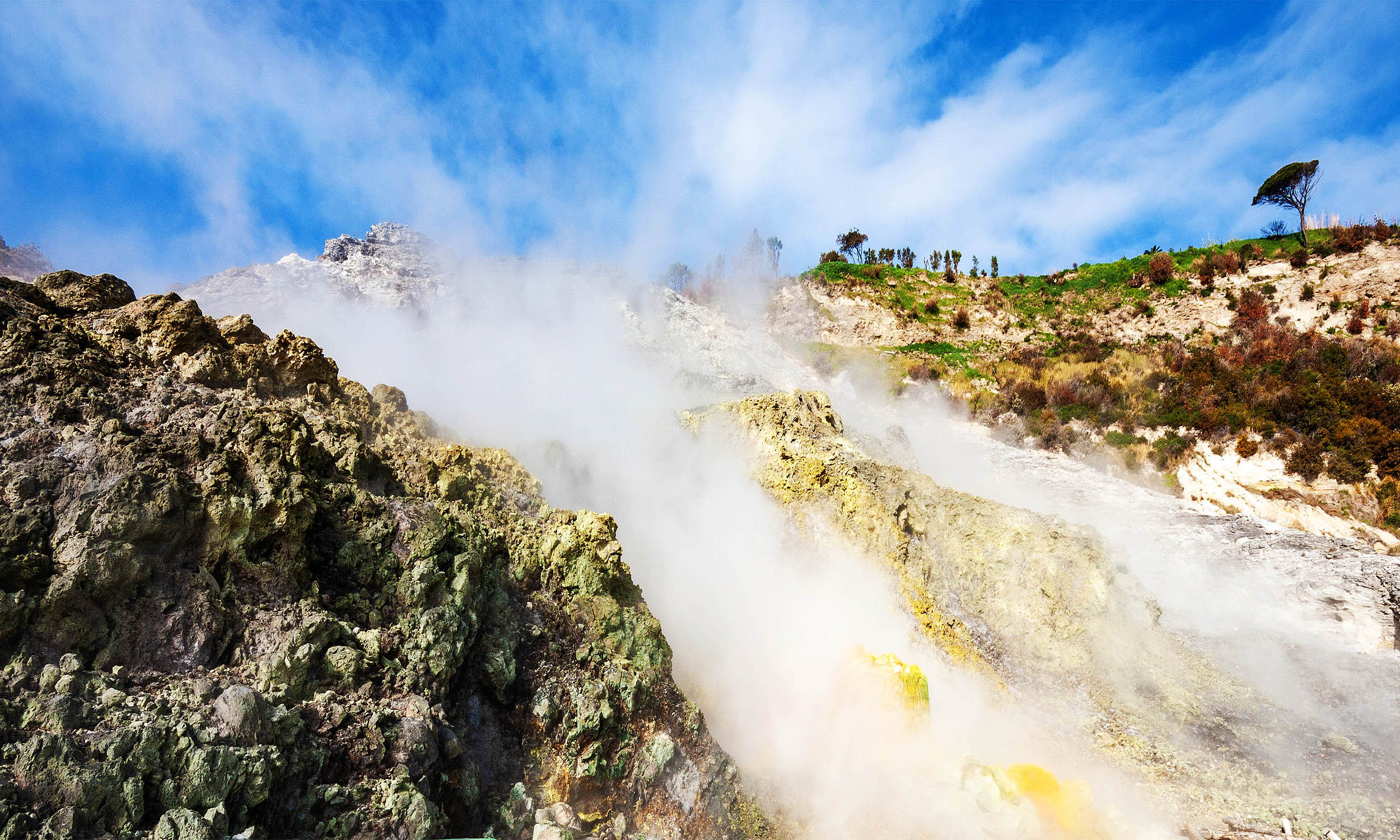
Campi Flegrei: New Insights into Italy‘s Restless Supervolcano
Naples,Italy – Residents around the bay of Naples are accustomed to a landscape in motion. Cracking streets, harbor siltation, steaming vents, and frequent minor earthquakes are all hallmarks of Campi Flegrei, a vast ”supervolcano” caldera that last erupted in 1538. Recent scientific investigations, though, are reshaping our understanding of this perhaps hazardous geological feature.
A History of Unrest
For years,scientists interpreted the observed activity as a direct consequence of rising magma. Though, two studies-one published in March 2023 and another in May 2025-have offered a more nuanced viewpoint. These findings suggest that while Campi Flegrei remains a significant threat, some of its most disruptive behaviors might potentially be mitigated through strategic interventions.
Decoding Carbon Dioxide Emissions
The 2023 research, published in Geology [[1]], focused on carbon dioxide (CO₂) emissions, a key indicator of volcanic activity. Volcanoes release substantial amounts of CO₂ as magma ascends and releases gases. At campi Flegrei, CO₂ measurements at the Solfatara-Pisciarelli zone reached 4,000-5,000 tons per day-among the highest rates globally-prompting initial concerns about an impending eruption.
However, further analysis revealed a surprising complexity. Researchers examined the ratios of CO₂ alongside other gases like nitrogen and helium, comparing the data to models predicting emissions solely from magma degassing. The results were inconsistent. The gas ratios began deviating from a “pure magma” pattern in 2005, aligning instead with indicators of hydrothermal activity and ground uplift-a phenomenon known as bradyseism.
Did You Know? Bradyseism, the slow rising and falling of the ground, is a common occurrence in the Campi flegrei area and has been observed for centuries.
The Role of Hydrothermal Systems
The study identified a secondary source of CO₂: the hydrothermal system heating the surrounding rocks.Hot, reactive fluids are decarbonating calcite, a carbonate-rich mineral, releasing additional CO₂ into the atmosphere. researchers estimate this non-magmatic source contributes 20-40% of the total CO₂ emissions. This finding doesn’t diminish the volcano’s danger, but it reframes how scientists interpret gas spikes-a surge in CO₂ doesn’t automatically signal an imminent eruption.
Pressure Dynamics and the Geothermal Reservoir
A subsequent study, published in science Advances in May 2025 [[2]], investigated the causes of recent earthquake swarms and ground deformation. By analyzing data from unrest episodes in 1982-1984 and 2011-2024, researchers developed a new model of the volcano’s internal processes.
Their model points to a capped geothermal reservoir beneath the town of pozzuoli as the primary driver of unrest. The caprock above this reservoir is fibrous and “self-healing,” meaning cracks tend to seal quickly. When the cap seals, water and steam trapped below build pressure.This pressure eventually fractures the rocks, releasing steam and causing the tremors reported by residents.
Interestingly, the earthquakes typically begin shallowly and deepen over time-the opposite of what would be expected from magma or gas rising from depth. Following major episodes, the land subsides slightly, consistent with fluid discharge and pressure reduction.
| Event | Date | Key findings |
|---|---|---|
| 2023 Study (Geology) | March 2023 | Identified hydrothermal system as a significant contributor to CO₂ emissions (20-40%). |
| 2025 Study (Science Advances) | May 2025 | Proposed a model centered on a capped geothermal reservoir driving pressure buildup and unrest. |
| Last Eruption | 1538 | Significant eruption impacting the surrounding area. |
| Caldera Formation | Approximately 40,000 years ago | Formation of the 9-mile wide caldera through a massive eruption [[3]]. |
Managing the Risk
The new understanding offers a potential pathway for managing the risks associated with Campi Flegrei. While the deep magmatic heat source cannot be eliminated, reducing the amount of water available to pressurize the geothermal reservoir could lessen the frequency and intensity of unrest. Researchers suggest restoring drainage channels, monitoring groundwater levels, and strategically relieving pressure through well systems.
Pro Tip: Maintaining effective drainage systems can help prevent rainwater from infiltrating the subsurface and contributing to pressure buildup.
What are your thoughts on the potential for managing volcanic unrest through hydrological interventions? Do you believe this approach could be replicated in other volcanic regions?
Ongoing Threats and Future Research
Despite these promising developments, Campi flegrei remains a dangerous supervolcano. Magma is still present at depth, and the hydrothermal system and pressure dynamics can still trigger destructive events, such as steam-driven explosions. The new approach aims to prevent fluid-pressure crises and reduce the likelihood of damaging events, but it doesn’t eliminate the risk of a larger magmatic eruption.
The key shift is a change in mindset. Traditional volcano monitoring-measuring gases, tracking quakes, and mapping ground motion-remains essential.Though, integrating civil engineering and hydrological expertise to manage groundwater and surface runoff could offer a proactive approach to mitigating risk.
Campi flegrei is part of the Campanian volcanic arc, a region with a long and active volcanic history, including the infamous Mount Vesuvius. The area’s unique geological setting and dense population make it one of the most volcanically hazardous regions in the world. Ongoing research and monitoring are crucial for understanding the complex processes at play and protecting the millions of people who live in the shadow of these volcanoes.
Frequently Asked Questions about Campi flegrei
- What is Campi Flegrei? Campi Flegrei is a large supervolcano caldera located near Naples, Italy, known for its ongoing unrest and potential for eruption.
- Is Campi Flegrei likely to erupt soon? While the volcano is active, recent research suggests the most immediate threats are related to fluid pressure buildup rather than a large magmatic eruption.
- What is bradyseism? Bradyseism is the slow rising and falling of the ground, a common phenomenon in the Campi Flegrei area caused by changes in subsurface fluid pressure.
- How are scientists monitoring Campi Flegrei? Scientists use a variety of methods, including gas monitoring, seismic monitoring, ground deformation measurements, and hydrological studies.
- Can the risk from Campi Flegrei be managed? Recent research suggests that managing groundwater and surface runoff could help mitigate some of the risks associated with the volcano.
We hope this article has provided valuable insight into the interesting and complex world of Campi Flegrei. Please share this details with your network, leave a comment below with your thoughts, and subscribe to our newsletter for more in-depth coverage of critical global events.
