
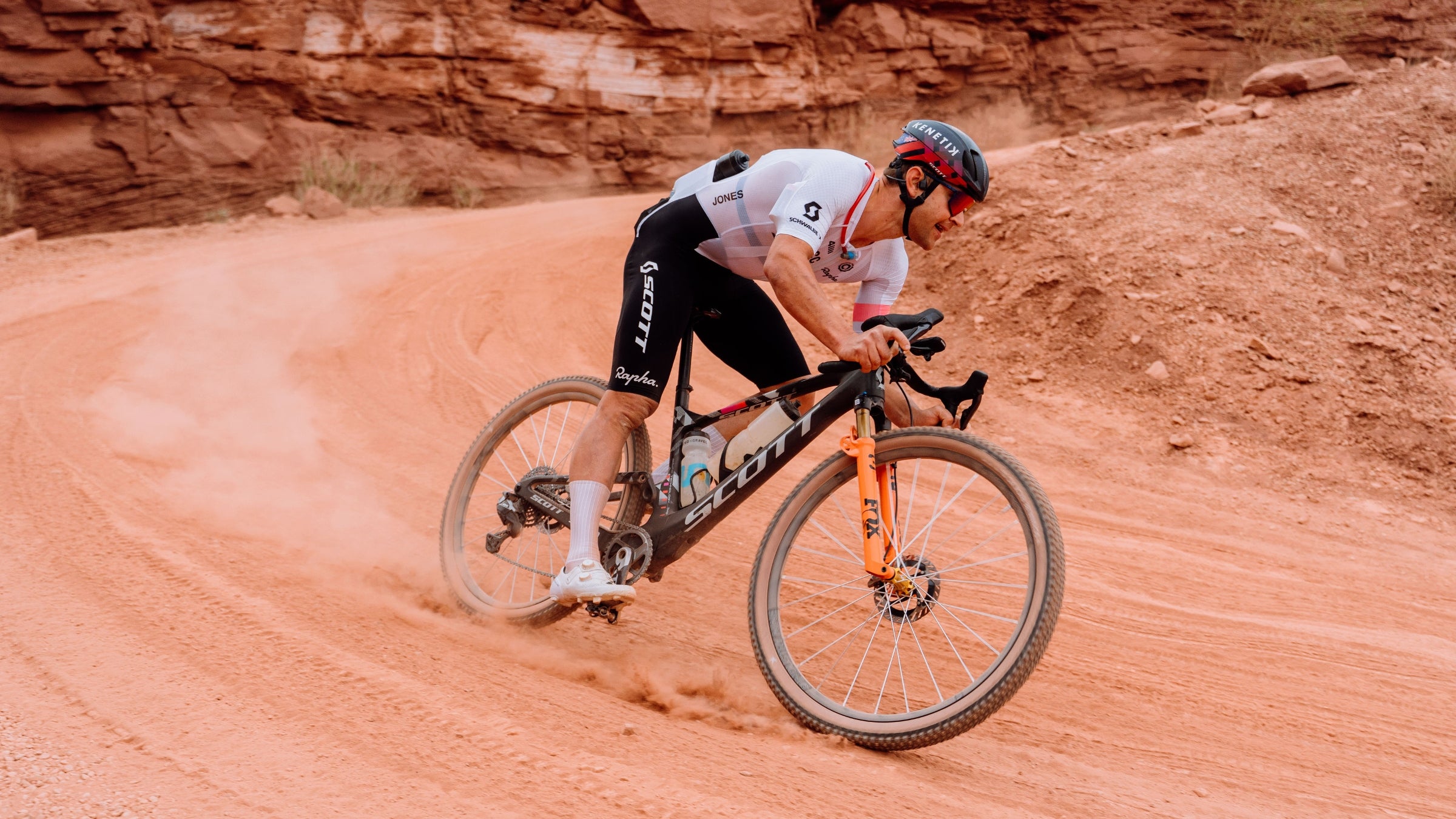
Cam Jones Smashes Keegan Swenson’s White Rim Record
Cam Jones, the 25-year-classic Unbound champion from New Zealand, smashed Keegan Swenson’s five-year record on Utah’s 100-mile White Rim Loop. Clocking in at 5:23:27, Jones shaved 4 minutes and 54 seconds off the 2021 mark, averaging 18.7 mph through the rugged, remote desert terrain of Canyonlands National Park.
The physical toll of a 100-mile unsupported desert push creates a massive recovery deficit that few athletes can manage mid-season. For an elite rider like Jones, who is currently operating on a grueling cross-country itinerary—transitioning from Mid South in Oklahoma and Unbound testing in Kansas toward the Sea Otter Classic in California—this FKT represents a high-stakes gamble in load management. The strategic problem isn’t just the 7,414 feet of elevation gain; it’s the periodization of effort. Inserting a maximum-intensity, unsupported effort into a window intended for race preparation risks acute fatigue or injury, which could compromise his standing in the larger gravel circuit.
The Tactical Breakdown: Aero-Optimization and Wind Resistance
Looking at the raw data confirmed by Scott Sports USA and recorded on Strava, this wasn’t a victory of raw power alone, but one of marginal gains and equipment specialization. Jones opted for a highly specific build: a Scott Spark RC World Cup modified with drop handlebars to maximize aerodynamic efficiency on the long, exposed stretches of the loop. This setup, paired with a Shimano XTR/Ultegra drivetrain and Fox suspension, allowed him to maintain a higher average velocity than a traditional mountain bike configuration would permit.
The ride was far from a linear progression of speed. According to the performance data, Jones faced a significant headwind during the first half of the loop, which nearly derailed the attempt. At the halfway point, he was trailing Swenson’s 2021 mark by almost four minutes. This deficit forced a tactical shift in the second half, requiring a surge in power output to claw back time while battling the desert’s relentless slickrock. The use of Industry Nine wheels and Schwalbe Rick XC 29 x 2.4″ tires provided the necessary balance between rolling resistance and grip on the rough jeep roads.
“It’s about five minutes of it [the record]? It’s a hard thing to race around. The bike was so decent,” Jones noted at the finish, emphasizing the role of the machine in overcoming the environmental hurdles.
The route itself is a grueling counter-clockwise challenge starting where Mineral Bottom Road intersects with Island in the Sky Road. The technicality of the terrain requires a precise power-to-weight ratio to maintain speed through the elevation changes without hitting the anaerobic ceiling too early. Jones’ ability to recover from a four-minute deficit in the latter half of the ride suggests a superior lactate threshold and a disciplined approach to pacing.
The Psychology of the “Side Quest”
While the result was a professional-grade execution, the impetus was surprisingly spontaneous. Jones described the attempt as a “side quest,” a diversion during his transit to the Sea Otter Classic. However, the “lark” was supported by a degree of professional preparation that separates an FKT contender from a casual rider. He utilized a special bike build and brought along filmmaker Danny Awang to document the effort, indicating that while the timing was spontaneous, the intent was calculated.

Jones’ motivation was rooted in the “rich history of hitters” who have traded the record back and forth. This psychological framing—viewing the record as a story to join rather than a chore to complete—likely reduced the mental fatigue associated with the 100-mile unsupported slog. By treating the record as an adventure ride, Jones managed the mental load that often leads to “bonking” in remote desert environments.
Regional Economic Impact and Logistical Vacuums
This record-breaking effort does more than update a Strava leaderboard; it reinforces Moab, Utah, as a global epicenter for gravel and off-road endurance. The “halo effect” of elite athletes like Jones and Hannah Otto—who set the women’s benchmark of 6:37:44 on May 2, 2025—drives significant traffic to regional hospitality and bike-service hubs. When an Unbound champion targets a local route, it triggers a spike in high-conclude tourism and specialized gear rentals in the Moab area.
However, the remote nature of the White Rim Loop creates a logistical vacuum for those attempting similar feats. The lack of infrastructure in Canyonlands National Park means that any support team or promotional crew must source regional event security and premium hospitality vendors to manage the overflow of spectators and support staff without violating National Park Service regulations.
Recovery, Load Management, and the Pro-to-Amateur Gap
From a sports science perspective, the transition from a 5:23:27 maximum effort to the competitive demands of the Sea Otter Classic is a perilous window. The inflammation and glycogen depletion following a 100-mile unsupported push require a rigorous recovery protocol. Professional athletes have the luxury of integrated teams to manage this, but the physical strain of 7,414 feet of climbing on slickrock can lead to overuse injuries in the lower back and knees.
While Jones has the backing of Scott Sports USA, amateur riders attempting to chase these “side quests” often lack a structured recovery plan. Those facing the aftermath of such extreme endurance events must secure vetted local orthopedic specialists and rehab centers to ensure that a record attempt doesn’t result in a season-ending injury. As athletes move into higher tiers of sponsorship and record-breaking fame, the complexity of their endorsement deals increases, necessitating the help of specialized sports contract lawyers to manage the intellectual property and performance bonuses associated with FKTs.
Cam Jones has effectively reset the bar for the White Rim Loop, proving that the gap between a “spontaneous adventure” and a world-class record is bridged by elite gear and a ruthless approach to pacing. As he moves toward the Sea Otter Classic, the industry will be watching to see if this peak effort provides a momentum boost or a recovery hurdle. For those looking to emulate this level of performance—or the professionals who support them—the World Today News Directory remains the premier resource for finding vetted medical, legal, and logistical experts across the sporting landscape.
Disclaimer: The insights provided in this article are for informational and entertainment purposes only and do not constitute medical advice or sports betting recommendations.