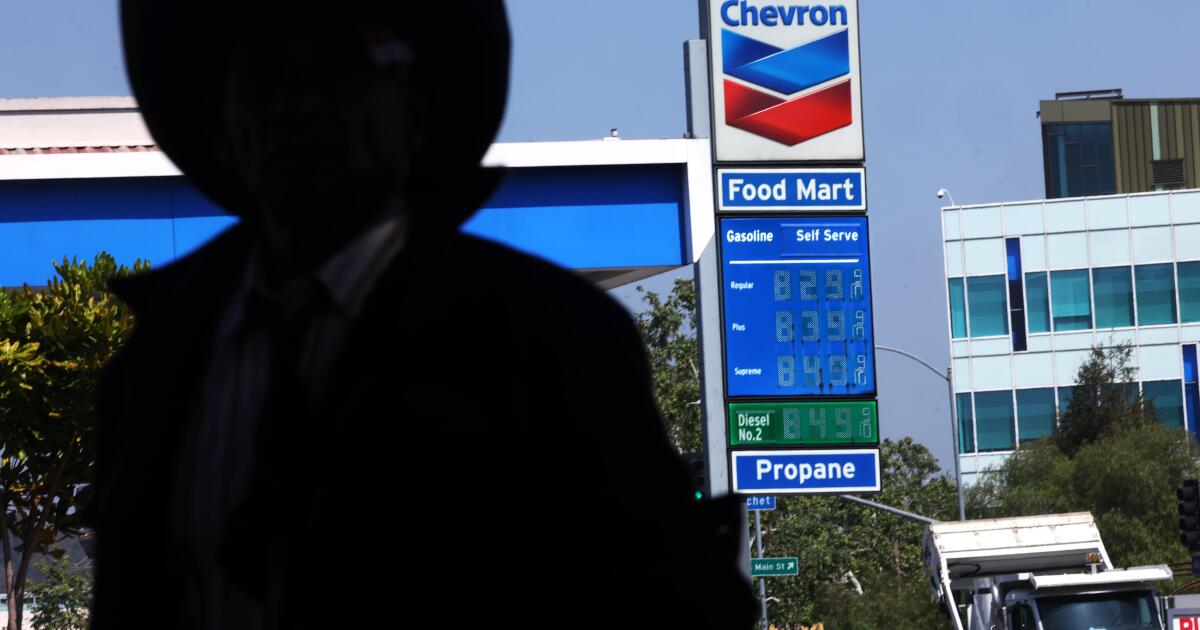
California Governor Urges Avoiding Chevron Gas Stations Amid Price Hike Blame Game
California Governor Gavin Newsom publicly blamed Chevron for artificially inflating gas prices across the state, urging drivers to avoid the company’s stations as fuel costs remain near record highs. The conflict pits the governor against the oil giant, which counters that state policies—not corporate greed—are the root cause of the crisis. As the debate escalates, drivers in Southern California and the Bay Area face a stark choice: pay inflated prices at Chevron stations or risk shortages at smaller, less reliable competitors.
The Problem: A Crisis of Trust and Supply
Newsom’s directive—issued during a press conference in Sacramento on May 21—marks a rare instance of a state governor directly targeting a corporation by name in a consumer-facing crisis. His office cited internal data showing Chevron stations in Los Angeles and San Francisco charging up to $0.20 more per gallon than independent or Shell-branded stations for identical fuel grades. The disparity, while not unprecedented, has sparked outrage among motorists already strained by inflation and California’s higher-than-average gas taxes.
“This isn’t about politics. It’s about protecting California families from being taken advantage of during a time when every dollar counts. Chevron has the resources to absorb these price hikes—they’re not passing on supply chain costs, they’re pocketing profits.”
Chevron, however, pushed back immediately. In a statement to the Federal Trade Commission, the company argued that California’s low-carbon fuel standards and recent refinery regulations have forced them to invest in pricier, compliant fuels. “We’re complying with state law while other retailers aren’t,” a Chevron spokesperson said. The company pointed to a 2025 California Energy Commission report showing that 68% of California’s fuel price volatility stems from state-mandated additives, not wholesale market fluctuations.
Geographic Impact: Who Bears the Brunt?
The tension is most acute in urban hubs where Chevron dominates. In Los Angeles, the company operates 47% of gas stations in high-traffic corridors like the 101 and 405 freeways—areas where commuters have few alternatives. A survey by the Los Angeles Alliance for a New Economy found that 72% of drivers in these zones report “price anxiety,” with 43% admitting to altering daily routines (e.g., consolidating errands, reducing work travel) to save on fuel.
- Southern California: Chevron stations in Orange County and San Diego are seeing a 15% drop in weekday sales, according to internal industry tracking. Independent stations in these areas report a 20% surge in business.
- Bay Area: The disparity is even sharper. In Oakland, Chevron’s prices average $5.19/gallon versus $4.92 at nearby Circle K stations, a gap that translates to $120 extra per month for a driver commuting 50 miles daily.
- Central Valley: Rural areas, where Chevron is often the sole provider, see minimal price adjustments, but residents cite “fear of running out” as a greater concern than cost.
“This isn’t just about money. In the Central Valley, families are choosing between filling their tanks or buying groceries. When one corporation controls the pump, it’s not just a market failure—it’s a public safety issue.”
Legal and Economic Fallout: What’s Next?
The governor’s intervention raises critical questions about antitrust enforcement, corporate accountability, and the limits of executive power in economic disputes. Legal experts warn that Chevron could retaliate by:
| Potential Chevron Response | Likely Impact | Regulatory Path |
|---|---|---|
| Suing the state for defamation or unfair business practices | Could trigger a drawn-out legal battle, diverting state resources | California Superior Court |
| Lobbying for legislative exemptions to fuel pricing laws | May weaken consumer protections statewide | California Legislature |
| Accelerating plans to reduce California operations | Could exacerbate shortages in underserved regions | FTC Antitrust Division |
Economically, the standoff could reshape California’s $120 billion transportation sector. The California Department of Transportation estimates that every $0.10/gallon increase in fuel prices costs the state $360 million annually in reduced travel and tourism revenue. With Chevron accounting for 12% of California’s retail fuel market, the governor’s move could either stabilize prices or trigger a broader industry-wide price war.
The Solution: Where to Turn When the Pump Fails
For consumers caught in the crossfire, the immediate solutions are practical—and limited. But for businesses and policymakers, this crisis highlights the need for structured responses:

- Price Transparency Tools: Apps like GasBuddy or hyperlocal fuel price trackers are seeing record downloads, but many lack real-time Chevron station data. Developers are rushing to fill this gap with AI-driven pricing alerts that flag anomalies.
- Legal Recourse: Drivers who feel misled by pricing can file complaints with the California Department of Consumer Affairs. However, class-action lawsuits against Chevron would require proof of systemic overcharging—something Newsom’s office has yet to provide in court-admissible form. Consumers may need to consult consumer protection attorneys specializing in energy litigation.
- Alternative Fuel Infrastructure: The crisis is accelerating demand for electric vehicle (EV) charging stations and hydrogen fueling hubs. Municipalities are fast-tracking permits for EV charging networks, while private equity firms are investing in fuel alternative startups to capitalize on Chevron’s potential exit from California markets.
A Warning for the Future: When Governors Pick Sides
Newsom’s gambit is a high-stakes experiment in corporate accountability. If successful, it could embolden other states to target monopolistic practices in essential goods. If it backfires, it may set a precedent where corporations retaliate by withdrawing from regulated markets entirely. The real losers? California drivers, who now face a choice between paying up or navigating a patchwork of unreliable alternatives.
The long-term question isn’t just about gas prices. It’s about whether consumers can trust their governments to hold corporations accountable—or whether the system is rigged to protect the powerful. For now, the only certainty is that the pumps will keep running. The question is who gets to decide the price.
For verified professionals equipped to navigate this developing story—whether you’re a corporate litigator, a tech innovator, or a community organizer—the World Today News Directory is your first step. The battle over California’s gas prices isn’t just about fuel. It’s about who controls the levers of power in your state.