
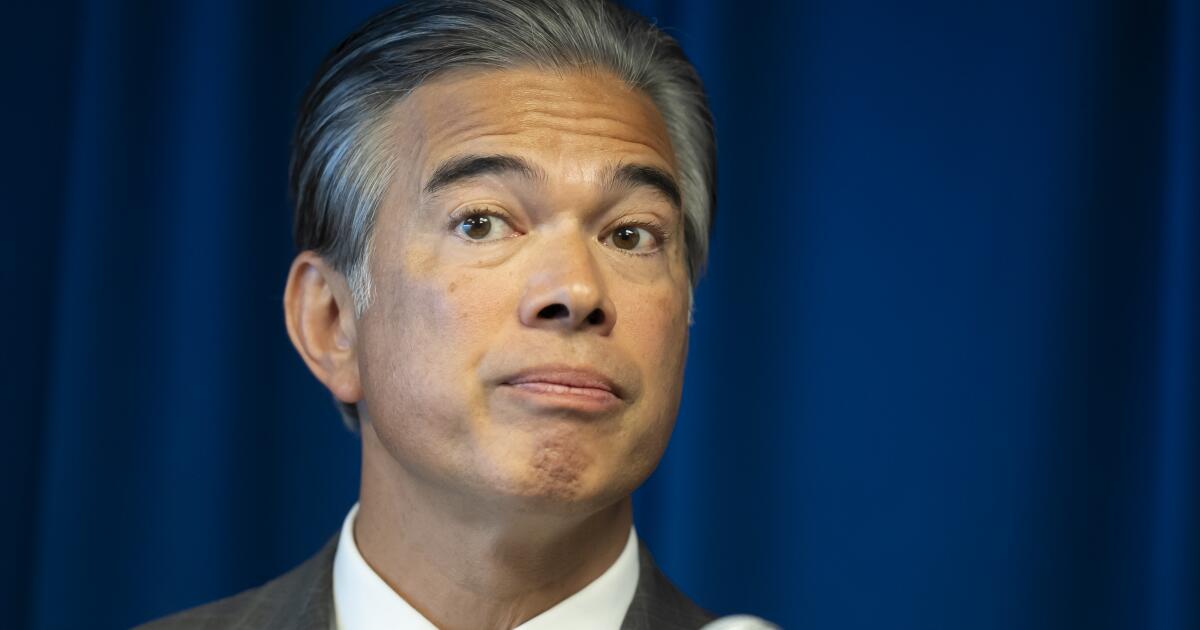
California Attorney General Bonta Condemns Supreme Court Ruling on Immigration Enforcement
Los Angeles, CA – California Attorney General Rob Bonta sharply criticized a recent U.S. Supreme Court decision that allows immigration agents broader authority to question individuals suspected of being in the country illegally. Speaking at a press conference in downtown Los Angeles on Monday, Bonta labeled the ruling a potential violation of Fourth Amendment protections against unreasonable searches and seizures.
The supreme Court’s decision effectively permits immigration agents to initiate stops and questioning based on characteristics like perceived race, place of employment, or inability to speak English. Bonta voiced strong agreement with arguments previously made by the ACLU in a lawsuit against the Trump administration, asserting that such indiscriminate tactics are unconstitutional.
“It is unconstitutional for ICE agents, federal immigration officers, to use race, the inability to speak English, location or perceived occupation to stop and detain, search, seize Californians,” Bonta stated. He expressed particular concern that the ruling could facilitate racial profiling.
Bonta also voiced his disapproval of the Supreme Court’s increasing use of its “emergency docket” – a fast-track process for urgent cases. He argued this practice lacks clarity, often resulting in rulings without detailed explanations or publicly recorded votes. “It’s disappointing,” Bonta said, “You frequently enough don’t know who has voted and how. There’s no argument. there’s no written opinion.”
The Attorney General specifically called the concurring opinion penned by Justice Brett kavanaugh “very disturbing.” Kavanaugh suggested that employment in industries like construction and farming – often filled by day laborers – could be a factor in identifying individuals for questioning by immigration agents.
Bonta countered that this justification opens the door to discriminatory practices.”It enables the use of race to perhaps discriminate,” he explained, “and it is disturbing and it is troubling.”
The Attorney General’s office is currently evaluating potential legal responses to the ruling, aiming to protect the rights of Californians.
