
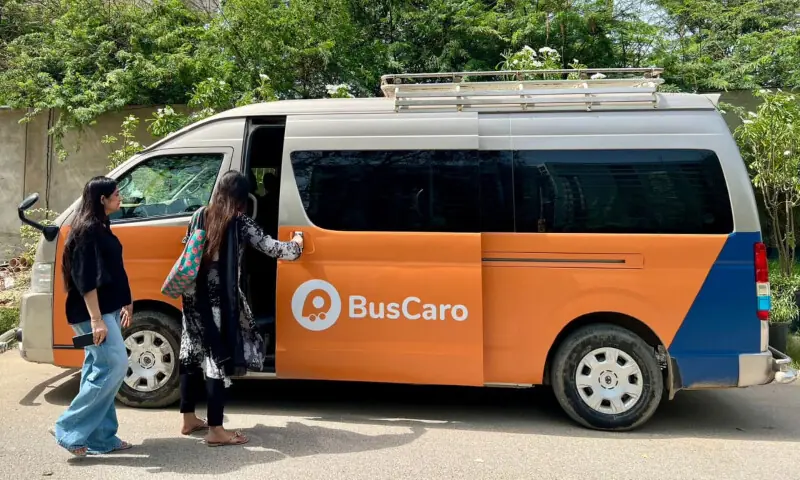
BusCaro Secures $2 Million to Expand Shared Commute Network in Pakistan
BusCaro, a Pakistani startup focused on shared commuting, has recently raised $2 million in funding as it navigates a challenging mobility sector. Teh company distinguishes itself from previous ventures like airlift and Swvl by prioritizing financial sustainability from the outset, a strategy proving crucial in the current economic climate.
Unlike its predecessors, which relied on heavily subsidized services to fuel rapid growth, BusCaro has achieved positive unit economics – meaning the cost of providing each ride is less than the revenue generated. This is maintained even with fluctuating fuel prices, as shared commutes remain a more affordable option than individual transport. crucially, BusCaro has avoided subsidizing per-seat fares.
The company’s success hinges on a dual-pronged business model, leveraging both Business-to-Business (B2B) and Business-to-Business-to-Consumer (B2B2C) partnerships. On the B2B side, BusCaro collaborates with institutions, offering commute solutions where employers either subsidize costs as an employee benefit or facilitate shared transport based on aggregated employee demand. The B2B2C approach involves partnerships with entities like housing societies and co-working spaces to consolidate commuter groups at designated pick-up locations, substantially reducing customer acquisition costs.
Currently, 60% of BusCaro’s business originates from B2B clients, with the remaining 40% stemming from B2B2C initiatives and its direct-to-consumer app. This app has unlocked a specific market: school commutes. Recognizing a gap in reliable transportation for students, BusCaro provides a platform for parents and schools to track rides in real-time, incorporating manual check-in/check-out features for minors. Founder Ms.Shahzad believes this segment holds substantial potential, not only within pakistan but also across the Gulf Cooperation Council (GCC) region, especially for working mothers.
Despite positive unit economics and growing demand – currently exceeding capacity by a factor of 5 to 6 – BusCaro is not yet profitable. The company currently experiences a monthly burn rate of approximately $15,000, resulting in a -2.8% EBITDA, primarily due to ongoing technology investments. High interest rates, currently at 36%, add significant expense to debt financing, mirroring the challenges that led to the exit of previous startups in the sector. To achieve profitability, BusCaro estimates a 28% increase in topline growth is required.
BusCaro operates a flexible fleet ranging from 80-seater buses to air-conditioned Corollas, offering an average blended fare of Rs130 per ride. Services are currently available in karachi, Lahore, Islamabad, and surrounding cities.
Safety is a key differentiator for BusCaro, which reports zero instances of harassment across nearly 19 million bookings since its launch. The company attributes this to the nature of shared rides, where 70% of passengers are women and children, alongside a driver vetting process.
Ms. Shahzad advises fellow startups facing fundraising difficulties to avoid chasing trends and instead focus on solving practical, local problems while maintaining unit profitability.
