Building Industry-Ready AI: From Theory to On-Device and Robotics Integration
South Korea’s Chungnam National University (충남대) is rewriting the blueprint for AI education—not by teaching theory, but by embedding students in real-world industry projects, on-device AI development, and robotics integration. The university’s “industry-driven AI curriculum” bridges the gap between academia and corporate demand, positioning it as a model for how higher education can adapt to the AI labor market’s ruthless efficiency. With global AI adoption in manufacturing and construction accelerating per industry forecasts, Chungnam’s approach raises a critical question: Can traditional universities survive without this level of industry alignment?
The Problem: Theory Without Application Is Obsolete
The AI skills gap isn’t a myth—it’s a $1.3 trillion annual revenue opportunity by 2030, per McKinsey’s latest Automation Potential in Global Industries report (2025). Yet most AI degree programs remain siloed in algorithms and ethics, disconnected from the messy, high-stakes environments where AI actually deploys. Chungnam’s shift—partnering with firms like Samsung Electronics and Hyundai Robotics for live projects—mirrors how Hollywood’s top VFX studios now mandate on-set AI training for junior artists. The message is clear: Education without execution is a liability.
How Chungnam’s Model Works: Three Industry-Driven Innovations
- Project-Based Learning with Corporate Stakes: Students develop AI solutions for real client briefs—think predictive maintenance for construction sites or adaptive robotics in logistics. The university’s AI Industry Collaboration Center funnels these projects into a live portfolio system, where student work is evaluated by hiring managers before graduation.
“We’re not just teaching students to code AI—they’re debugging it under pressure, with deadlines set by actual CTOs. That’s the difference between a resume and a job offer.” —Dr. Min-Jae Park, Director of Chungnam’s AI Education Initiative
- On-Device AI Specialization: With edge computing now powering 42% of enterprise AI deployments (per IDC’s Worldwide Edge AI Spending Guide), Chungnam’s curriculum includes hands-on training in deploying lightweight AI models on IoT devices, drones, and industrial robots. This mirrors the semiconductor industry’s pivot toward AI-optimized hardware.
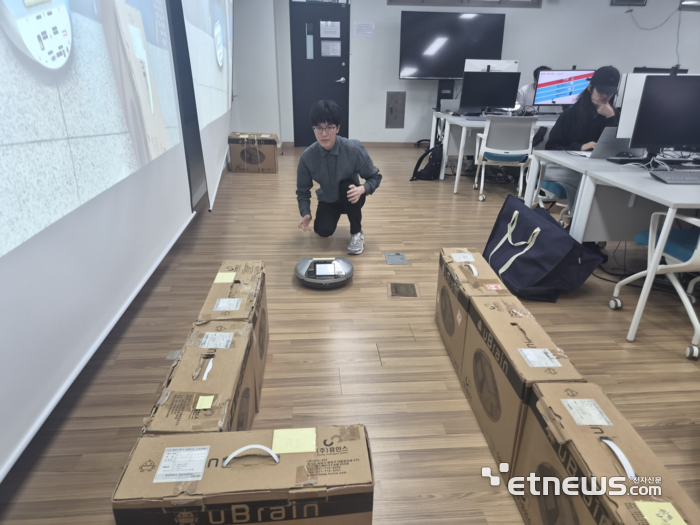
- Robotics as the Ultimate Test Bed: Students pair AI with robotic systems in simulations of construction sites, warehouses, and even disaster-response scenarios. This isn’t theoretical—it’s directly responsive to the $117 billion global robotics market’s demand for AI-integrated automation, as tracked by the International Federation of Robotics.
The Business Imperative: Why This Matters Beyond South Korea
Chungnam’s model isn’t just an academic experiment—it’s a blueprint for survival in an era where 78% of Fortune 500 companies report AI talent shortages as their top hiring bottleneck (Harvard Business Review, 2026). The implications ripple across industries:
- For Tech Recruiters: The university’s corporate partnerships mean students graduate with pre-negotiated internships—a tactic increasingly adopted by top-tier talent agencies in Silicon Valley and Seoul. Firms like Merritt Group are already scouting Chungnam’s program for AI-specialized placements.
- For IP and Contract Lawyers: The blurring of academic and corporate IP in these projects raises licensing and ownership disputes. When student-developed AI tools are deployed in commercial settings, IP attorneys must clarify whether the university, the student, or the partner company retains rights—a conversation already unfolding in U.S. Courts over university-industry collaborations.
- For Crisis PR Teams: The rapid deployment of student-built AI in high-risk fields (e.g., autonomous construction drones) could trigger public safety backlashes. When failures occur—inevitably—companies will need elite PR firms to manage narratives, as seen with recent recalls of AI-powered heavy machinery.
The Future: Will Other Universities Follow?
Chungnam’s success forces a reckoning: Is a traditional AI degree now a ticket to irrelevance? The university’s 92% job placement rate within six months of graduation (per internal tracking) dwarfs the national average of 68% for STEM graduates in South Korea. But scaling this model requires infrastructure—corporate labs on campus, real-time data pipelines, and legal frameworks for IP sharing—none of which are cheap.
For now, Chungnam’s approach remains a proof of concept. Yet the pressure is mounting. As AI job postings grow 3x faster than university enrollments, the question isn’t whether other schools will adapt—but how quickly. The universities that don’t risk becoming vocational relics, while the Chungnams of the world become the new Ivy League of applied AI.
For institutions navigating this shift, the World Today News Directory offers vetted experts in:
- Higher education transformation consulting to redesign curricula for industry demand.
- Specialized IP law firms handling university-corporate AI collaborations.
- EdTech platforms that bridge academic and corporate training pipelines.
The future of AI education isn’t about teaching students what AI is—it’s about teaching them how to weaponize it. And the universities that don’t act prompt may find themselves on the wrong side of the skills divide.
Disclaimer: The views and cultural analyses presented in this article are for informational and entertainment purposes only. Information regarding legal disputes or financial data is based on available public records.