
Brightest Fast Radio Burst Ever Detected traced to Distant Galaxy
Astronomers have, for the first time, pinpointed the origin of an exceptionally powerful fast radio burst (FRB), a fleeting yet energetic cosmic event. This breakthrough, achieved through observations with the Canadian Hydrogen Intensity Mapping Experiment (CHIME) telescope, could reshape our understanding of these enigmatic signals from deep space.The finding offers a crucial step toward unraveling the mysteries surrounding FRBs and their potential sources.
What are Fast Radio Bursts?
Fast radio bursts are intense pulses of radio waves lasting only milliseconds. First detected in 2007, these events release an astonishing amount of energy-comparable to the Sun’s total energy output over several years-in a fraction of a second. Their transient nature and unknown origins have made them a significant puzzle for astrophysicists. explosive events in the universe are often short-lived, making detection and source identification challenging.
Did You Know? The energy released by a single fast radio burst is equivalent to the Sun’s entire energy output over approximately 365 days.
The Discovery of FRB 20250316A
In March 2025, the CHIME telescope detected an exceptionally bright FRB, designated FRB 20250316A, quickly nicknamed ”RBFLOAT” – an abbreviation for “brightest radio flash of all time.” The signal’s intensity promptly drew the attention of researchers, prompting a focused effort to trace its origin. The sensitivity of CHIME, enhanced by new telescope plug-ins across north America, allowed for sustained observation of the FRB until its host galaxy could be identified.
Researchers successfully localized the source of RBFLOAT to a spiral arm within the NGC 4141 galaxy,situated approximately 130 million light-years from Earth.The pinpointed region spans just 45 light-years in width, a remarkably precise localization for such a distant event.
Unveiling the Source: A neutron Star Candidate
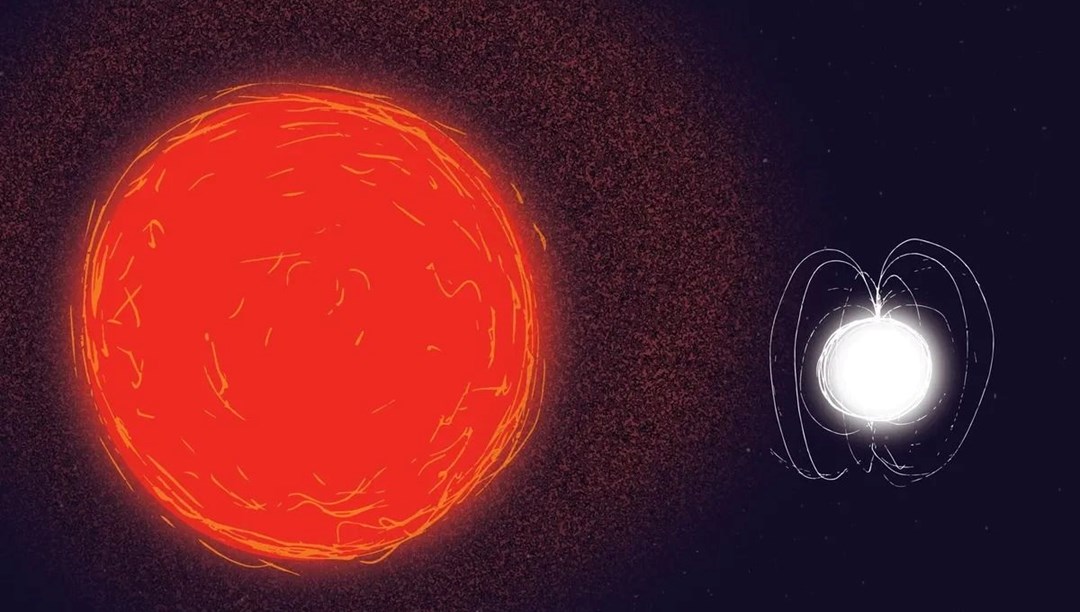
Further investigation using the James Webb Space Telescope revealed a faint infrared source, designated NIR-1, within the identified region. Scientists hypothesize that NIR-1 is highly likely a red giant or middle-aged star. Though, they believe this star alone cannot account for the immense energy released by FRB 20250316A.
The prevailing theory suggests the presence of a nearby neutron star, a highly dense remnant of a collapsed star with an extraordinarily powerful magnetic field-known as a magnetar. This neutron star is suspected of triggering the powerful radio explosion. magnetars are known to produce intense bursts of energy due to their extreme magnetic fields, as detailed in studies of magnetar flares [[1]].
Pro Tip: Understanding the properties of neutron stars and magnetars is crucial for interpreting the origins of fast radio bursts.
Key Data Summary
| event | Date | Location | Distance | Energy Output |
|---|---|---|---|---|
| FRB 20250316A (RBFLOAT) Detection | March 2025 | NGC 4141 Galaxy | 130 million light-years | Equivalent to the Sun’s annual energy output |
| First FRB Detection | 2007 | Unknown | Varies | Significant, but less intense than RBFLOAT |
Implications for FRB Research
“This result is a turning point,” stated a researcher involved in the study. “Now we can see exactly where these mysterious flashes come from-from dying stars,exotic objects like a magnetar,or something we haven’t yet conceived.” This precise localization opens new avenues for studying the environments surrounding FRBs and testing theoretical models. What role do galactic magnetic fields play in shaping these bursts? Could FRBs be used as probes of the intergalactic medium?
The ability to observe FRBs until their host galaxies are visible represents a significant advancement in the field. This allows for a more comprehensive understanding of the conditions that give rise to these powerful cosmic events.
The Ongoing Mystery of Fast Radio Bursts
While the identification of a potential neutron star source is a major step forward, the exact mechanisms driving FRBs remain a subject of intense research. Scientists continue to explore option explanations, including the possibility of more exotic phenomena such as cosmic strings or even signatures of extraterrestrial technology. The study of FRBs is a rapidly evolving field,with new discoveries constantly challenging existing theories.
Frequently asked Questions about Fast Radio Bursts
- What causes fast radio bursts? While not definitively known, the leading theory points to magnetars-neutron stars with extremely powerful magnetic fields-as the source.
- How far away are fast radio bursts? FRBs originate from vast distances,ranging from millions to billions of light-years away.
- Are fast radio bursts dangerous? Despite their immense energy, FRBs are not considered a threat to Earth due to their distance and highly focused nature.
- What is the meaning of FRB 20250316A? This burst is the brightest ever detected, allowing astronomers to pinpoint its origin with unprecedented accuracy.
- How are astronomers studying fast radio bursts? Astronomers use radio telescopes like CHIME and optical telescopes like James Webb to detect and study FRBs and their host galaxies.
This groundbreaking discovery marks a pivotal moment in the quest to understand these captivating cosmic signals. As technology advances and more FRBs are detected, we can anticipate further revelations about the universe’s most energetic and mysterious phenomena.
we invite you to share this article with your network and join the conversation in the comments below.Don’t forget to subscribe to World Today News for the latest updates on space exploration and scientific breakthroughs!
