
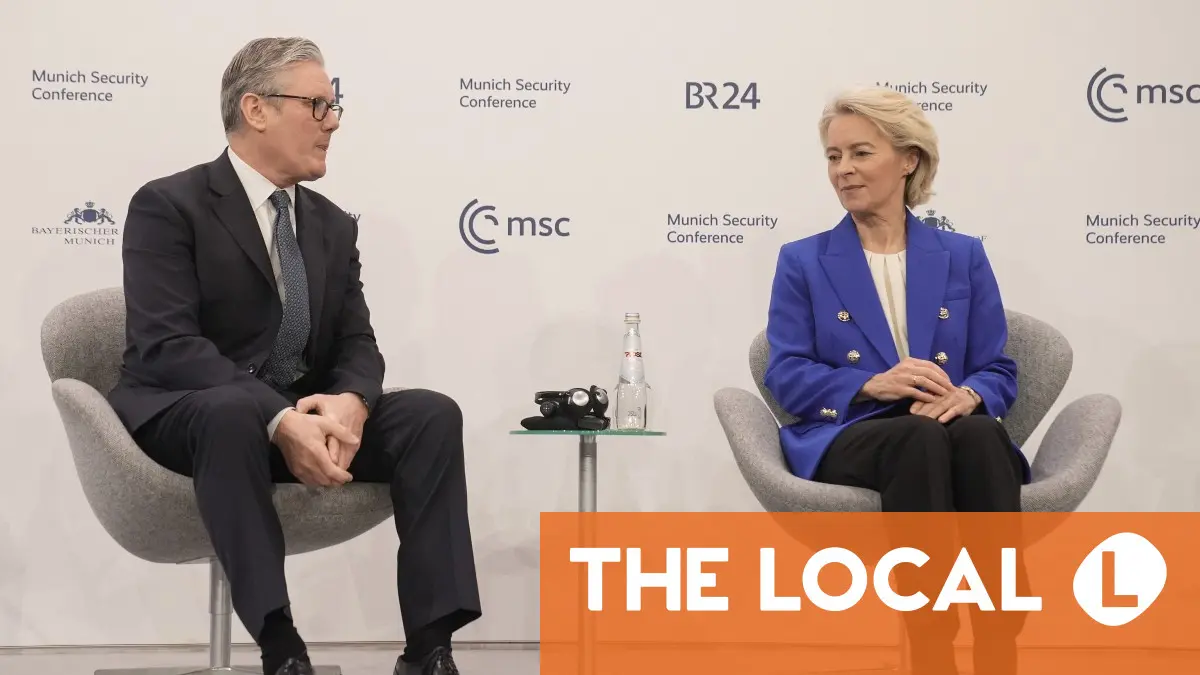
MUNICH – In a striking display of shifting geopolitical priorities, the United Kingdom and the European Union signaled a renewed commitment to security and economic cooperation at the Munich Security Conference on Saturday, ten years after the Brexit referendum. European Commission President Ursula von der Leyen stated that the futures of Europe and the UK remain “as bound as ever,” urging closer collaboration on security, the economy and the defense of democratic principles.
Von der Leyen’s remarks, delivered at the conference, emphasized the need for increased European independence in key areas, including defense, energy, and technology. “An independent Europe is a strong Europe. And a strong Europe makes for a stronger transatlantic alliance,” she said, referencing comments made by US Assistant Secretary of Defence Jerry Friedheim in the 1970s about national responsibility for security. She argued that prioritizing European security does not diminish the transatlantic bond, but rather strengthens it.
The call for closer ties was echoed by UK Labour Party leader Keir Starmer, who stressed the importance of building “hard power” as “the currency of the age.” Starmer advocated for a shared industrial base across Europe to “turbocharge our defence production” and enhance collective strength. He asserted the necessity of deterring aggression and maintaining a readiness to engage in conflict if required.
The renewed focus on security cooperation comes amid ongoing concerns about Russia’s aggression in Ukraine, which has entered its fourth year since the full-scale invasion. Starmer has been a leading voice in coordinating European support for Ukraine, a commitment he reiterated at the conference. NATO Secretary General Mark Rutte, speaking on Friday, underscored the importance of a strong Europe within a strong NATO alliance, stating that this would bolster the transatlantic relationship. French President Emmanuel Macron similarly called for a “strong Europe” capable of building its own security architecture.
Von der Leyen’s speech highlighted a broader plan for European independence, encompassing defense, energy, the economy, trade, raw materials, and digital technology. She acknowledged challenges to the “European way of life,” including attempts to undermine the Union from within and increased competition from external powers. The Commission President framed this push for independence as a necessary response to a fractured global landscape.
Starmer’s proposals for a shared European industrial base signal a potential shift in the UK’s approach to defense procurement and collaboration following Brexit. The Labour leader, who came to office in 2024, has actively sought to reset relations with the EU since assuming leadership. The details of how such a shared industrial base would be structured and funded remain unclear.
No immediate follow-up meetings or specific agreements were announced following the conference, leaving the practical implementation of these renewed commitments to be determined in the coming weeks and months.
