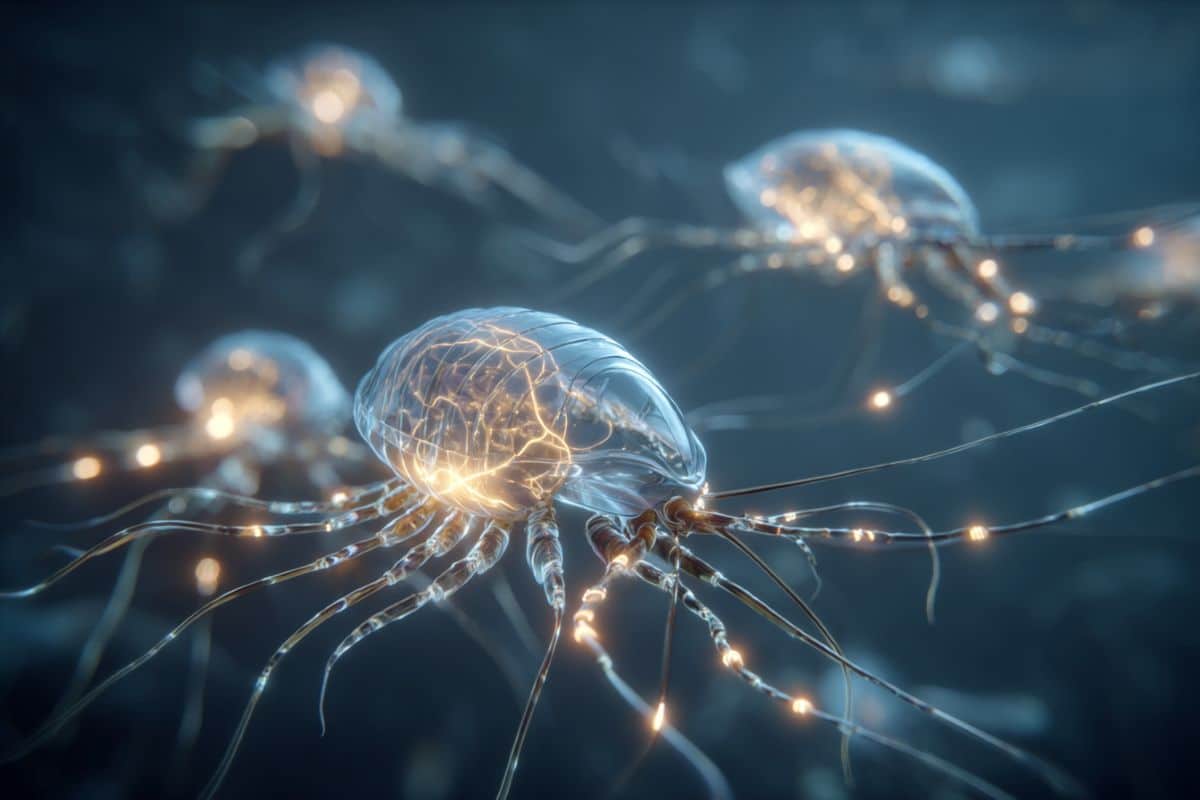
Brain-First Hypothesis: Rethinking the Cambrian Explosion
The “Cambrian Explosion” has long been the biological equivalent of a legacy system crash—a sudden, inexplicable spike in biodiversity roughly 500 million years ago that defies traditional linear scaling. For decades, the consensus focused on the hardware: shells, limbs, and skeletal structures. But new research suggests we were looking at the chassis when we should have been auditing the kernel.
The Tech TL;DR:
- The Shift: The “Brain-First Hypothesis” proposes that neural regionalization and complexity preceded—and enabled—the diversification of animal body plans.
- The Mechanism: Ecological pressure in competitive marine environments drove sensory processing needs, creating a genetic “toolkit” that was later co-opted for anatomical innovation.
- The Impact: This reframes the Cambrian period not as a sudden burst, but as a multi-stage architectural rollout from 550 to 520 million years ago.
In the world of systems architecture, we call this “decoupling.” You don’t build a complex UI before you have a functioning API to feed it. The traditional view of the Cambrian Explosion assumed the “UI” (the physical body plans) appeared first, and the “backend” (the nervous system) scaled to support it. Professor Ariel Chipman of the Hebrew University of Jerusalem is flipping the script. The Brain-First Hypothesis suggests the expansion and regionalization of the brain were the primary drivers, providing the necessary computational overhead to manage more complex physical forms.
From a deployment perspective, this is a classic case of iterative optimization. The transition occurred between the Late Ediacaran and the Early Cambrian, roughly 550-520 million years ago. According to Professor Chipman, this era represents a transition from a low-diversity biosphere of mostly sessile suspension or bottom feeders to a dynamic, tiered ecosystem. The “problem” was environmental latency: organisms needed to sense, process, and respond to predators and prey in real-time. Those that upgraded their neural “processing power” first gained the competitive edge, eventually using those same genetic instructions to build limbs and sensory organs.
The Architectural Pivot: Brain-First vs. Body-First
To understand the divergence, we have to look at the “tech stack” of early animal life. The Body-First model assumes environmental triggers (like oxygen spikes) allowed for larger bodies, which then required better brains. The Brain-First model argues that neural complexity was the prerequisite. This is akin to deploying a high-performance NPU (Neural Processing Unit) before optimizing the rest of the SoC (System on a Chip).
| Feature | Body-First Model (Legacy) | Brain-First Hypothesis (Current) |
|---|---|---|
| Primary Trigger | Environmental/Anatomical | Neural/Computational |
| Sequence | Shells/Limbs → Brain | Brain → Shells/Limbs |
| Development | Sudden “Explosion” | Gradual, Multi-stage Cascade |
| Genetic Logic | Adaptive Response | Genetic Co-option (Toolkits) |
This shift toward neural-driven evolution is particularly evident in the lineages that dominated the era: arthropods, mollusks, annelids, and chordates. These groups didn’t just “get lucky” with their anatomy; they had the underlying neural framework to support complex locomotion and sensory integration. For modern enterprises trying to scale similar complexities in AI, this mirrors the shift toward enterprise software architects who prioritize data orchestration layers before building out end-user features.
The Genetic Toolkit: Implementing Co-option
The core of the Brain-First Hypothesis is “genetic co-option.” In software terms, this is essentially creating a highly versatile library or a set of base classes that can be inherited and repurposed for different modules. The genetic instructions used to regionalize the brain were “co-opted” to pattern other systems, such as segmented body structures or advanced sensory organs.
If we were to model this co-option process in a simplified simulation, the logic would look something like this:

class GeneticToolkit: def __init__(self): self.neural_patterning_module = "REGIONALIZE_SENSORY_INPUT" def deploy_feature(self, target_organ): # Co-opting the brain's patterning logic for other anatomy if target_organ == "brain": return f"Executing {self.neural_patterning_module} for cephalization." elif target_organ == "limb": return f"Co-opting {self.neural_patterning_module} for segmented appendage growth." else: return "Generic tissue growth." # Simulation of the Brain-First rollout evolution_stack = GeneticToolkit() print(evolution_stack.deploy_feature("brain")) # Step 1: Neural complexity print(evolution_stack.deploy_feature("limb")) # Step 2: Anatomical innovation This modular approach reduced the “development time” for new species. Instead of evolving an entirely new genetic sequence for a limb, nature simply called an existing function from the brain’s development library. This is exactly why many firms are now pivoting to AI integration consultants to build modular, reusable LLM frameworks rather than bespoke, monolithic applications that are impossible to maintain.
Ecological Feedback Loops and System Latency
The driver for this neural upgrade was the “arms race” of the marine environment. As predator-prey interactions increased, the “latency” of a simple nervous system became a fatal flaw. Organisms that could process sensory information faster—and more accurately—survived. This created a feedback loop: more complex environments demanded better brains, and better brains allowed organisms to create even more complex ecological niches.
“This period represents a sequence of increases in animal complexity and diversity, during which the biosphere transitioned from including a low diversity of mostly sessile suspension or bottom feeders to a world with numerous animal body plans occupying a dynamic tiered ecosystem with diverse feeding modes,” says Professor Ariel Chipman.
This biological “arms race” is a mirror image of the current cybersecurity landscape. As threat actors deploy more sophisticated automated exploits, the “response latency” of manual security patches is no longer sufficient. This is why corporations are aggressively deploying cybersecurity auditors and penetration testers to implement autonomous, AI-driven detection systems that can “sense and respond” at machine speed, mirroring the very neural regionalization that saved early Cambrian chordates.
The Brain-First Hypothesis suggests that the “explosion” was actually a series of successful deployments. The “toolkit” was established, the “kernel” was optimized, and the “hardware” followed. It reminds us that in any complex system—whether it’s a 500-million-year-old organism or a modern Kubernetes cluster—the intelligence layer must precede the scaling layer.
Disclaimer: The technical analyses and security protocols detailed in this article are for informational purposes only. Always consult with certified IT and cybersecurity professionals before altering enterprise networks or handling sensitive data.