
The Health Gap: Income Disparity and Lifespan in Brabant
Den Bosch, Netherlands – A new exhibition and recent data underscore a troubling reality: socioeconomic status substantially impacts health and longevity. Residents of the brabant region with higher incomes live, on average, eight years longer than those with fewer financial resources, according to figures from the Social and Economic Council (SER).
A Personal Story of Health and Hardship
caroline Budike, a 57-year-old Surinamese native living in Den Bosch, embodies this disparity. She recounts a time when healthy living felt natural, growing up on a plantation where her family cultivated their own food. “We lived from our own vegetables, caught fish and made oil from coconuts,” budike explained. “We were not rich,but we took good care of ourselves.”
Budike’s experience shifted dramatically after moving to the Netherlands. She found accessing affordable, healthy food to be a significant challenge, notably while raising four children as a single parent. “Vegetables and meat from the supermarket are often sprayed or edited,” she noted. “And fresh food is too expensive for people with little money.”
Did You Know? Access to nutritious food is a fundamental determinant of health, impacting everything from chronic disease risk to cognitive function [1].
The issue extends beyond individual choices. Doctors at the jeroen Bosch Hospital observe that financial strain, stress, and even societal biases contribute to patient health concerns. “some patients can no longer pay their medication,” stated Miriam de Werd,project leader of the health gap initiative. “Others suffer from overweight due to poor food, or bowel complaints due to stress.”
The SER data reveals an even more striking statistic: individuals in the higher income bracket in Brabant enjoy 24 years more of good health compared to their less affluent neighbors. This difference is attributed to factors like living in greener neighborhoods,having less physically demanding jobs,and receiving education on healthy cooking practices. De Werd points out that some children in the region have never even encountered vegetables like broccoli or zucchini.
The Exhibition: Shining a Light on Inequality
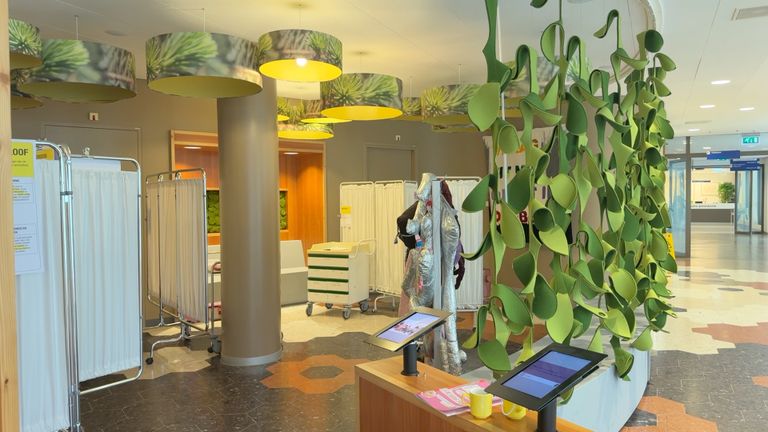
To raise awareness, the Jeroen Bosch Hospital and the municipality of Den Bosch collaborated on “The health Gap” exhibition. The exhibit visually demonstrates the link between socioeconomic status and health outcomes, and explores potential solutions.
Budike is a featured voice in the exhibition, sharing her story and advocating for accessible, affordable healthy eating. She regularly prepares fresh meals for residents in her De Hambaken district who struggle to afford nutritious food. ”I wont to show that healthy eating does not always have to be expensive or complicated,” she said.
Pro Tip: Community gardens and food banks can be valuable resources for individuals and families facing food insecurity.
Budike reflects on her upbringing in Suriname, where a simpler lifestyle fostered better health. “In Suriname, hardly anyone needs to go to the doctor because of their way of life,” she recalls. This highlights the importance of preventative care and lifestyle factors in maintaining well-being.
Addressing the Root Causes
De Werd emphasizes the need for a holistic approach to healthcare, urging doctors to consider the underlying social and economic factors impacting their patients. ”We don’t solve the health gap in one go,” she acknowledged, “but we can start by paying attention to someone’s whole situation in the consultation room.”
| Indicator | Difference (Brabant) |
|---|---|
| Average Lifespan (Rich vs. Poor) | 8 years |
| Years of Good Health (Rich vs.Poor) | 24 years |
What systemic changes are needed to bridge this health gap and ensure equitable access to well-being for all residents of Brabant?
How can healthcare providers better integrate social determinants of health into their practice?
Evergreen Context: The global Health equity Challenge
The health disparities observed in Brabant are not unique. Globally, socioeconomic status is a powerful predictor of health outcomes. factors like access to clean water, sanitation, education, and healthcare contribute to these inequalities. addressing these disparities requires comprehensive policies that promote social justice and economic chance.The world Health Organization (WHO) emphasizes the importance of tackling the social determinants of health to achieve global health coverage [2].
Frequently Asked Questions
- What is the health gap? The health gap refers to the differences in health outcomes between diffrent socioeconomic groups.
- What are the social determinants of health? These are the non-medical factors that influence health, such as income, education, and access to healthy food.
- Why is income linked to health? Higher income often provides access to better healthcare, nutrition, and living conditions.
- What can be done to reduce the health gap? Addressing the root causes of poverty and inequality, improving access to healthcare, and promoting healthy lifestyles are crucial steps.
- Is this issue specific to Brabant? No, health disparities based on socioeconomic status are a global concern.
This story serves as a crucial reminder that health is not solely a matter of individual duty, but a reflection of the broader societal conditions in which we live.
