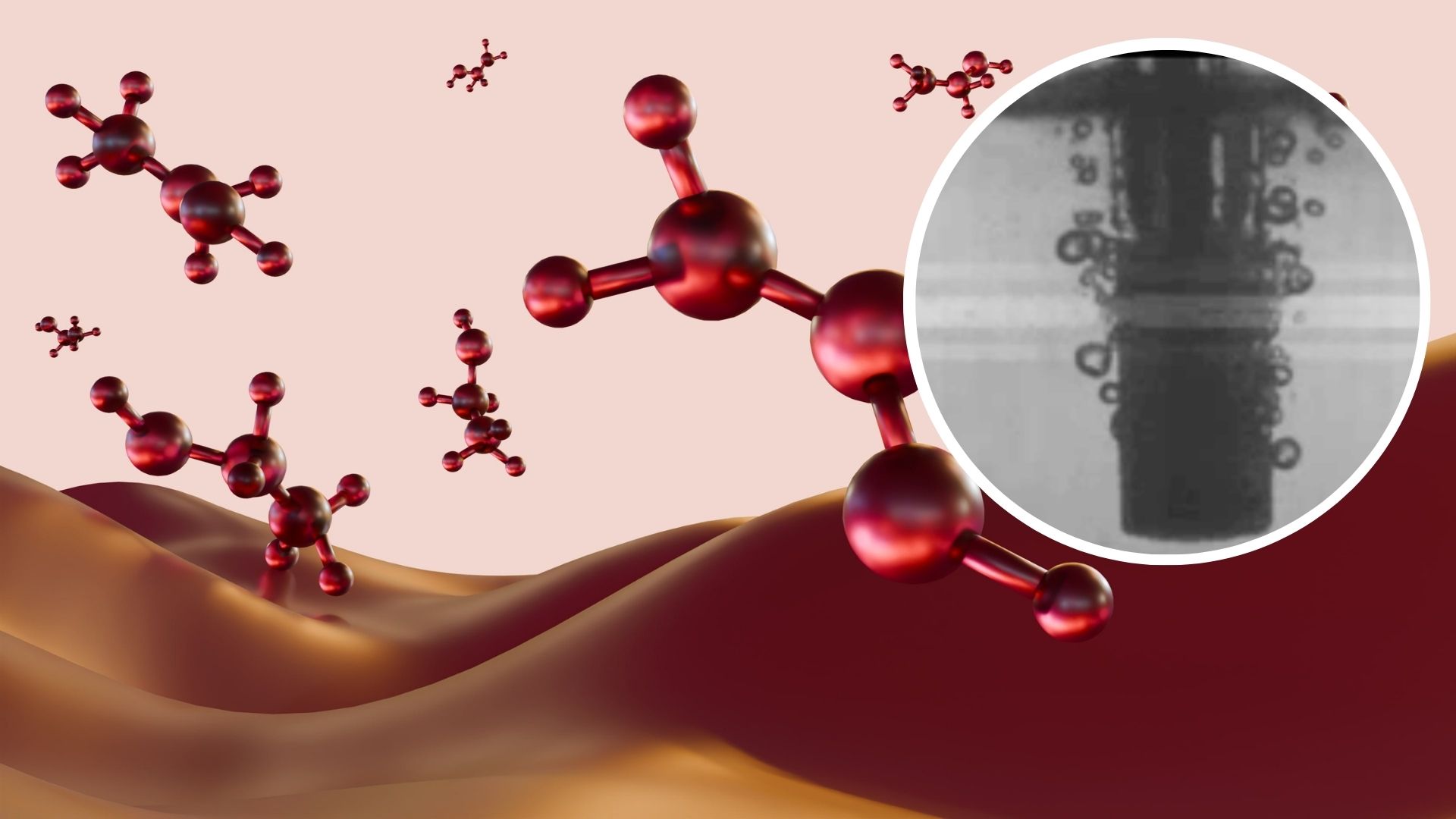
Bottled Lightning: Turning Methane Into Cleaner Liquid Fuel
Chemistry just hit a critical optimization milestone. US researchers have effectively bypassed the thermodynamic brutality of traditional methane-to-methanol conversion, swapping high-pressure autoclaves for a plasma-driven approach that mimics lightning. For the energy sector, this isn’t just a lab win; it’s a fundamental shift in the “compute” of chemical synthesis.
The Tech TL;DR:
- The Breakthrough: Non-thermal plasma (NTP) converts methane (CH4) to methanol (CH3OH) at ambient pressures, eliminating the demand for energy-intensive high-heat environments.
- The Efficiency Gain: Drastic reduction in CAPEX for fuel synthesis by removing the requirement for heavy-duty pressure vessels and extreme thermal management.
- The Enterprise Pivot: Shifts natural gas from a “burn-or-pipe” commodity to a scalable, liquid-state energy carrier compatible with existing logistics.
The historical bottleneck in methane conversion has always been the C-H bond. Breaking that bond typically requires temperatures exceeding 700°C or pressures that make a submarine look like a soda can. In the industrial world, this means massive energy overhead and a high risk of “over-shooting” the reaction—turning your valuable methanol into useless CO2 and water. It is the chemical equivalent of a memory leak that crashes the entire system.
By utilizing “bottled lightning”—specifically non-thermal plasma—researchers from Northwestern University and their collaborators have decoupled the electron temperature from the gas temperature. This allows the system to excite electrons to high energy levels to trigger the reaction without heating the bulk gas to dangerous levels. This represents an architectural shift from “brute force” thermodynamics to “precision” kinetic targeting.
The Hardware Spec Breakdown: Plasma vs. Thermal Catalysis
To understand why this matters to the C-suite and the engineers, we have to look at the operational overhead. Traditional synthesis is a resource hog. The new plasma-driven approach operates more like a distributed system, allowing for modular deployment rather than monolithic refinery builds.
| Metric | Traditional Thermal Synthesis | Non-Thermal Plasma (NTP) |
|---|---|---|
| Operating Temp | 700°C – 1000°C | Ambient / Low Heat |
| Pressure Requirements | High (MPa range) | Atmospheric / Low Pressure |
| Energy Profile | High Thermal Inertia | Instant On/Off (Electrical) |
| Selectivity | Low (High CO2 byproduct) | High (Tunable via Pulse) |
| Infrastructure | Heavy Industrial Plants | Modular/Containerized Units |
From a systems perspective, this is a transition from a legacy mainframe to a microservices architecture. Instead of one giant, high-risk reactor, we can deploy smaller, controllable plasma cells. But, the “latency” here is the energy efficiency of the plasma generation itself. Whereas the temperature is low, the electrical input must be optimized to avoid parasitic losses. This is where the integration of AI-driven control loops becomes mandatory to maintain the “sweet spot” of methanol selectivity.

As these modular synthesis units move toward production, the attack surface shifts. We aren’t just talking about chemical leaks; we’re talking about the industrial control systems (ICS) managing the plasma pulses. A jitter in the pulse timing could result in a total loss of selectivity. Enterprises integrating these systems will need to ensure their ICS and SCADA security auditors are vetting the firmware for vulnerabilities that could lead to physical equipment failure.
“The transition to plasma-catalysis isn’t just about chemistry; it’s about the electrification of the feedstock process. When you move from heat to electrons, you move from a slow-moving thermal mass to a system that can be throttled in milliseconds.”
— Dr. Aris Thorne, Lead Systems Engineer at NexGen Energy Labs
The Implementation Mandate: Simulating Reaction Kinetics
For the developers and data scientists working on the digital twins of these reactors, the focus is on the pulse-width modulation (PWM) of the plasma source. To optimize the yield of methanol over CO2, the control loop must be tighter than traditional PID controllers. Below is a conceptual Python snippet illustrating how a developer might implement a basic monitoring loop to trigger a “safety shutdown” if the selectivity ratio drops below a critical threshold, simulating a real-time telemetry feed from the plasma reactor.

import time import random # Thresholds for Methanol Selectivity (Simplified) CRITICAL_SELECTIVITY_THRESHOLD = 0.65 SENSORS_POLLING_RATE = 0.1 # seconds def get_reactor_telemetry(): # Simulating real-time sensor data from the plasma cell return { "methanol_yield": random.uniform(0.60, 0.80), "co2_byproduct": random.uniform(0.20, 0.40), "plasma_voltage": 15000, # Volts "temp_c": 45.0 } def monitor_plasma_stability(): print("Initializing Plasma Monitor... [OK]") while True: data = get_reactor_telemetry() selectivity = data["methanol_yield"] / (data["methanol_yield"] + data["co2_byproduct"]) if selectivity < CRITICAL_SELECTIVITY_THRESHOLD: print(f"ALERT: Selectivity Drop Detected ({selectivity:.2f}). Triggering Emergency Vent.") break print(f"Status: Stable | Selectivity: {selectivity:.2f} | Temp: {data['temp_c']}C") time.sleep(SENSORS_POLLING_RATE) if __name__ == "__main__": monitor_plasma_stability() This logic is the foundation of the "edge" control required for these plants. Because the reaction happens at the speed of electrons, any lag in the monitoring stack can lead to suboptimal yields. This is why the industry is pivoting toward edge computing architectures to handle the telemetry locally rather than routing it through a distant cloud instance.
The "Information Gap": Funding and Scalability
While the Northwestern University research is groundbreaking, the path to commercialization is not a straight line. This project is largely driven by academic grants and federal funding aimed at decarbonization. However, the "valley of death" between a lab-scale plasma reactor and a gigawatt-scale facility is wide. The primary source documentation, often found in IEEE and Nature publications, suggests that the current energy cost per mole of methanol produced is still higher than the traditional steam-methane reforming (SMR) process.
The "win" here isn't immediate cost-parity; it's the flexibility of deployment. We can now position a methanol synthesis unit at the wellhead of a stranded gas field, converting the gas into a transportable liquid on-site. This eliminates the need for multi-billion dollar pipeline infrastructure. For the firms managing this transition, the bottleneck is no longer the chemistry—it's the regulatory and cybersecurity framework. Deploying remote, unmanned synthesis units requires a robust zero-trust architecture. Companies are already sourcing Managed Security Service Providers (MSSPs) to secure these remote endpoints against state-sponsored kinetic attacks.
Looking at the broader tech stack, this process mirrors the evolution of the NPU (Neural Processing Unit) in silicon. Just as we moved from general-purpose CPUs to specialized accelerators for AI, we are moving from general-purpose thermal chemistry to "accelerated" plasma chemistry. The result is a more efficient, targeted, and modular output.
"bottled lightning" is a metaphor for the broader trend of electrification in heavy industry. As we replace combustion with plasma and electricity, the grid becomes the primary feedstock. The firms that can integrate these chemical reactors with renewable energy grids—while maintaining SOC 2 compliance and rigorous endpoint security—will dominate the next decade of energy logistics. If you're building the infrastructure for this, don't ignore the security layer; a hacked plasma controller is a very expensive bomb.
Disclaimer: The technical analyses and security protocols detailed in this article are for informational purposes only. Always consult with certified IT and cybersecurity professionals before altering enterprise networks or handling sensitive data.