
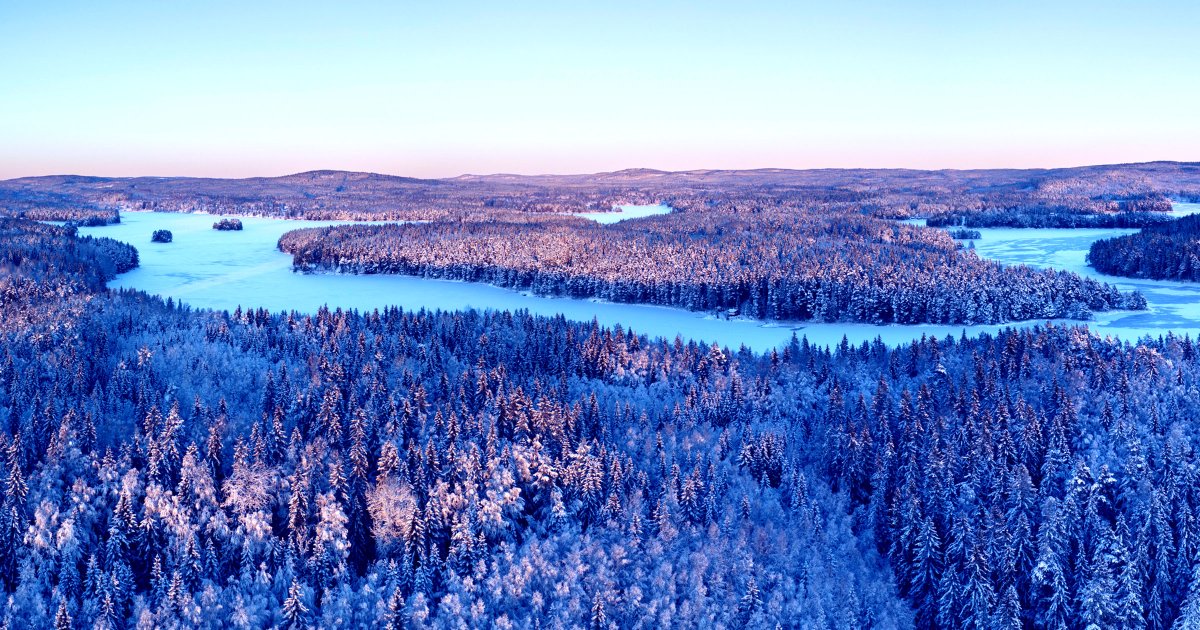
The world’s boreal forests – a vast biome stretching across northern latitudes – are demonstrably shifting northward as global temperatures rise, according to a new study published in the journal Biogeosciences. Researchers confirmed the trend using nearly a quarter-million satellite images collected between 1985 and 2020 through NASA’s Landsat program.
The analysis revealed that boreal forests expanded by 0.844 million km² – a 12 percent increase – and migrated northward by an average of 0.29 degrees of latitude over the four-decade period. The gains in forest cover were particularly concentrated between 64 and 68 degrees North latitude. The study, led by Min Feng and colleagues, leveraged the longest and highest-resolution satellite record of calibrated tree cover to date, applying machine learning to process imagery from Landsat 4, 5, 7, and 8.
Boreal forests, the largest terrestrial biome on Earth, are warming at a rate faster than any other forest type. This warming is driving the observed shift, as trees attempt to establish themselves in more suitable, cooler climates further north. The research confirms previous observations and provides a detailed, quantified assessment of the changes underway.
While the expansion of boreal forests may initially appear positive, scientists caution that the long-term implications are complex and uncertain. The young forests resulting from this northward shift have the potential to act as a significant carbon sink, currently holding an estimated 1.1 to 5.9 petagrams of carbon, with the capacity to sequester an additional 2.3 to 3.8 petagrams if allowed to mature. However, the same climate change driving the shift also increases the risk of widespread tree cover loss due to drought, wildfires, and outbreaks of destructive species.
“These findings confirm the northward advance of the boreal forest and implicate the future importance of the region’s greening to the global carbon budget,” the researchers wrote in their paper. They also noted that the changes are “spatially extensive” and “demographically consequential,” reflecting a growing proportion of young forests with distinct characteristics influencing carbon sequestration.
The study highlights the need for continued monitoring and research to fully understand the dynamics of boreal forest change. Researchers emphasize the importance of integrating satellite data with field-based measurements to assess canopy structure and the environmental factors driving forest growth, mortality, and species turnover. Effective communication between scientists, government agencies, and commercial entities will also be crucial for translating this information into effective climate change mitigation and adaptation strategies.
Recent reports indicate that the boreal forest has experienced the fastest climatological warming of any forest biome, with annual surface temperatures increasing by approximately 1.4 degrees Celsius (2.52 degrees Fahrenheit) over the last century. The ecosystem’s vulnerability is further compounded by increasingly extreme climate events, including larger and more frequent wildfires in western Canada and the spread of destructive insect infestations.
