
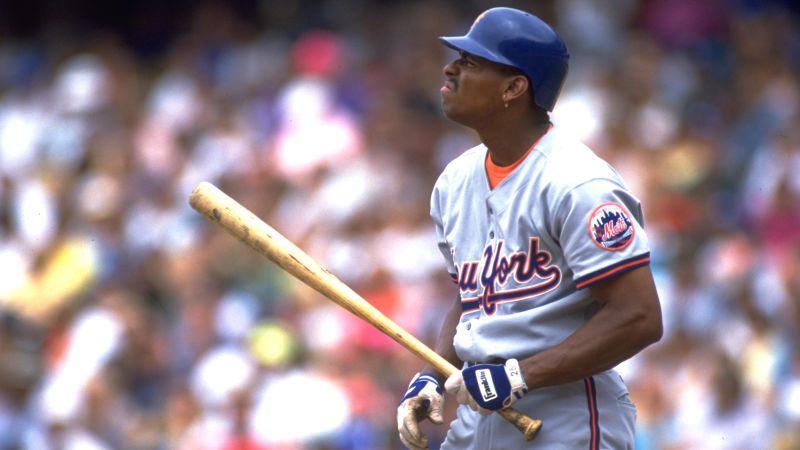
Bobby Bonilla Day: How a Bad Mets Deal Keeps Paying millions
Table of Contents
New York Mets pay Bobby Bonilla nearly $1.2 million.This 'Bobby Bonilla day' tradition stems from a deferred payment deal linked to Bernie Madoff's Ponzi scheme."/>
Every July 1st, New York mets fans are reminded of a deal gone wrong: “Bobby Bonilla Day.” Despite not playing for the team since 1999 and retiring in 2001, former outfielder Bobby Bonilla receives a check for nearly $1.2 million annually. This unusual arrangement, a consequence of deferred payments and a connection to the infamous Bernie Madoff Ponzi scheme, continues to baffle and amuse baseball fans.
The Origins of Bobby Bonilla Day
In 2000, the Mets wanted to release Bonilla, who still had $5.9 million remaining on his contract.Rather of paying him outright, the team, under owner Fred Wilpon, struck a deal to defer the payments. Wilpon, who was heavily invested with Bernie Madoff, believed he could generate higher returns through Madoff’s investment firm.
Bonilla’s agent, Dennis Gilbert, negotiated the agreement, which stipulated that Bonilla would receive annual payments of $1,193,248.20,including an 8% interest rate,from 2011 until 2035.By the end of the contract, Bonilla will have collected a total of $29.8 million.
Did You Know? The annual payment to Bonilla is roughly equivalent to the league minimum salary for a Major league Baseball player in 2024.
The Madoff Connection
Fred Wilpon’s reliance on Madoff’s investment returns backfired spectacularly when Madoff’s Ponzi scheme collapsed in 2008. The scheme, estimated at $64.8 billion, defrauded thousands of investors and exposed the Mets’ financial vulnerabilities. Madoff was sentenced to 150 years in prison and died in 2021.
The Mets’ financial entanglement with Madoff made the Bonilla deal a symbol of mismanagement and poor financial planning. What seemed like a clever way to save money in the short term turned into a long-term financial burden.
Deferred Payments in Baseball
While the Bonilla contract is infamous, deferred payments are not uncommon in Major League Baseball. Teams often use deferred money to manage their cash flow and stay within salary cap restrictions.
A recent example is Shohei Ohtani‘s contract with the Los Angeles Dodgers. ohtani agreed to defer $68 million of his $70 million annual salary, receiving onyl $2 million per year during the contract term.The deferred payments,totaling $680 million,will be paid out from 2034 to 2043. This arrangement allows the Dodgers to remain competitive while still securing Ohtani’s services.
Pro Tip: Deferred payments can be a win-win for both players and teams, allowing players to maximize their long-term earnings while giving teams financial versatility.
The concept of deferred compensation gained traction in the 1960s with “The Dolgoff Plan,” devised by accountant Ralph Dolgoff to help the American basketball Association (ABA) compete with the NBA. This plan allowed teams to offer payments over extended periods, attracting players with the promise of long-term financial security.
The Legacy of Bobby Bonilla Day
Bobby Bonilla Day serves as a cautionary tale about the risks of short-sighted financial decisions and the importance of due diligence. While Bonilla is the most famous beneficiary of a deferred payment plan, he is not the only one.
The Bonilla contract highlights the complexities of sports finance and the potential consequences of relying on speculative investments. It also provides a humorous,albeit painful,reminder for Mets fans every July 1st.
| Person | Role | Significance |
|---|---|---|
| Bobby Bonilla | Former MLB Player | Beneficiary of the deferred payment contract. |
| Fred Wilpon | Former Mets Owner | Agreed to the deferred payment plan, influenced by investments with Bernie Madoff. |
| Dennis Gilbert | Bobby Bonilla’s Agent | Negotiated the deferred payment agreement with the Mets. |
| Bernie Madoff | Financier | His Ponzi scheme indirectly led to the Mets’ financial troubles and the Bonilla contract. |
what other unusual sports contracts have you heard of? How do you think teams should balance short-term savings with long-term financial stability?
Evergreen Insights: Deferred Payments and Financial Planning
Deferred payments in sports contracts are a complex financial tool with both advantages and risks. For players, they can provide long-term financial security and potential tax benefits. For teams, they can free up immediate cash flow and allow them to sign other players.
However, deferred payments also carry risks. Teams may face financial difficulties in the future, making it challenging to meet their obligations. Players may also be affected by inflation or changes in tax laws.
The Bobby Bonilla contract serves as a reminder of the importance of careful financial planning and due diligence. Teams and players should carefully consider the potential risks and benefits of deferred payments before entering into such agreements.
Frequently asked Questions About Bobby Bonilla Day
- Why do the New York Mets pay Bobby Bonilla every year?
- The New York Mets pay Bobby Bonilla every July 1st due to a deferred payment agreement negotiated in 2000. Instead of paying Bonilla the $6 million remaining on his contract at the time, the Mets agreed to pay him nearly $1.2 million annually from 2011 to 2035, including an 8% interest rate.
- How did Bernie Madoff’s Ponzi scheme influence the Bobby Bonilla contract?
- Former Mets owner Fred Wilpon believed he was receiving substantial returns on investments through Bernie Madoff. He opted to defer Bonilla’s payments, intending to invest the money with Madoff. However,Wilpon became a victim of Madoff’s Ponzi scheme,making the deferred payment plan a costly blunder.
- What is “Bobby bonilla Day”?
- “Bobby Bonilla Day” is a tongue-in-cheek reference to July 1st, the date when the New york Mets make their annual payment to former player Bobby Bonilla as part of the deferred payment agreement.
- How much will Bobby Bonilla receive in total from the Mets?
- Due to the deferred payment agreement, Bobby Bonilla will receive a total of $29.8 million from the New York Mets by the time the contract expires in 2035.
- Are deferred payments common in Major League Baseball?
- Yes, deferred payments are relatively common in Major League Baseball. A recent example is Shohei Ohtani’s contract with the los Angeles Dodgers, where he deferred a significant portion of his salary to be paid out later.
- Who negotiated the Bobby Bonilla deferred payment contract?
- bobby Bonilla’s agent, Dennis Gilbert, negotiated the deferred payment contract with the New York Mets.
- When did Bobby Bonilla last play for the New York Mets?
- bobby Bonilla last played for the New York Mets in 1999.
Share this story and join the conversation! What are your thoughts on deferred payment contracts in sports?
