
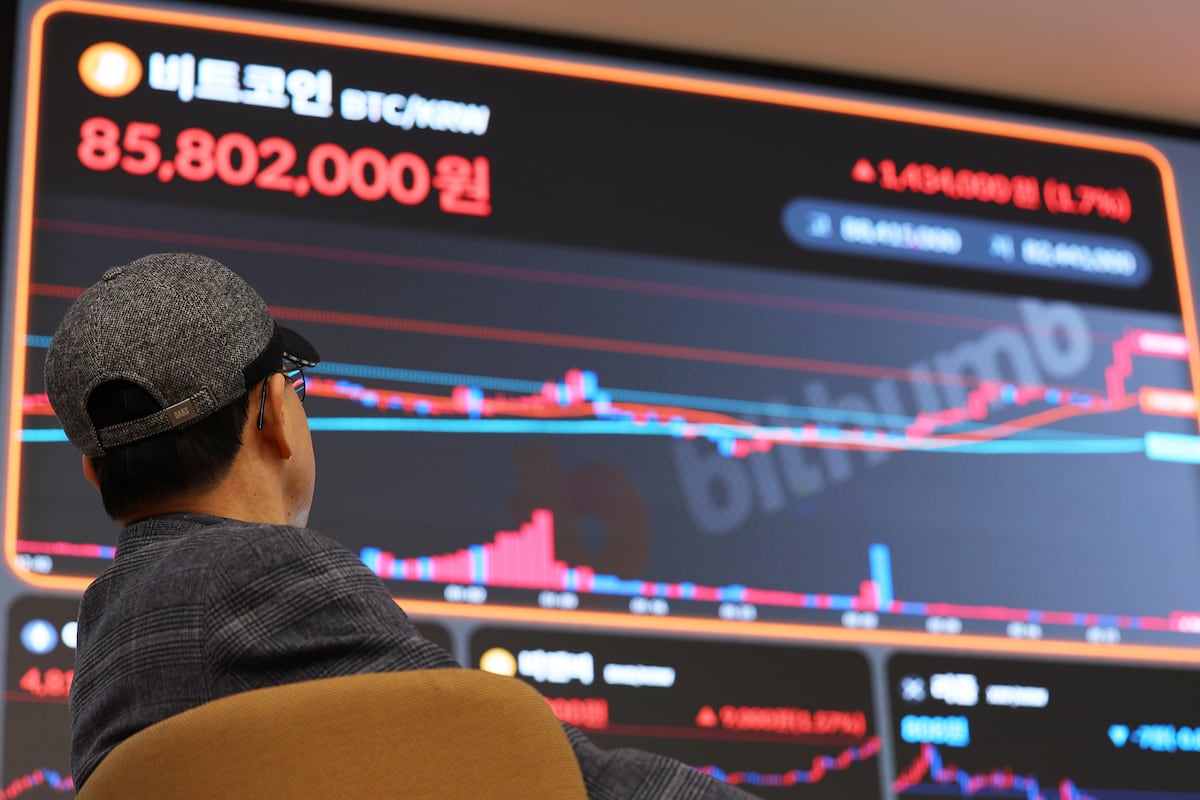
Bitcoin’s Great Maturation: From Speculative Frenzy to Institutional Staple
Digital asset sheds extreme volatility as big players drive market stability.
Bitcoin is undergoing a profound metamorphosis, transitioning from its early days as a volatile, speculative darling to a more tempered financial asset. The cryptocurrency now finds itself firmly on the radar of large institutional investors, whose activity is increasingly dictating market movements.
From Wild Swings to Steady Climb
Recent months have seen Bitcoin trade within a tighter range, roughly between $93,000 and $111,000, a stark contrast to its historically wild price swings. While it still touched new historical highs near $120,000, the extreme daily fluctuations of 5-10% are becoming a rarity, signaling a shift away from the speculative fervor that once defined the market.
Institutional Influx Reshapes the Landscape
This moderation in volatility is directly linked to a changing investor base. The community of retail investors, often driven by speculative enthusiasm and social media hype, is gradually being supplanted by major asset managers like Blackrock and Fidelity. These entities are offering regulated Bitcoin-linked investment products, such as exchange-traded funds (ETFs), making the cryptocurrency accessible to a broader, more traditional investment audience.
Alberto Goyanes, head of Digital Assets at Renta 4, notes that the entry of new participants and clearer regulation contribute to price standardization. “As new participants enter and regulation becomes clearer, its price is standardized, because the new entities keep it in the long term, limiting the pronounced falls that increased volatility,”
he explained.
Macroeconomic Factors Now Drive Bitcoin
The asset’s price is now increasingly influenced by macroeconomic indicators such as interest rates, inflation, and employment data, rather than just the sentiment of a niche community. This integration into the broader financial system means the sky-high revaluation percentages of Bitcoin’s early years are unlikely to be replicated.
Javier Molina, an analyst at Anoro, observes this shift: “It has gone from being a speculative commitment to a volatile financial asset, but subject to the macroeconomic environment, and not so much to moods of a very specific community of believers.”
He further elaborated on the changing return profile, noting that while Bitcoin revalued 1,375% in 2017, it was 120% last year and has seen a 25% increase so far in 2025.
Whales Sell, Institutions Buy
Long-term holders, commonly referred to as “whales,” have been selling significant amounts of Bitcoin, with over 500,000 coins offloaded in the past year, a move largely absorbed by new institutional demand. Jaime Muñoz, a portfolio manager at Miralta AM, highlights that this institutional commitment is now focused on the long term, contributing to greater price stability.
ETFs and companies accumulating Bitcoin now control approximately a quarter of all circulating units. This increased institutional control is a key factor in Bitcoin’s evolving market dynamics, offering greater predictability and reduced risk for long-term investors.
While the extreme volatility that once attracted speculators may be diminishing, the long-term revaluation potential of Bitcoin remains strong. Experts anticipate that future price movements will be more predictable, with less pronounced short-term corrections. This stability could, however, present a challenge for certain sophisticated financial strategies that rely on high volatility.
For investors considering entry into the cryptocurrency space, understanding these evolving market dynamics is crucial. As of July 2025, Bitcoin’s adjusted volatility is 35% lower than in May, according to industry data, a testament to its ongoing maturation. (Source: Cinco Días)
