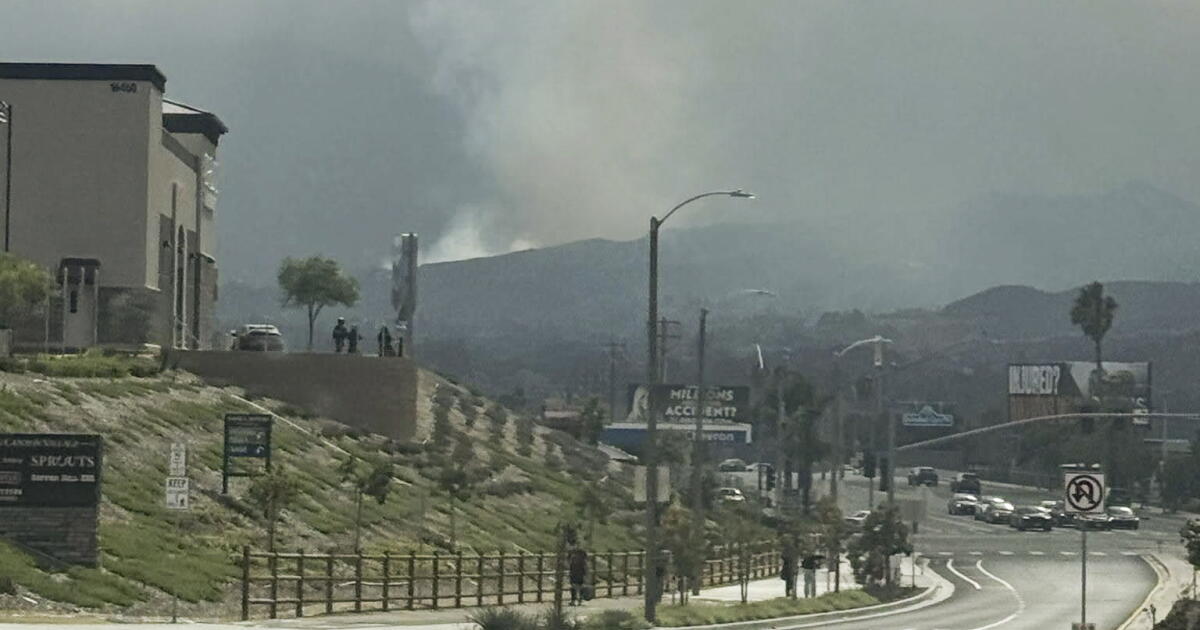
Bike Fire in Santa Clarita Reaches 171 Acres with 12 Percent Containment
A fast-moving wildfire burning near homes in Santa Clarita reached approximately 171 acres on Sunday, prompting mandatory evacuation orders and drawing a heavy multi-agency response.
Evacuation Orders and Shelter Locations in Santa Clarita
Los Angeles County Fire Department Captain Aaron Katon stated that the blaze initially appeared as a small brush fire before expanding rapidly under erratic winds. The Los Angeles County Sheriff’s Department ordered residents to evacuate as the flames pushed toward local neighborhoods.
Local authorities established an evacuation shelter at College of the Canyons, located at 26455 Rockwell Canyon Road in Santa Clarita. For displaced residents with pets, an animal shelter was set up at the Antelope Valley Fairgrounds, located at 2551 W. Ave. H in Lancaster.
Fire Containment Reaches 12 Percent as Acreage Estimates Vary
Initial estimates provided by officials and field reports varied as the fire developed on Sunday afternoon. Captain Aaron Katon noted that the fire grew rapidly from five acres to 100 acres before temporarily stabilizing around 275 acres. However, state emergency intelligence aircraft mapping conducted at approximately 4 p.m. recorded the burned area at roughly 170 acres.
By late Sunday afternoon, firefighting forces had made measurable progress. Angeles National Forest officials reported that the Bike Fire was 12% contained at approximately 4:45 p.m. Crews from the L.A. County Fire Department and the Angeles National Forest remained on the lines into the evening.
Rain Shadow Effect Leaves Santa Clarita Exposed to Winds
Weather conditions across Southern California created stark contrasts as the fire developed. The remnants of tropical storm Rachel delivered heavy rain and rough ocean conditions to areas such as Newport Beach and the Coachella Valley, but preliminary readings from the National Weather Service recorded zero rainfall in Santa Clarita.
Captain Aaron Katon explained that a weather system moving through the region brought precipitation to the Los Angeles Basin while leaving Santa Clarita exposed to dry, strong winds due to a rain shadow effect. Those winds, combined with steep terrain and heavy brush in the hills surrounding Sand Canyon, fueled the rapid spread of the fire.
Aerial Resources and Ground Crews Protect Residential Structures
Firefighting agencies deployed extensive aerial resources to combat the blaze in rugged terrain. County Fire Department utilized aircraft including a Super Scooper to drop water on active hot spots.
On the ground, firefighters worked to defend residential structures in the path of the flames. Dave Lyznick, a local resident whose property was threatened, described seeing flames tower 30 feet in the air before he evacuated. Returning later, Lyznick found that firefighters had successfully protected his home despite the extreme conditions.
Captain Aaron Katon credited property owners who maintained defensible space around their homes, emphasizing that proactive brush clearance remains vital for giving emergency personnel a chance to save structures during fast-moving wildfires.