
Beijing Hyundai’s EO Electric SUV: Launch Date, Specs, and China Market Entry
Table of Contents
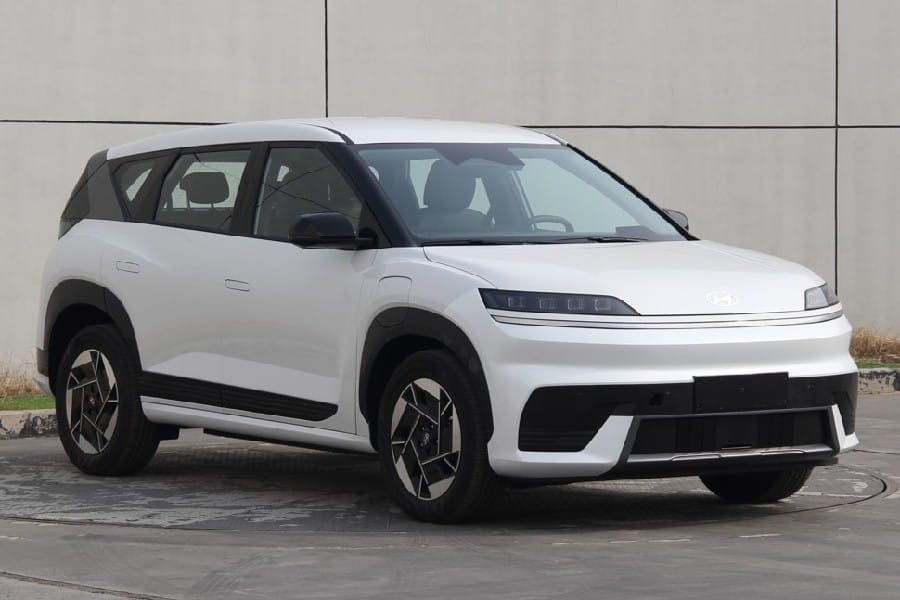
Beijing Hyundai is poised to enter China’s competitive electric vehicle (EV) market with the launch of its first all-electric SUV, the EO, in September. This marks a significant shift for the automaker, which currently lacks a Battery Electric Vehicle (BEV) presence in the world’s largest automotive market.The EO, previously known as the Elexio, represents a key component of Beijing Hyundai’s strategy to introduce several new pure electric models in the coming years.
The EO boasts a reported range of 700 kilometers (435 miles) based on the CLTC standard,positioning it competitively against other EVs in the Chinese market.Fast charging capabilities allow for a 30-80% charge in just 27 minutes. Design highlights include distinctive crystal-inspired running lights, incorporating the number 8, and a state-of-the-art infotainment system powered by a Qualcomm 8295P processor. The vehicle also features Level 2+ bright driving assistance systems, enhancing safety and convenience.
regulatory filings confirm the EO’s dimensions: 4,615mm in length,1,875mm in width,and 1,675mm in height. Customers will have the option of either front-wheel drive (FWD) or all-wheel drive (AWD) configurations. The FWD version will utilize a 160kW electric motor, while the AWD model adds a 73kW rear motor, resulting in a combined output of 233kW. Both variants are electronically limited to a top speed of 185km/h (115 mph). Powering the EO is a Lithium Iron Phosphate (LFP) battery supplied by FinDreams, a subsidiary of BYD, a leading Chinese battery manufacturer.
CarNewsChina estimates the EO’s price will likely remain under 150,000 yuan (approximately $20,800 USD), making it an attractive option for budget-conscious EV buyers. However, Beijing Hyundai has yet to officially confirm the pricing details. The EO’s launch is anticipated to significantly bolster Beijing Hyundai’s position in the rapidly expanding Chinese EV landscape.
The Rise of Electric Vehicles in China: A Historical Context
China has emerged as the global leader in electric vehicle adoption, driven by government incentives, stringent emission standards, and growing consumer demand. The Chinese government has implemented policies such as subsidies for EV purchases, tax exemptions, and investments in charging infrastructure to accelerate the transition to electric mobility. These initiatives have spurred significant growth in the domestic EV market, attracting both established automakers and new entrants.
Early pioneers in the Chinese EV market included BYD, which began producing electric vehicles in 2008, and SAIC Motor. Though, the market has become increasingly competitive with the entry of Tesla, Nio, Xpeng, and Li Auto, among others. The demand for EVs in China is particularly strong in major cities, where air pollution is a significant concern. The shift towards electric vehicles is also supported by a growing awareness of environmental issues and a desire for enduring transportation solutions.
the LFP battery technology, utilized in the EO, has gained prominence in China due to its lower cost and improved safety compared to Nickel Manganese Cobalt (NMC) batteries. BYD, a key player in LFP battery production, has played a crucial role in driving down the cost of EVs and making them more accessible to a wider range of consumers. the EO’s adoption of LFP technology underscores this trend and highlights Beijing Hyundai’s commitment to offering competitive and sustainable electric vehicles in the Chinese market.
Frequently Asked Questions about the Beijing Hyundai EO
- what is the Beijing Hyundai EO? The EO is Beijing Hyundai’s first all-electric SUV, designed specifically for the Chinese market.
- When will the EO be launched? The EO is scheduled to launch in September 2025.
- What is the EO’s driving range? The EO offers a CLTC-rated range of 700 kilometers (435 miles).
- How long does it take to charge the EO?
