
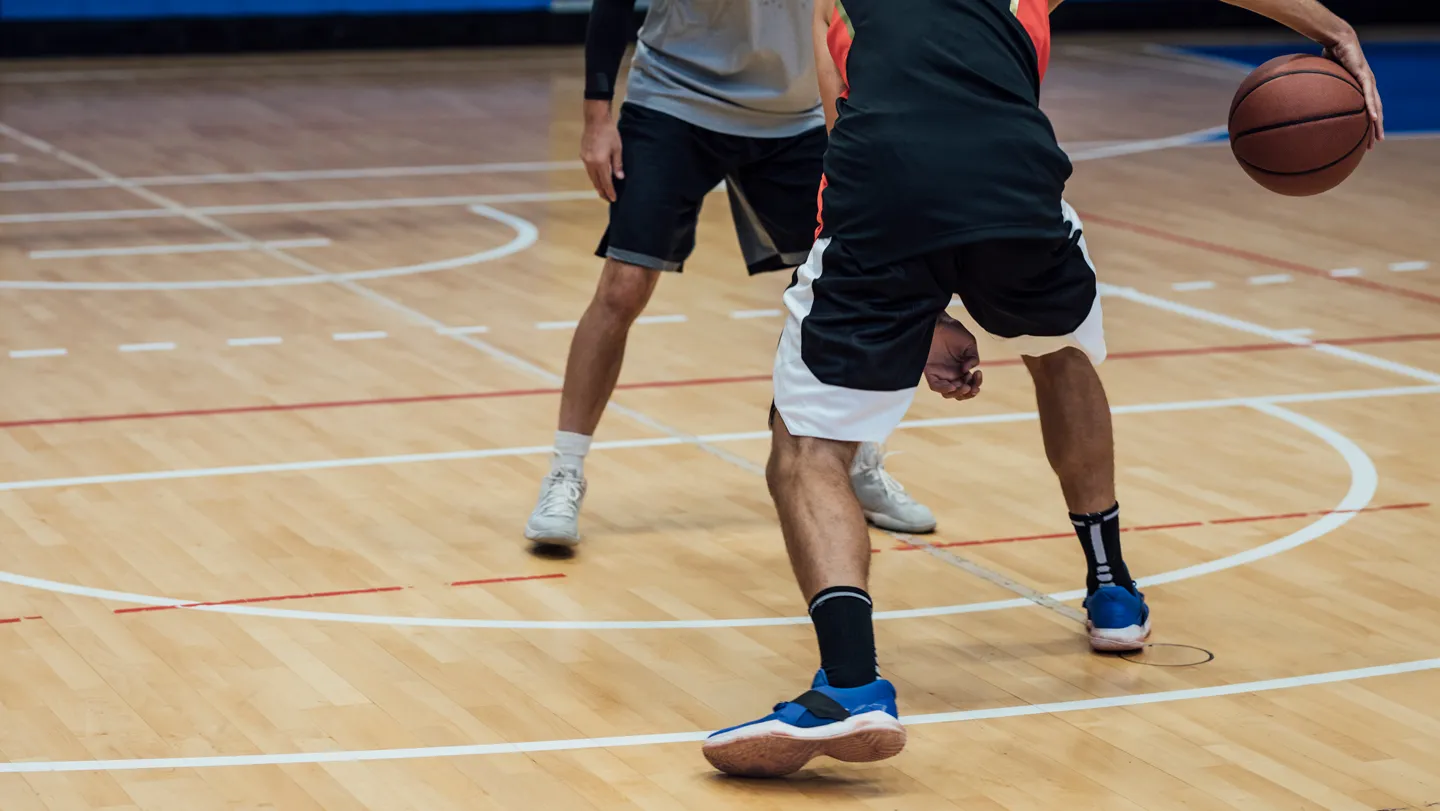
The persistent squeak of sneakers on basketball courts, a sound synonymous with the sport, has been definitively explained by physicists at Harvard University. A study published Wednesday in the journal Nature details how the noise isn’t simply friction, but a complex interplay of stick-slip motion and the unique design of sneaker treads.
Adel Djellouli, a materials scientist at Harvard, initially became curious about the phenomenon while attending a Boston Celtics game. “This squeaking sound when players are sliding on the floor is omnipresent,” Djellouli said, according to the Associated Press. “It’s always there, right?” This observation spurred a research project involving high-speed cameras and a glass plate used to simulate a basketball court surface.
The research revealed that the squeak originates from thousands of tiny, rapid detachments and reattachments between the sneaker sole and the floor, occurring at a rate of approximately 4,800 times per second. These minute “ripples” create fluctuations in air pressure, resulting in the high-pitched sound. “That squeaking is basically your shoe rippling, or creating wrinkles that travel super fast. They repeat at a high frequency, and this is why you get that squeaky noise,” Djellouli explained, as reported by the Independent.
Crucially, the study found that the tread patterns on sneakers are essential to producing the squeak. When researchers tested flat, featureless rubber blocks against the glass plate, they observed disorganized ripples but no discernible squeaking sound. The ridges on sneaker soles appear to organize these pulses, creating a clear, consistent pitch. According to Science News, the thickness and stiffness of the rubber block also influence the pitch of the sound.
The findings build on the concept of “stick-slip motion,” where surfaces alternately adhere and slide against each other. This process, previously understood in broader physics contexts, has now been specifically applied to explain the mechanics of sneaker squeaks. The research team used total internal reflection to image the shoe’s sole, highlighting areas of contact and detachment during the sliding motion.
The study, inspired by a single observation during an NBA game, provides a detailed physical explanation for a sound that has long been a part of the basketball experience. Researchers have not yet indicated plans to investigate methods for reducing or eliminating the squeak, leaving the distinctive sound to continue as a hallmark of the game.
