
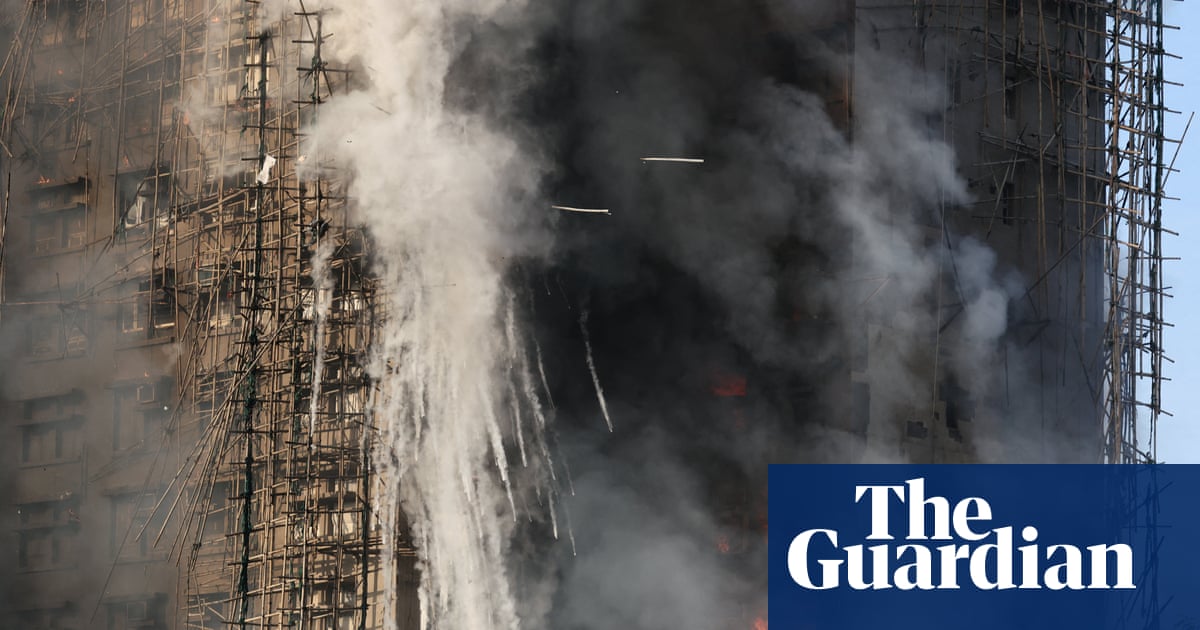
Hong Kong Fire Highlights Safety Concerns Over traditional Bamboo Scaffolding
TAI PO, HONG KONG – A devastating fire that killed dozens in Hong Kong’s wang Fuk Court residential complex on Wednesday is raising questions about the safety of the city’s widespread use of bamboo scaffolding. The blaze, Hong Kong’s deadliest in decades, tore through the eight 31-story towers housing approximately 4,800 residents in the northern New Territories. Authorities are investigating whether the bamboo scaffolding surrounding the building contributed to the rapid spread of the flames.
Hong Kong remains one of the few places globally where bamboo scaffolding is still commonly used in construction.Valued for its lighter weight and lower cost compared to metal, the intricate structures are a familiar sight across the city’s skyline and represent a centuries-old building tradition, depicted as far back as Han dynasty scroll paintings. While abundant in southern China, mainland construction sites have largely transitioned to metal scaffolding.
the government announced in March plans to phase out bamboo scaffolding in favor of fire-resistant steel, requiring 50% of public construction works to utilize metal frames. This decision followed a concerning trend of industrial accidents: official figures show 23 deaths linked to bamboo scaffold collapses as 2018. steel also offers greater resilience to Hong Kong’s humid climate.
However, the transition faces opposition from the Hong kong and Kowloon Bamboo Scaffolding Workers Union, wich fears the shift will threaten the livelihoods of skilled ”bamboo masters.” These craftspeople possess the expertise to construct stable scaffolds from the naturally varying poles, a skill honed over generations.
The cause of the Wang Fuk Court fire remains under investigation, but the presence of bamboo scaffolding and green construction mesh is being examined as a potential factor in its rapid escalation.
