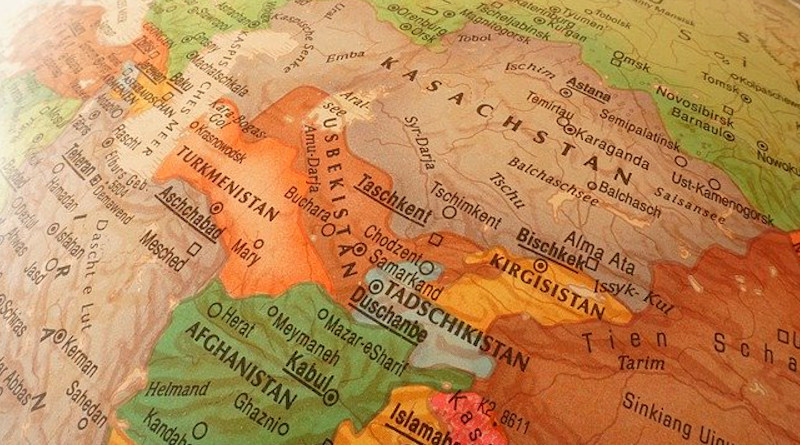
Azerbaijan and Central Asia: Strategic Partnerships and the Middle Corridor
Dr. Matin Mammadli, head of department at the Baku-based Center of Analysis of International Relations and Multiculturalism, writes that Central Asia has moved from the periphery of Azerbaijan’s foreign policy to become one of its principal geopolitical priorities.
The Shift Beyond Turkic Affinity and the Middle Corridor
Mammadli argues that Baku’s growing focus on Central Asia cannot be reduced solely to historical, ethnic, or religious ties among Turkic-speaking states. Instead, the policy shift rests on the Caspian Sea functioning as a unifying bridge rather than a physical barrier. The growing strategic importance of the Trans-Caspian International Transport Route—known widely as the Middle Corridor—has accelerated this integration. Eurasian geopolitics shifted rapidly after 2022, when traditional northern trade routes through Russia faced severe disruptions due to the war in Ukraine. As European and Asian economies sought alternative export avenues, demand for the Middle Corridor surged.
According to the analysis, this transit architecture is not merely a temporary fix for wartime supply chain crises. Through ports, railways, and energy pipelines, Azerbaijan provides Central Asian nations with reliable access to Western markets through Türkiye.

Institutionalization of Alliances and the C6 Framework
Baku has systematically upgraded its diplomatic architecture across the region. By mid-2026, Azerbaijan secured formal alliances with Kazakhstan, Uzbekistan, and Kyrgyzstan, alongside strategic partnerships with Tajikistan and Turkmenistan. This deliberate engagement with non-Turkic states like Tajikistan proves that Baku’s regional policy aims at broader security and economic integration rather than exclusive ethnic solidarity.
President Ilham Aliyev participated as a guest of honor at Central Asian consultative summits in Dushanbe in 2023 and Astana in 2024. Following a formal decision at the Seventh Consultative Meeting in Tashkent in November 2025, Azerbaijan achieved full member status. On July 31, 2026, Aliyev joined leaders from Kazakhstan, Kyrgyzstan, Uzbekistan, Tajikistan, and Turkmenistan for an informal summit in Cholpon-Ata, Kyrgyzstan, where the six heads of state signed the Cholpon-Ata Declaration.
This regular gathering of six nations is frequently referenced in political discourse as the “C6” configuration. Analysts emphasize that C6 operates strictly as a consultation and coordination platform rather than a supranational political union, preserving each participating state’s independent foreign policy.

Azerbaijan Connects Central Asian Markets to Europe and Türkiye
Central Asia possesses vast energy reserves, critical raw materials, agricultural goods, and growing consumer markets, while lacking direct access to world oceans. Azerbaijan matches these production capacities with developed transport infrastructure, including the Baku International Sea Trade Port, the Baku–Tbilisi–Kars railway, and the Southern Gas Corridor.
This complementarity yields direct economic returns for Baku. Ultimately, Azerbaijan serves not just as a geographic corridor, but as a strategic gateway connecting Central Asian markets to Europe and Türkiye.