AWS Weekly Roundup: GPT-6, Claude 5.5, and AI Observability on Amazon Bedrock
AWS Weekly Roundup: GPT-6 Sol and Luna, Claude Opus 5.5 on Amazon Bedrock, and More
The weekly AWS production push centers heavily on model choice and runtime observability. OpenAI’s GPT-6 Sol and GPT-6 Luna, alongside Anthropic’s Claude Opus 5.5, have landed on Amazon Bedrock, giving engineering teams granular points on the intelligence-versus-efficiency curve. Alongside these frontier model drops, Amazon Web Services rolled out architectural updates across CloudWatch, EventBridge, and SageMaker HyperPod to help enterprise platforms manage the operational weight of autonomous software agents.
Core Takeaways for Engineering Teams
- OpenAI released GPT-6 Sol for complex developer and operations workflows and GPT-6 Luna for high-volume repeatable tasks on Amazon Bedrock, both priced below prior versions.
- Anthropic introduced Claude Opus 5.5 on Bedrock, optimized for agentic coding and reduced token consumption during long-running execution loops.
- New infrastructure tooling dropped this week, including Amazon CloudWatch Omni for OpenTelemetry-based agent monitoring and SageMaker HyperPod Inference Gateway, which cuts first-token latency by up to 82%.
Frontier LLM Deployments on Amazon Bedrock
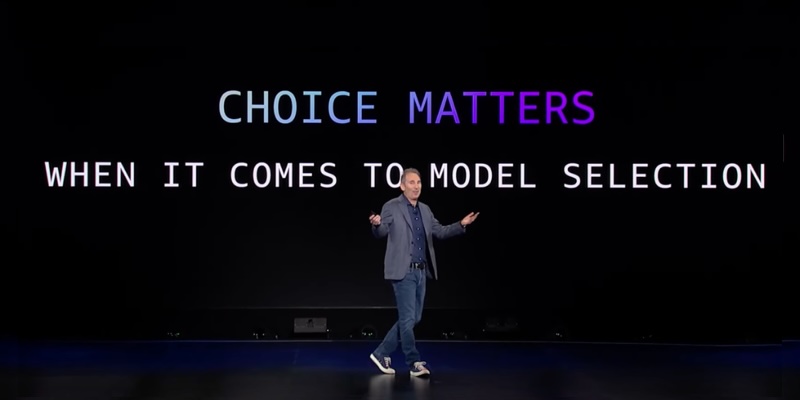
Model selection on Amazon Bedrock shifted last week from raw benchmark chasing to precise workload matching. GPT-6 Sol targets demanding, recurring development and operations duties, while GPT-6 Luna handles focused, repeatable tasks at scale. Both models deploy at significantly lower pricing than their GPT-5.6 predecessors. Concurrently, Anthropic introduced Claude Opus 5.5, marking the debut of the Claude 5.5 family. This model achieves higher throughput with fewer tokens than Opus 5 and is tuned explicitly for agentic coding and long-running execution tasks.
Unified Observability with Amazon CloudWatch Omni
Amazon introduced CloudWatch Omni, a monitoring layer built directly on OpenTelemetry. Existing telemetry populates automatically without requiring configuration changes, and teams access the environment through a single URL protected by enterprise single sign-on (SSO). The system auto-discovers services, maps dependencies, and integrates the AWS DevOps Agent into live investigation sessions to correlate metrics and trace root causes across multi-account deployments.

High-Performance Routing via SageMaker HyperPod Inference Gateway
Deployed as a single Amazon EKS managed add-on requiring zero application modifications, the gateway acts as a Kubernetes-native, GPU-aware routing layer. Rather than traditional round-robin load balancing, it routes incoming requests based on real-time hardware telemetry, including KV cache utilization, queue depth, prefix cache hits, and predicted latency.
Scaling Event-Driven Architectures and Messaging Skills
Amazon EventBridge rolled out enhanced custom event buses designed for organizations scaling event-driven architectures across accounts. Organizations can now deploy a centralized bus shared across every account via AWS RAM, featuring optional event ordering, content-based deduplication, and synchronous invocation for targets such as AWS Lambda. A simplified Subscriber resource bundles filtering, targets, and retries under a new ingress/egress pricing model that replaces compounding cross-account routing fees.
Amazon SES and AWS End User Messaging also published AI agent skills for the AWS MCP Server. These skills provide coding assistants—including Claude Code, Codex, Cursor, and Kiro—with validated, step-by-step guidance for verifying sending identities, dispatching production emails, or constructing branded RCS agents without requiring engineers to switch between documentation and console screens.
Open-Source Agent Harnesses and Governance Insights
The Strands harness was released under the Apache 2.0 license. Operating locally or deployed across cloud environments, the harness wires up models across Bedrock, Anthropic, OpenAI, Google, or local Ollama instances using a single line of Python or TypeScript. It includes built-in prompt caching, tool result truncation, and context window management, achieving roughly 28% lower operating costs than comparable harnesses while maintaining output accuracy.
On the infrastructure front, Gartner named AWS a Leader in the 2026 Magic Quadrant for Container Management.
Worth a look
- OpenAI Repositions ChatGPT as an AI App Store with New Model and Agents
- Qualcomm Launches Snapdragon 8 Elite Series for Mobile AI
- Anthropic Consults Religious Scholars to Build Moral Foundations for Claude (time.news)
- Weekly Cisplatin Does Not Reduce Toxicity in Advanced Head and Neck Cancer (newsy-today.com)