
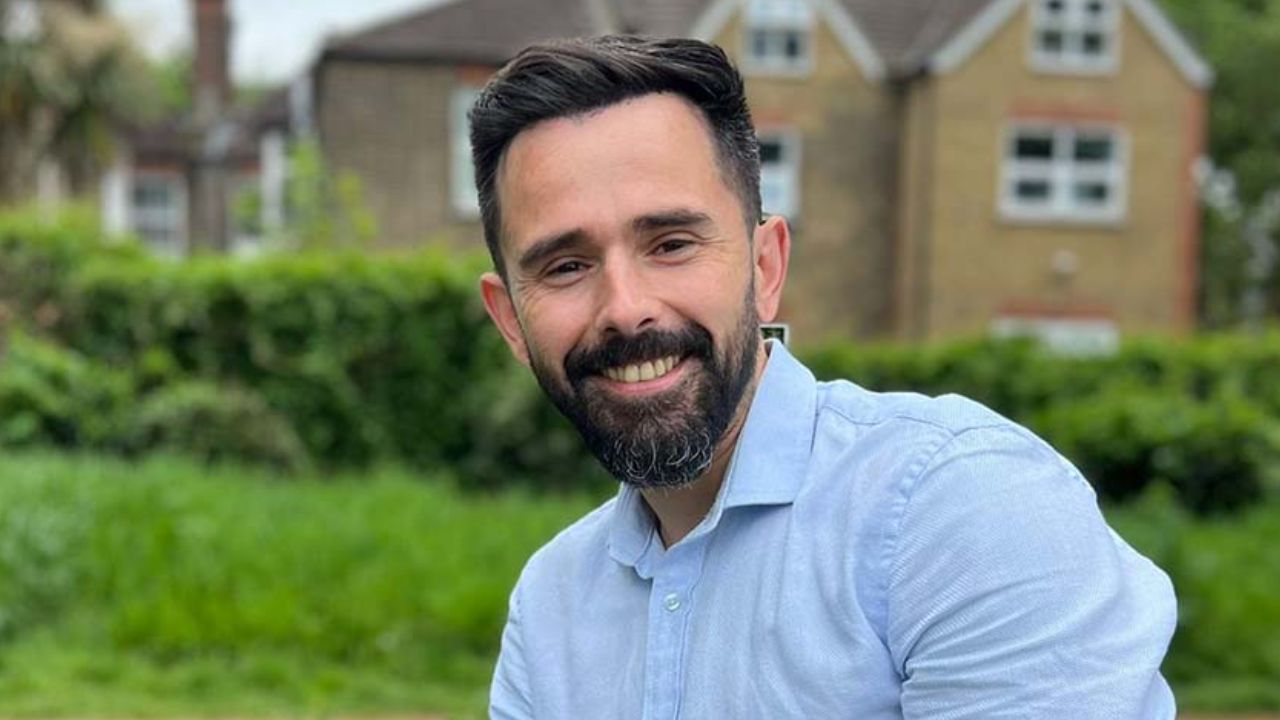
Abraham Arenas, a Doctor of Law, Education, and Development, has spent his life navigating a world not designed for his neurodivergent mind. Diagnosed with autism later in life, Arenas now dedicates his career to transforming education to be more accessible for all students, particularly those with special educational needs and mental health challenges.
Arenas recounts a childhood spent unaware of his autism, a period where the education system led him to believe he lacked academic ability. “I grew up without knowing I was autistic, and for years the educational system made me believe I didn’t have the skills to study,” he stated. His diagnosis revealed, he says, that the issue wasn’t his potential, but the system itself. This realization spurred him to develop innovative pedagogical models catering to neurodivergent students.
He is the Founder and Director of the International Neurodiversity College of London (INCL), a pioneering institution focused on inclusive education for neurodivergent students, and President of Asociación Edu-Constellation, an organization dedicated to educational innovation and inclusion strategies. Arenas’s work stems from a core belief that the environment is fundamentally unprepared for the development and adaptation of individuals with autism. He asserts, “Autism isn’t suffered; I love what happens in my head.” The problem, he emphasizes, lies in the surrounding environment and the lack of societal adaptation and inclusion.
This lack of preparedness extends beyond the individual, impacting families and social lives. Arenas notes the strain it places on relationships, leading to social isolation as families struggle to participate in activities due to the behaviors of their autistic children, behaviors often excluded from societal norms. He believes every child, young person, and adult possesses immense potential, requiring only the appropriate tools to flourish. “My objective is to challenge traditional paradigms and demonstrate that there are other ways to learn, grow, and prosper,” he explained.
Arenas highlights a common challenge for autistic individuals: maintaining eye contact. He describes it not as a matter of politeness, but as a source of anxiety. “One of the things that costs us the most as autistic people is making eye contact,” he said. He acknowledges the social pressure to camouflage and engage in eye contact despite the discomfort, and advocates for recognizing and discussing this difficulty. He suggests a focus on smiles as a more natural and effective form of connection, advocating for an education rooted in empathy and understanding.
Currently, Arenas serves as an advisor and support person to families with neurodivergent children, providing tools and strategies to improve their quality of life and access to education. His work continues to push for a more inclusive and understanding world, one where neurodiversity is not a barrier, but a strength.
