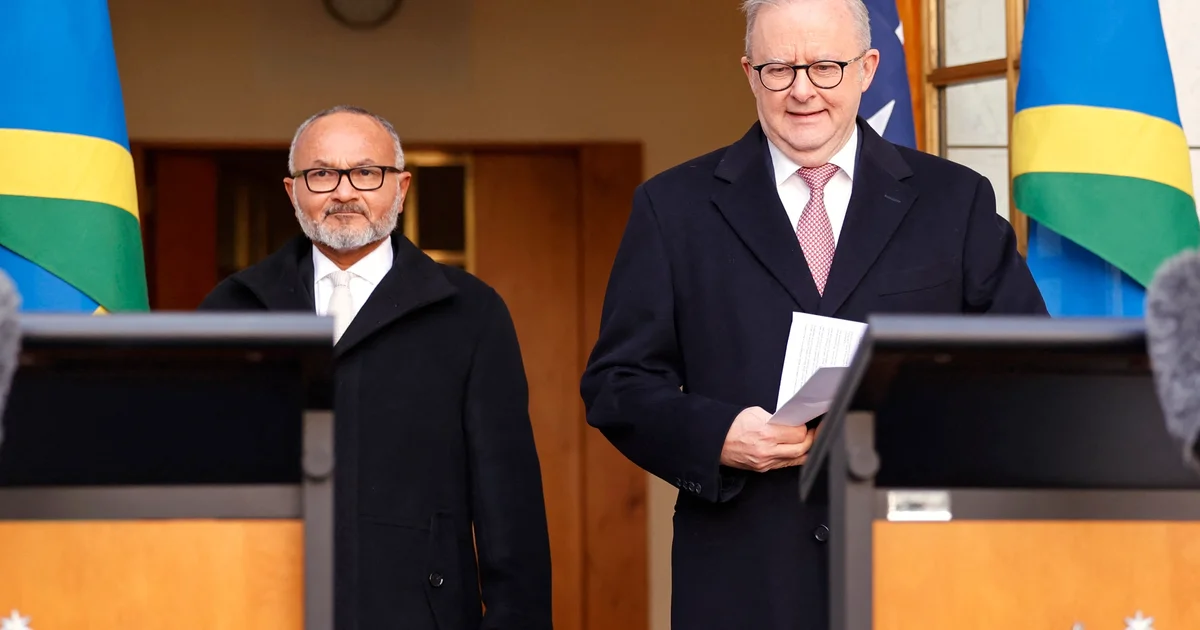
Australia’s Solomon Islands Funding Risks Undermining Reform Efforts
Australia’s recent commitment to provide constituency-level development funding in the Solomon Islands risks undermining the reform agenda of Prime Minister Wale’s government. By bypassing national planning mechanisms, Canberra’s aid package threatens to entrench the very political patronage networks that the new administration has pledged to dismantle.
The Shift Toward Constituency-Based Aid
The Australian government faces mounting scrutiny over its decision to direct substantial financial resources toward individual Solomon Islands constituencies. This approach deviates from established development best practices, which typically prioritize national-level planning and the strengthening of public institutions. This strategy risks creating a conflict of interest for the Wale government, which is currently attempting to reset the nation’s domestic policy framework.
The funding package includes $142 million for a free-education policy—a flagship initiative for the Wale administration—and $47.8 million designated for visa access improvements and responses to “security requests from Solomon Islands”. While these initiatives address critical needs, the decision to route funds through MPs rather than national budgets complicates the government’s efforts to move away from the political structures of the past.
Accountability and the Reform Agenda
Prime Minister Wale, a former chair of the Public Accounts Committee, has staked his political capital on a zero-tolerance policy toward cronyism. His administration recently appointed Auditor-General David Dennis as the Permanent Secretary of Finance, signaling an intent to enforce rigorous public finance reforms. However, the influx of foreign aid managed at the constituency level may inadvertently provide a lifeline to the same patronage systems that the GREAT (Government for Reform, Empowerment, Accountability and Transformation) Coalition seeks to eliminate.
The risk is that Australian financial support, while intended to advance strategic objectives, becomes inextricably linked to the survival of specific MPs. This dynamic places the Wale government in a precarious position: it must maintain its reformist credentials while managing the political imperatives of the coalition members who rely on local development funds to maintain their legislative support.
Managing Geopolitical Entanglements
The Solomon Islands remains a focal point of regional competition. Opposition Leader Manasseh Sogavare, who previously led the country’s diplomatic switch from Taiwan to the People’s Republic of China, remains a potent political force. Sogavare’s history of negotiating a secretive security agreement with Beijing—a deal that remains under a non-disclosure clause—continues to influence regional politics.
Prime Minister Wale has sought to restore balance by engaging with Australia and the United States, while also asserting a more independent stance on regional security. Following a provocative Chinese missile test, Wale publicly stated, “China is a good friend of Solomon Islands, but this is not something a friend does.” This assertion of national agency has been a point of stability for a population weary of the geopolitical influence exerted by external powers.
The Long-Term Impact of Aid Delivery
The tension between short-term strategic goals and long-term institutional health is the defining feature of this aid package. When foreign assistance bypasses national planning, it often weakens the very governance frameworks that development partners like the World Bank have spent decades trying to build.
For observers of Pacific diplomacy, the situation shows that financial intervention is rarely neutral. When aid flows directly to the political periphery, it can either support grassroots development or sustain the power of local gatekeepers. The long-term success of the Wale government’s reform agenda may ultimately depend on whether it can channel these resources into transparent, national systems rather than allowing them to be absorbed by traditional constituency-based patronage.

As the Solomon Islands defines its role in the Pacific, the impact of these financial decisions will resonate far beyond the current parliamentary term. The ability of the Wale government to maintain its “zero-tolerance” policy while managing significant inflows of foreign capital will be the true test of its commitment to national transformation.