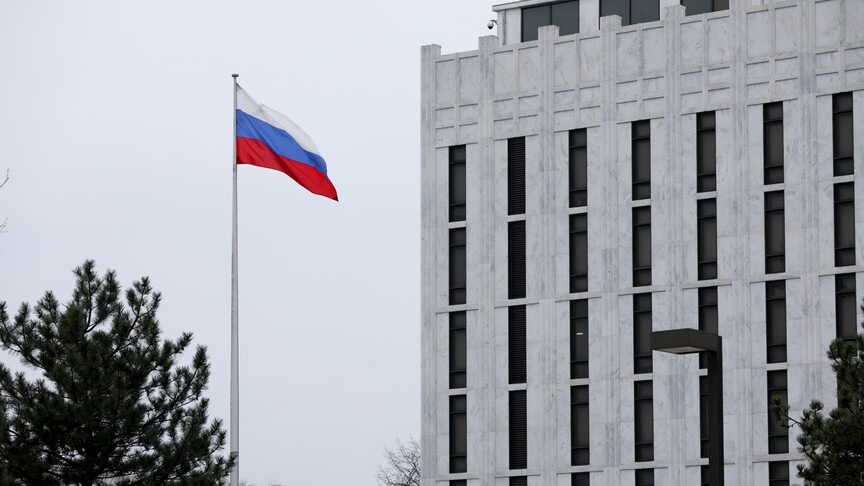
Russian Embassy Rejects Invasion Plans and Warns Over Kaliningrad
On September 30, 2026, the Russian Embassy in Dublin rejected Western assertions that Moscow intends to invade Europe, accusing European nations of recycling an alleged “Russian threat” to justify increased defense spending, overall militarization, and continued aid to Ukraine. The diplomatic pushback coincides with high-stakes regional military exercises and stark warnings from senior Moscow officials regarding the Baltic exclave of Kaliningrad.
Kremlin Pushes Back on Militarization Claims
Moscow maintains that assertions of an imminent military push into Western territory lack any factual grounding. In its September 30 statement shared on the social media platform X, the Russian Embassy in Dublin pointed directly to statements made on September 25 by President Vladimir Putin. According to the embassy, Putin reaffirmed that Russia holds no plans, motives, or reasons to aggravate the security situation on the European continent.
The diplomatic mission argued that the daily recycling of the Russian threat slogan in Western media serves a specific political function. It acts as a financial and operational rationale for European governments to ramp up defense budgets and secure further political, financial, and military assistance for Ukraine. Moscow frames these policy shifts not as defensive responses to a genuine security crisis, but as a coordinated push toward the broader militarization of Europe.

Escalation Concerns Over Baltic Sea Military Drills
Tensions in the region have intensified around specific geographic flashpoints, notably the Russian exclave of Kaliningrad. Sandwiched between Poland and Lithuania on the Baltic Sea and separated from mainland Russia by Lithuanian territory, Kaliningrad remains a focal point for military readiness on both sides.
The Dublin embassy specifically pointed to Gallant Boar 2026, a joint military exercise executed by Lithuania, Poland, and France. Moscow claims this exercise is purposefully aimed at the Kaliningrad region. Citing information regarding preparations by NATO for potential air and naval blockades of the exclave, the embassy characterized the situation as a matter of grave concern, asserting that irresponsible European political elites are engaging in a dangerous game.

Lavrov’s Warning on Potential Direct Confrontation
Backing up the embassy’s warnings, Moscow reiterated recent statements delivered by Russian Foreign Minister Sergey Lavrov. Speaking on September 16 at the International Youth Festival in Yekaterinburg, Lavrov cautioned that any direct Western attack on Russia would trigger a fundamentally different and brief conflict.
The embassy expanded on this posture by stating that Moscow stands ready to deploy its entire national arsenal, including nuclear capabilities, to defend its sovereign territory if NATO members attempt to isolate Kaliningrad. Under such a scenario, the risk of armed confrontation remains exceptionally high. The statement warned that Russia could resort to preemptive strikes against decision-making centers within Alliance countries during the early stages of a conflict.
These warnings were echoed separately on Tuesday by the Russian Embassy in the UK, which similarly signaled that any British or NATO blockade attempt against Kaliningrad would meet a response utilizing all available means, including nuclear weapons.
Worth a look
- Macron Condemns Alleged Antisemitic Remarks by Jordan Bardella as Inacceptable
- Garry Kasparov Under US Protection Following Russian Assassination Plot
- ProPublica report warns of escalation traps in online sports betting apps (newsdirectory3.com)
- Romanian Parliament Rejects Siegfried Muresan as Prime Minister (time.news)