
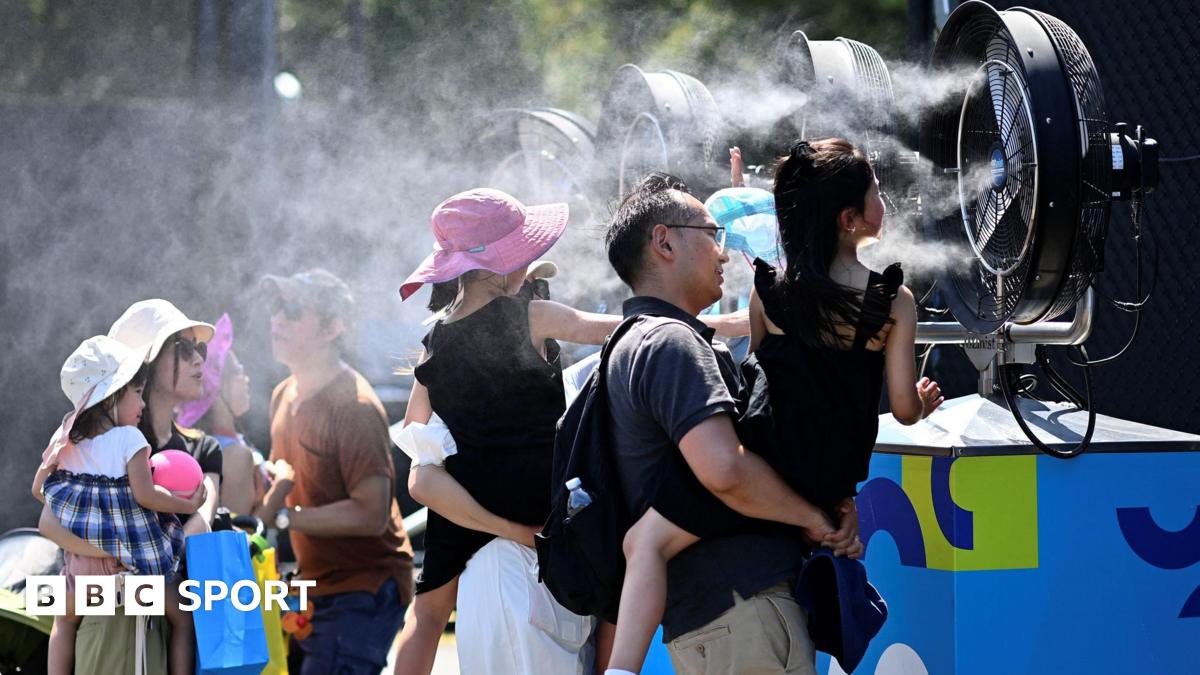
Heat Concerns and Early matches Highlight Day at the Australian Open
The Australian Open is underway in Melbourne, but the intense summer heat is already a significant talking point. Players are contending with challenging conditions, prompting discussions about player safety and the implementation of the tournament’s heat rule. Early matches on Tuesday feature prominent seeds including Jannik Sinner, Jessica Pegula, and Lorenzo Musetti, all navigating the sweltering conditions. World number one Aryna Sabalenka has voiced concerns about the physical toll the heat is taking on competitors, underscoring the need for protective measures.
The Australian Open employs a Heat Stress Management Policy designed to protect players from dangerous conditions. The policy isn’t based on a specific temperature threshold, but rather utilizes a complex calculation considering temperature, humidity, wind speed, and radiant heat. this is measured using the Wet Bulb Globe Temperature (WBGT), a metric developed to assess the risk of heat stress. https://www.ausopen.com/about/rules-regulations/heat-stress-management-policy
When the WBGT reaches a certain level, the tournament referee can implement stages of the heat rule. These stages include:
* Stage 1: A 10-minute break between the second and third sets in women’s matches and between the third and fourth sets in men’s matches.
* Stage 2: Suspension of play on outdoor courts. Play continues on Rod Laver Arena and Margaret Court Arena (both with retractable roofs).
* Stage 3: Suspension of play on all courts.
The decision to enact the heat rule is at the discretion of the tournament referee,Andrew Jarrett,who continuously monitors the conditions and consults with medical professionals. The goal is to balance fair play with the health and safety of the athletes.
Impact of Heat on Player Performance and Health
The Australian Open is notorious for its extreme heat, and the impact on players can be significant. Prolonged exposure to high temperatures can led to:
* Dehydration: Loss of fluids through sweat can impair physical and cognitive function.
* Heat Cramps: Painful muscle spasms caused by electrolyte imbalance.
* Heat Exhaustion: A more serious condition characterized by weakness, dizziness, nausea, and headache.
* Heat Stroke: A life-threatening emergency where the body’s temperature regulation system fails.
Beyond these immediate health risks, heat can also negatively affect performance. Players may experience reduced endurance, slower reaction times, and impaired decision-making. The mental strain of battling the heat can also contribute to fatigue and errors.
“It’s brutal out there,” saeid veteran player John Isner in a recent interview. “You’re constantly battling dehydration and trying to stay cool. It takes a lot out of you.” https://www.wtatennis.com/news/articles/7819899/australian-open-heat-rule-explained-wbgt-index-aryna-sabalenka-jannik-sinner
Early Matchups and Players to Watch
Several top players are scheduled to compete on Tuesday, facing the heat head-on.
* Jannik Sinner: The Italian rising star is a favorite to contend for the title and will be looking to make a strong start. His physical conditioning will be crucial in managing the heat.
* Jessica Pegula: The American is a consistent performer and a threat in any tournament.She’ll need to pace herself strategically to conserve energy.
* Lorenzo Musetti: The young Italian is known for his flair and shot-making ability. The heat could test his stamina and focus.
* Aryna Sabalenka: As the world number one, all eyes will be on Sabalenka. Her comments about the heat highlight the concerns shared by many players.
Beyond these players, several other seeds and rising stars will be in action, all vying for a place in the second round. The early matches will provide a crucial test of their ability to adapt to the challenging conditions.
The Evolution of Heat Management in tennis
The Australian Open’s Heat Stress Management Policy has evolved over the years in response to increasing concerns about player welfare. Initially, the rule was based solely on temperature, but it became clear that humidity and other factors played a significant role in heat stress. The adoption of the WBGT index represented a major step forward in providing a more accurate and extensive assessment of the risk.
However, the heat rule remains a subject of
