
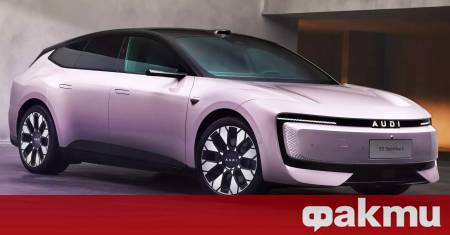
A bold attempt by Audi to conquer the Chinese electric vehicle market with a brand specifically designed for the region is faltering, forcing a significant price reduction just months after launch. SAIC-Audi, the joint venture behind the “AUDI” branded vehicles (distinguished from the global Audi company through capitalization), slashed the price of its E5 Sportback by 30,000 yuan (approximately 4,000 euros) in late February, following a dismal January that saw only 420 deliveries nationwide.
The price cut positions the German-designed fastback alongside the Zeekr 007 GT and below the Xiaomi SU7, which dominated sales charts last year with over 250,000 units sold. This move represents a stark admission of weakness for a brand that, five months prior, boasted 10,000 pre-orders within the first 30 minutes of opening books.
Industry analysts attribute the struggles to an identity crisis within the “AUDI” brand. Despite the E5 Sportback being awarded “Car of the Year in China 2026,” the decision to remove the iconic four rings logo appears to have backfired with Chinese consumers, for whom status and brand recognition are paramount. Without the familiar emblem, the E5 is perceived as simply another electric vehicle, forced to compete on specifications alone with domestic rivals like Nio and AITO (backed by Huawei), which currently hold an advantage in integrated “digital ecosystems.”
The initially reported 10,000 pre-orders were, in fact, non-binding deposits of 1,000 yuan each. The actual conversion rate proved disastrous, with total deliveries since August 2025 totaling just 7,070 units.
On paper, the E5 boasts impressive specifications. It utilizes an Advanced Digitized Platform (ADP) with an 800V architecture, delivering up to 776 horsepower and a CLTC range of 773 kilometers. However, in a market where “technology” is the new luxury, German engineering alone is no longer a sufficient differentiator.
Audi is not alone in facing headwinds. The Chinese automotive market has entered a period of “involution” – a term used by local media to describe fierce competition that erodes profit margins. Both BMW and Mercedes-Benz have been compelled to reduce recommended retail prices by as much as 10-15% to clear accumulated inventory. In February 2026, the Chinese government intervened, imposing minimum price controls and prohibiting automakers from selling vehicles below production costs in an attempt to prevent a complete industry collapse, which cost the sector approximately 65 billion euros last year.
