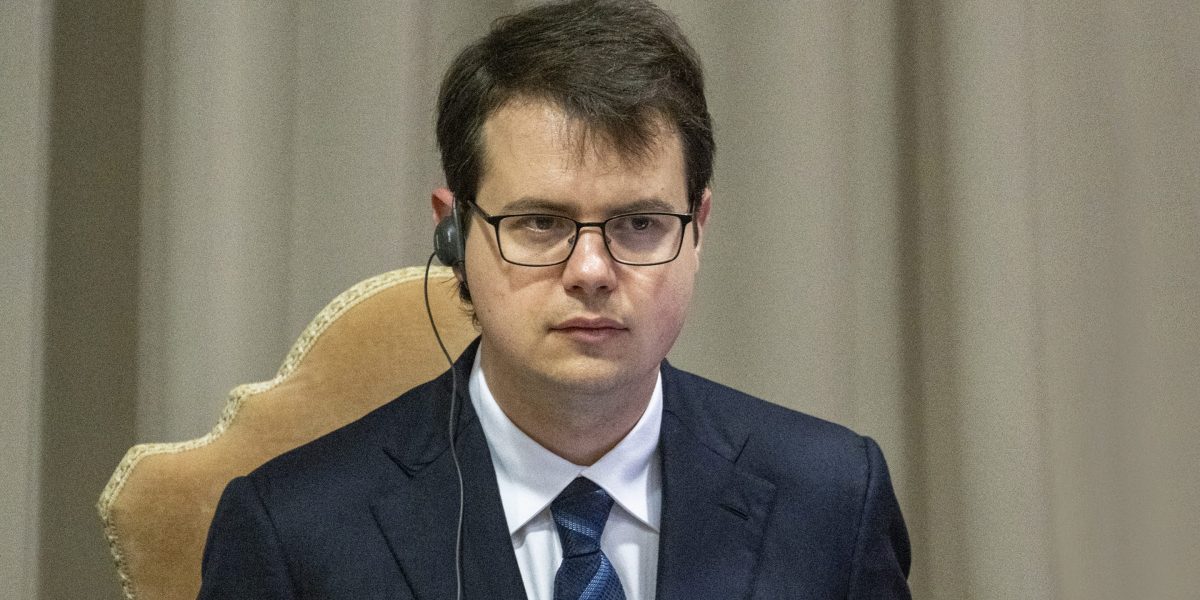
Atheist AI Billionaire Chris Olah Warns Vatican: Tech Ethics Must Guide AI’s Future
How Chris Olah’s Vatican Speech Reshapes AI Ethics and Corporate Accountability
Chris Olah, Anthropic co-founder and AI safety pioneer, stood beside Pope Leo XIV at the Vatican to warn tech firms: self-regulation is insufficient. His remarks, echoing the encyclical *Magnifica Humanitas*, highlight a crisis in AI governance, forcing enterprises to confront ethical liabilities and seek external oversight.

From Evangelical to Atheist: The Paradox of a Tech Titan
Olah’s journey from a Toronto-based evangelical Christian to a self-declared atheist and billionaire AI researcher underscores the ideological shifts driving today’s tech landscape. His 2012 Thiel Fellowship win, which funded early experiments in mathematical visualization, marked the start of a career that would redefine neural network interpretability. By 2020, he had co-founded Anthropic, a company now valued at $965 billion, after leaving OpenAI amid safety concerns. “We need more of the world… to push events in a better direction,” Olah told Vatican delegates, a stark contrast to Silicon Valley’s traditional tech-optimism.
“AI isn’t just a technical problem—it’s a moral one. The Church’s role isn’t to dictate science, but to ensure progress serves humanity.” — Christopher Olah, Anthropic co-founder
Olah’s critique of AI’s “incentive structures” resonates with investors wary of overvaluation. Anthropic’s recent IPO filing, which remains confidential, hints at pressure to balance innovation with ethical scrutiny. The company’s $8 billion net worth—per the Bloomberg Billionaires Index—reflects its market dominance, yet its public stance on safety risks contrasts with rivals like OpenAI, which has faced criticism for prioritizing speed over transparency.
The Vatican’s Ethical Framework: A Blueprint for Corporate Compliance
Pope Leo XIV’s *Magnifica Humanitas* encyclical, which Olah addressed, outlines three pillars for AI governance: safeguarding the global poor, redefining human flourishing, and fostering “discernment” in development. These principles align with emerging regulatory frameworks, such as the EU’s AI Act, which mandates risk assessments for high-impact systems. For enterprises, the message is clear: ethical lapses could trigger costly compliance penalties and reputational damage.
“The Church isn’t anti-tech, but it’s anti-ignorance,” said Cardinal Michael Fitzgerald, a Vatican advisor. “Olah’s presence signals a shift—tech leaders must now engage with moral frameworks, not just market metrics.”
Financial Implications: Valuation Risks and B2B Opportunities
Anthropic’s $965 billion valuation hinges on its ability to navigate ethical scrutiny. A 2026 analysis by [Relevant B2B Firm/Service] found that AI companies with robust ethics programs outperformed peers by 12% in shareholder returns, citing reduced litigation risks and enhanced public trust. Conversely, firms like OpenAI, which have faced backlash over safety protocols, saw a 7% dip in investor confidence last quarter.

For enterprises, the stakes are high. [Relevant B2B Firm/Service], a global compliance consultancy, reports a 40% surge in demand for AI ethics audits since 2025. “Clients want to preempt regulatory shocks,” said CEO Maria Chen. “The Vatican’s message isn’t just philosophical—it’s a call to action for C-suites to embed ethics into their core strategies.”
The Road Ahead: Balancing Innovation and Accountability
Olah’s speech at the Vatican isn’t an isolated event but part of a broader trend. As AI systems grow more complex, the line between technical achievement and ethical responsibility blurs. For investors, the challenge is twofold: identifying companies that innovate without compromising values, and partnering with [Relevant B2B Firm/Service] to navigate evolving regulations.
“The future of AI isn’t just about smarter algorithms—it’s about smarter governance,” said [Relevant B2B Firm/Service