
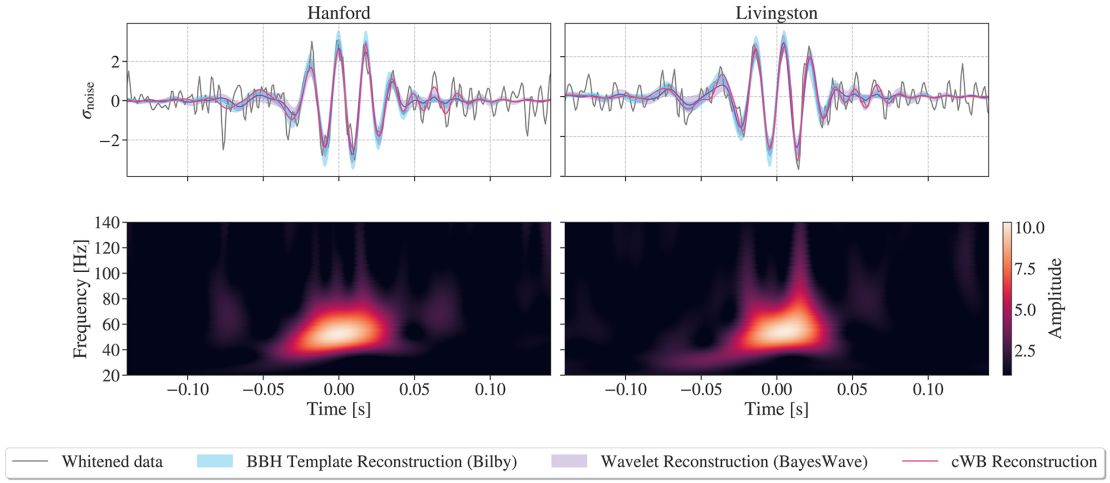
The LIGO-virgo-KAGRA Collaboration expressed surprise at the vast amount of knowledge yet to be gained about gravitational waves,hoping for future observations of events like GW231123 to deepen understanding of such systems.
Previously, the most massive black hole merger recorded was GW190521, which was only 60% the size of GW231123. However,scientists anticipate the discovery of even more massive mergers in the coming decades,potentially observable with more advanced instruments like the proposed Cosmic Explorer in the US and the Einstein Telescope in Europe.
This recent discovery offers new insights into the formation and growth of black holes, according to Imre Bartos, an associate professor at the University of Florida, who was not involved in the research. He noted the rapid advancement of gravitational wave astronomy, moving from initial detection to challenging established theories in less than ten years.
While acknowledging that prior mergers coudl account for the high mass and rapid spin of these black holes, alternative explanations include repeated collisions within young star clusters or the direct collapse of exceptionally massive stars. However, Bartos suggested these alternative scenarios are less likely to produce black holes with such high spin rates.
Zoltan Haiman, a professor at the Institute of Science and Technology Austria and also unaffiliated with the discovery, stated that the black holes in GW231123 are naturally explained as the result of one or more previous merger generations. He mentioned that this hypothesis emerged shortly after the initial LIGO detection of a black hole merger, and the current discovery strongly supports this explanation.Haiman concluded that future detections will reveal whether this significant merger is an isolated event or indicative of a larger trend.
