
Astronomers Discover Vast ‘Midpoint Cloud’ Fueling Star Formation in Milky Way
Table of Contents
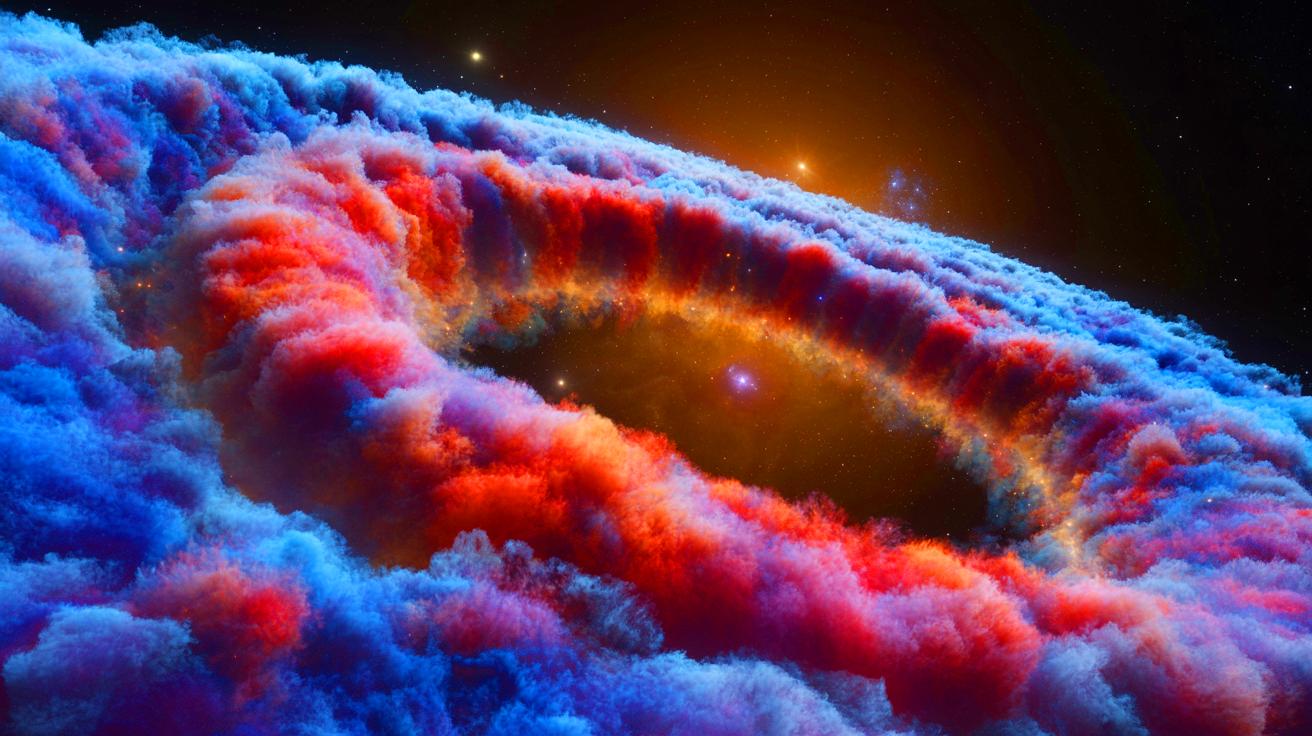
WASHINGTON – In a groundbreaking finding, astronomers have identified a colossal structure within the Milky Way galaxy, dubbed the “Midpoint cloud.” Spanning an astounding 650 trillion miles,this Giant Molecular Cloud (GMC) is reshaping our understanding of how stars are born and how matter flows within our galactic home. The findings, made possible by the powerful Green Bank Telescope, reveal a dynamic region of intense star-forming activity and offer new clues about the Milky Way’s core dynamics.
Unveiling the Midpoint Cloud
The identification of the Midpoint cloud represents a significant leap forward in astronomical research. Led by Dr. Natalie Butterfield of the National radio Astronomy Observatory, the team’s work highlights the capabilities of modern radio telescopes in probing previously unexplored areas of the galaxy. The cloud’s immense size and density instantly set it apart, prompting further examination into its composition and behavior.
“No one had any idea this cloud existed until we looked at this location in the sky and found the dense gas,” Dr. Butterfield remarked, underscoring the element of surprise and the potential for uncovering hidden cosmic phenomena through dedicated observation. This discovery emphasizes the importance of continuing to map the Milky Way in detail.
Did You Know? Giant Molecular Clouds are the birthplaces of stars, containing enough gas and dust to form thousands or even millions of stars like our Sun.
The Role of Giant Molecular Clouds in Galactic Evolution
Giant Molecular Clouds, like the newly discovered Midpoint cloud, are fundamental to the cosmic ecosystem. These vast reservoirs of gas and dust provide the raw materials for star and planet formation. Within the Midpoint cloud, astronomers have observed turbulent conditions and dense gas clumps, indicating active star-forming regions. These conditions are similar to those found near the center of the milky Way,suggesting a complex interplay of forces at work.
Specifically, the cloud contains structures known as free-floating evaporating gas globules (frEGGs), dense pockets of gas undergoing erosion by nearby stellar radiation. These frEGGs offer a unique window into the earliest stages of star formation, allowing scientists to study the conditions necessary for new stars to emerge.The study of frEGGs provides crucial insights into the processes that govern the birth of stars,
explains dr. Butterfield.
| Feature | Description | Significance |
|---|---|---|
| Size | 650 trillion miles | One of the largest GMCs discovered in the Milky Way. |
| Composition | Dense gas and dust | provides raw materials for star formation. |
| Location | Underexplored region of the Milky Way | Highlights the potential for new discoveries in uncharted areas. |
| Key Structures | frEGGs,masers | Indicate active star-forming regions and ongoing galactic processes. |
Channeling Matter to the Galactic Core
The Midpoint cloud’s significance extends beyond its role as a star-forming region.Researchers believe the cloud acts as a conduit, channeling matter from the galaxy’s disk towards its core. This flow of material is facilitated by thick dust lanes within the cloud, which function like cosmic rivers, delivering gas and dust to the central regions of the Milky Way. This process is crucial for sustaining star formation in the galactic center.
The detection of a maser-a source of intense microwave radiation-within the Midpoint cloud further supports the idea of active star formation. Additionally, the presence of a shell-like structure, likely the remnant of past supernova explosions, suggests a dynamic and evolving surroundings. The interplay between star birth and stellar death within the Midpoint cloud provides a thorough picture of galactic evolution.
Pro Tip: Masers are naturally occurring microwave amplifiers that are frequently enough found in regions of intense star formation, making them valuable tools for studying these processes.
What implications might this discovery have for our understanding of the Milky Way’s overall structure and evolution? And how will future observations build upon these findings?
Future Research and the Ongoing Exploration of the Milky Way
The discovery of the Midpoint cloud opens exciting new avenues for research. Dr. Butterfield’s team plans to continue studying the cloud to better understand the mechanisms driving star formation in barred spiral galaxies like our own. Their work suggests that the Midpoint cloud plays a critical role in channeling matter to the galactic core, fueling ongoing stellar evolution. As Dr.Larry Morgan of the Green Bank Observatory notes, ”Star formation in galactic bars is a bit of a puzzle… the leading edges of these bars… can accumulate dense gas and trigger new star formation.”
By continuing to observe and analyze the Midpoint cloud, astronomers hope to unravel the mysteries of star birth and gain a deeper understanding of the complex processes that shape our galaxy. This discovery serves as a reminder of the vastness and complexity of the universe and the importance of continued exploration.
Evergreen Context: Giant Molecular Clouds and Galactic evolution
Giant Molecular Clouds (GMCs) are not unique to the Milky Way; they are found in other spiral galaxies as well. Their study is crucial for understanding the broader processes of galactic evolution and the formation of stars throughout the universe. Research into GMCs has been ongoing for decades, with significant advancements made possible by increasingly sophisticated telescopes and observational techniques. The Midpoint cloud discovery adds a new piece to this puzzle, providing valuable insights into the dynamics of star formation in a specific galactic environment.
Frequently Asked Questions About the Midpoint Cloud
- What is the Midpoint cloud? A vast Giant Molecular Cloud located within the Milky Way galaxy, spanning 650 trillion miles.
- How was the midpoint cloud discovered? It was discovered using the Green Bank Telescope through observations of dense gas in a previously unexplored region of the galaxy.
- Why is the Midpoint cloud significant? It provides insights into star formation,galactic dynamics,and the flow of matter within the Milky Way.
- What are frEGGs and why are they vital? Free-floating evaporating gas globules are dense pockets of gas undergoing erosion, offering clues about the early stages of star formation.
- What is a maser and what does its presence indicate? A maser is a source of intense microwave radiation, indicating active star-forming regions.
We hope you found this article insightful. Share it with your friends and colleagues, and join the conversation in the comments below! Subscribe to World Today News for more breaking science news and in-depth analysis.
