Asteroid That Killed Dinosaurs Did Not Drive Tuna Evolution
<>
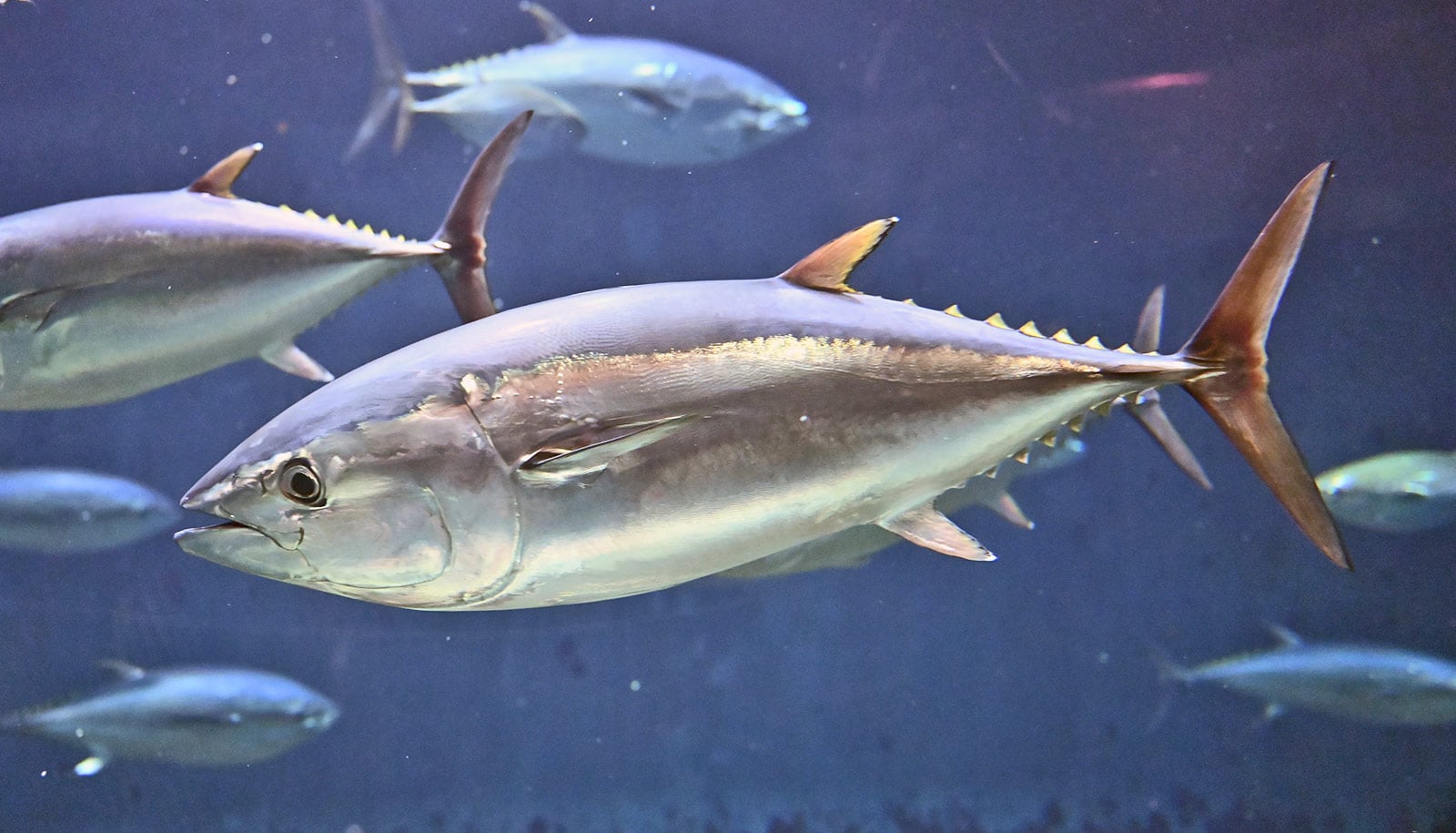
A recent evolutionary analysis published in the journal Proceedings of the Royal Society B challenges the long-standing hypothesis that the Cretaceous-Paleogene (K-Pg) mass extinction event served as the primary catalyst for the evolution of tunas. Contrary to the theory that the asteroid strike 66 million years ago created a sudden ecological vacancy filled by these high-performance predators, researchers at Yale University found that the signature traits of the Scombridae family—including large body size, high-speed swimming, and endothermy—evolved incrementally over a 50-million-year timeline.
- Tuna evolution was a gradual process spanning 50 million years, rather than a rapid response to the K-Pg extinction event.
- Endothermy, the ability to regulate internal body temperature, emerged independently within the Scombridae family at least three times, mostly millions of years after the asteroid impact.
- Understanding the metabolic machinery of these fish provides a biological model for studying human thermoregulation and metabolic syndromes.
The Evolutionary Timeline of Scombridae
The research team, led by graduate student Chase Brownstein and senior author Thomas Near, a professor of ecology and evolutionary biology at Yale, constructed a comprehensive time-calibrated evolutionary tree for the Scombridae family. By integrating genetic data with fossil records, the study demonstrates that while the origins of the Scombridae family coincide with the timing of the K-Pg extinction, the defining phenotypic traits of modern tunas did not immediately follow.
“Our results demonstrate the K-Pg extinction did not trigger the evolution of tunas and related large, endothermic predators,” Brownstein noted. The findings indicate that increases in body size occurred sporadically, and the development of endothermy—essential for the high-speed predatory lifestyle of tunas—followed the asteroid strike by 10 to 15 million years. This trajectory suggests that the biological “body plans” of these fish were the result of long-term selective pressures rather than a sudden ecological reset.
Metabolic Insights and Human Health
Beyond its implications for evolutionary biology, the study offers a window into the fundamental mechanisms of metabolism. The independent evolution of endothermy in multiple lineages of Scombridae provides a natural laboratory for observing how organisms optimize thermoregulation. According to Thomas Near, who also serves as the Bingham Oceanographic Curator of Ichthyology at the Yale Peabody Museum, these mechanisms are highly relevant to human physiology.
“Understanding that endothermy independently evolved multiple times in tunas and mackerels provides insight into the fundamental machinery underlying metabolism and thermoregulation,” Near explained. “These are systems that are central to disease and health conditions in humans, such as obesity, diabetes, and metabolic syndrome.” While the study does not claim a direct clinical link, it emphasizes that the evolutionary strategies used by marine biodiversity to manage metabolic demands offer a comparative framework for modern metabolic research.
Conservation and Research Funding
The research, which utilized DNA and tissue samples from institutions including the Yale Peabody Museum, highlights the urgency of conservation. The Atlantic bluefin tuna, a key subject of the study, has faced significant population declines due to overfishing. A deeper understanding of the evolutionary history of these species is intended to inform more effective management and conservation strategies.
The study was supported by the Yale Training Program in Genetics, the Bingham Oceanographic Fund of the Yale Peabody Museum, and the National Science Foundation. The collaborative effort included researchers from Virginia Polytechnic Institute and State University, the Santa Barbara Museum of Natural History, the Natural History Museum of Los Angeles County, Purdue University, and the Marine Resources Institute at the South Carolina Department of Natural Resources.
Future Directions in Comparative Biology
The findings caution against interpreting complex evolutionary adaptations, such as endothermy, as simple responses to major environmental shifts. By demonstrating that large body size and metabolic regulation are not intrinsically linked in these fishes, the research encourages a more nuanced approach to phylogenetic analysis. As clinical researchers continue to explore the molecular basis of metabolic disorders, the evolutionary history of vertebrates like Scombridae provides a valuable context for understanding the limits and capabilities of biological thermoregulation.
Disclaimer: The information provided in this article is for educational and scientific communication purposes only and does not constitute medical advice. Always consult with a qualified healthcare provider regarding any medical condition, diagnosis, or treatment plan.