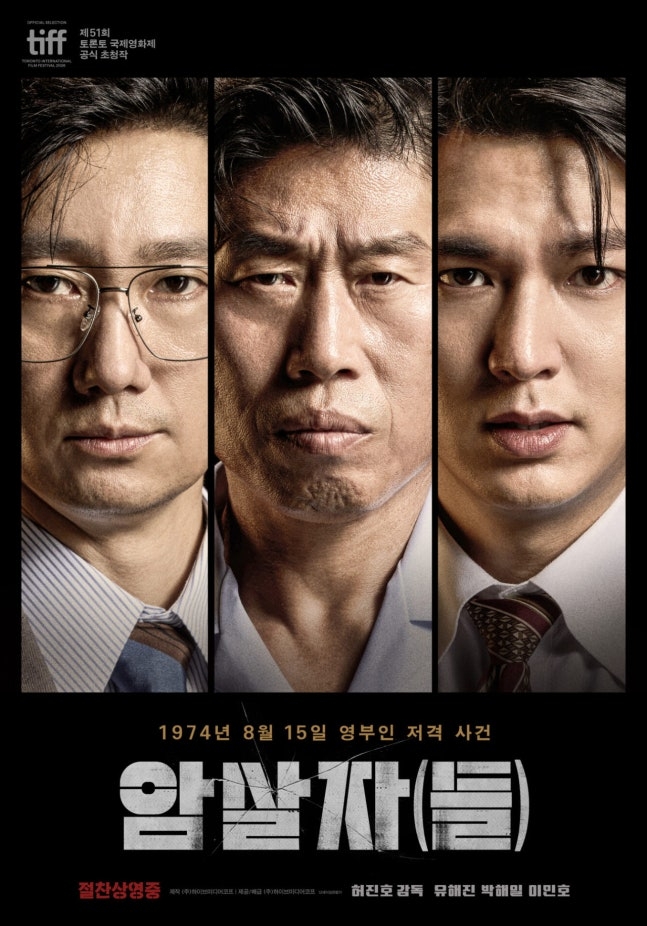
Assassins Movie Sparks Controversy Over Yuk Young-soo Shooting Depiction
The South Korean film The Assassins has sparked a national controversy over allegations of historical distortion regarding the 1974 assassination of First Lady Yuk Young-soo. Directed by Hur Jin-ho, the mystery thriller suggests that former President Park Chung-hee may have been the true mastermind behind his wife’s death, leading to calls for legal punishment from political figures and public outcry over the depiction of the tragedy.
The conflict centers on the tension between artistic license and historical record. While the film has found commercial success—surpassing 1 million admissions within four days of its September 23 release and reaching 1.56 million viewers by September 27—it has triggered a fierce backlash from conservative lawmakers who view the plot as political propaganda.
Lawmakers Demand Punishment for Historical Distortion
Representative Yoo Young-ha of the People Power Party characterized the film as “obvious political propaganda” in a Facebook post on September 28. Yoo argued that director Hur Jin-ho subtly twisted historical facts to imply that President Park Chung-hee was the actual architect of the attack on his own wife. She described the narrative as an act of “betrayal” against Korean history and a “depraved act” that causes further pain to the surviving bereaved family members.
Representative Joo Jin-woo of the People Power Party has gone further, explicitly calling for the punishment of those involved in the film’s creation. On September 27, Joo questioned whether “freedom of expression” would protect a film alleging wrongdoing in another case. Joo asserted that the movie conceals the historical truth of North Korean involvement and constitutes a clear case of defamation of the deceased.
To support the claim of North Korean involvement, Joo cited past statements from former North Korean National Defense Commission Chairman Kim Jong-il, who reportedly apologized for the incident, which Joo interprets as a confession of North Korea’s responsibility.
Commercial Success Amidst Public Backlash
Despite the political firestorm, The Assassins is performing strongly at the box office. Starring Yoo Hae-jin and Park Hae-il, the film’s rapid climb to 1.56 million viewers suggests a high level of public curiosity regarding the conspiracy theories surrounding the 1974 event.
The controversy has extended beyond the legislature. Media personality Hong Hye-geol expressed discomfort with the film via social media on September 27, questioning whether it is right to insult a figure respected or recognized by half the population through “forced conspiracy theories” while the bereaved family is still alive.
The Official Record of the 1974 Assassination
The film’s narrative diverges from the findings of the original special investigation team. According to official records, the assassination occurred during the Liberation Day ceremony on August 15, 1974. The investigation concluded that Mun Se-gwang, acting on orders from North Korea and the General Association of Korean Residents in Japan (Chongryon), attempted to assassinate President Park Chung-hee.
While the attempt on the President failed, the bullet struck First Lady Yuk Young-soo, who was seated beside him, resulting in her death. Mun Se-gwang was subsequently executed at the Seoul Detention Center on December 20 of that year. By reframing this event, The Assassins challenges one of the most documented political tragedies of the Park era.
Disclaimer: The views and cultural analyses presented in this article are for informational and entertainment purposes only. Information regarding legal disputes or financial data is based on available public records.