
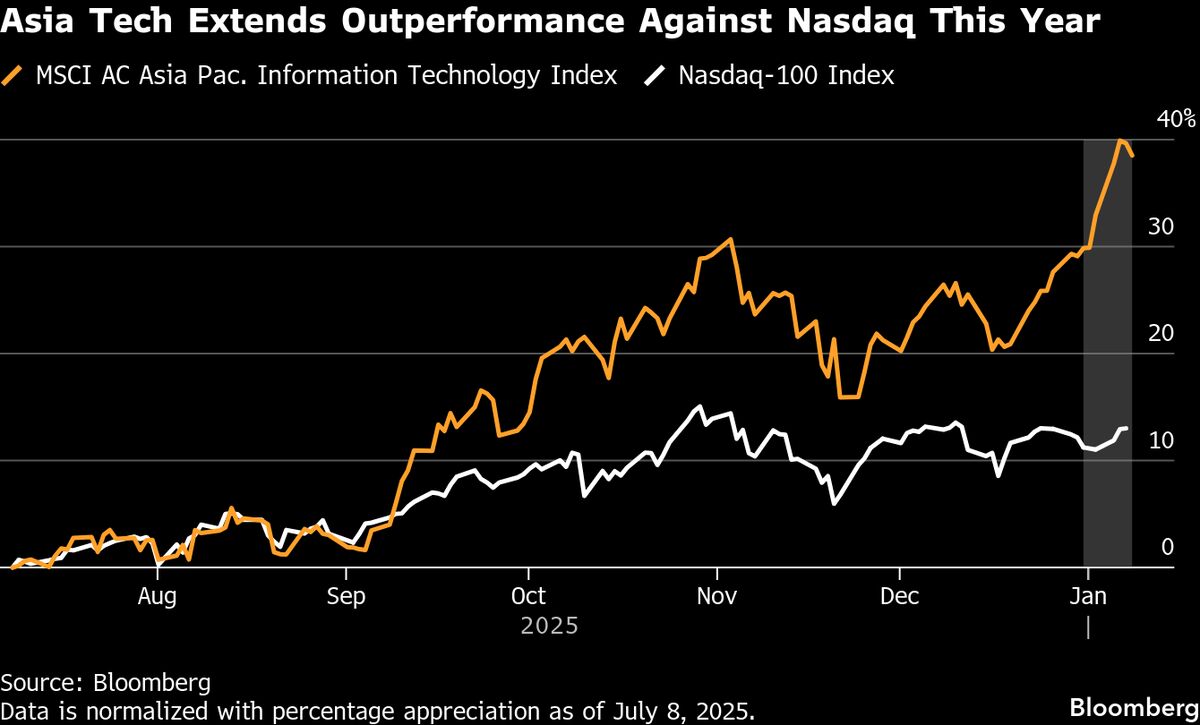
Asia Tech Stocks Surge in 2026: A Deep Dive into teh Rally
Asia’s technology stocks have kicked off 2026 with remarkable strength, captivating investors who anticipate this momentum will not only continue but also widen the performance gap between Asian and US tech companies.This surge isn’t a fleeting moment; it’s rooted in a confluence of factors, from robust economic growth in key Asian markets to increasing innovation and a shift in global investment strategies. This article explores the driving forces behind this rally, examines the key players, and assesses the potential risks and opportunities for investors.
The Rise of Asian Tech: A Shifting Global Landscape
For years, US tech giants have dominated the global technology landscape. However, the balance of power is demonstrably shifting. Several factors contribute to this change. Firstly, many Asian economies, particularly China, India, and South Korea, are experiencing substantial economic growth, creating a fertile ground for tech innovation and adoption. According to the International Monetary Fund’s January 2024 World Economic outlook Update, Asia is projected to remain the fastest-growing region globally.
Secondly, Asian tech companies are no longer simply followers; they are increasingly at the forefront of innovation in areas like artificial intelligence (AI), 5G, electric vehicles (EVs), and fintech. Companies like Samsung, TSMC, Tencent, and Alibaba are global leaders in their respective fields, and are investing heavily in research and development. Statista data shows that Asian companies consistently rank among the top spenders on R&D globally.
geopolitical factors and a reassessment of risk are playing a role. Concerns about regulatory scrutiny and potential trade tensions in the US have prompted some investors to diversify their portfolios and allocate more capital to Asian markets.
Key Drivers Fueling the Rally
- Strong Economic Fundamentals: Rapid economic expansion in countries like India and Indonesia provides a strong foundation for tech sector growth. Increased disposable incomes and a growing middle class drive demand for technology products and services.
- Government Support: Many Asian governments are actively promoting the development of their tech industries through favorable policies, subsidies, and investments in infrastructure. For example, China’s “Made in China 2025” initiative aims to make the country a global leader in advanced technologies.
- Innovation in Key Sectors: Asian companies are leading the way in crucial technological advancements. South Korea’s dominance in memory chips, Taiwan’s leadership in semiconductor manufacturing (through TSMC – TSMC), and China’s advancements in AI and fintech are prime examples.
- Digital Change: The rapid adoption of digital technologies across various sectors, including e-commerce, healthcare, and finance, is driving growth in the Asian tech market.
- Increased Venture Capital Investment: Venture capital funding in Asian tech startups has surged in recent years, fueling innovation and the development of new businesses. PitchBook’s 2023 Asia VC Funding Report highlights the continued strong investment trends.
Spotlight on Key Players
Several companies are at the heart of this Asian tech boom:
- TSMC (Taiwan Semiconductor Manufacturing Company): The world’s largest contract chipmaker, TSMC is crucial to the global semiconductor supply chain. Its advanced manufacturing capabilities are in high demand.
- Samsung Electronics (South Korea): A diversified tech giant, Samsung is a leader in smartphones, memory chips, and displays.
- Tencent (China): A dominant force in the Chinese internet market, Tencent operates popular social media platforms, gaming services, and fintech solutions.
- Alibaba group (China): A leading e-commerce and cloud computing company, Alibaba is expanding its reach across Asia and beyond.
- Reliance jio (India): revolutionizing the Indian telecom market with affordable data plans and a comprehensive digital ecosystem.
Potential Risks and Challenges
While the outlook for Asian tech stocks is largely positive, investors should be aware of potential risks:
- Geopolitical tensions: Escalating tensions in the South China Sea or between China and taiwan could disrupt supply chains and negatively impact investor sentiment.
- Regulatory Uncertainty: Changes in government regulations, particularly in China, can create uncertainty for tech companies.
- Economic Slowdown: A slowdown in global economic growth could dampen demand for technology products and services.
- US-China Tech War: ongoing trade and technology restrictions between the US and China could hinder the growth of certain Asian tech companies.
- Valuation Concerns: Some Asian tech stocks may be trading at high valuations, leaving them vulnerable to corrections.
Investing in asian Tech: Strategies and Considerations
Investors looking to capitalize on the growth of Asian tech have several options:
- Exchange-Traded Funds (ETFs): ETFs that focus on Asian technology stocks provide diversified exposure to the sector. Examples include the iShares MSCI Asia Ex Japan Tech ETF (IXN) and the KraneShares CSI China Internet ETF (KWEB).
- Individual Stocks: Investing in individual Asian tech companies allows for targeted exposure to specific growth opportunities.
- Mutual Funds: Actively managed mutual funds specializing in Asian technology can offer professional investment management.
When investing, it’s crucial to conduct thorough research, understand the risks involved, and diversify your portfolio.
Key Takeaways
- Asian tech stocks are experiencing a significant rally driven by strong economic growth,innovation,and shifting global investment patterns.
- Companies like TSMC, Samsung, Tencent, and Alibaba are leading the charge.
- Investors should be aware of potential risks, including geopolitical tensions and regulatory uncertainty.
- ETFs, individual stocks, and mutual funds offer various ways to invest in the Asian tech sector.
Looking ahead, the momentum in asian tech stocks is expected to continue, driven by the region’s dynamic economies and its increasing role in global innovation. While challenges remain, the long-term prospects for Asian technology are bright, positioning it as a key growth engine for the global economy. Investors who strategically allocate capital to this region are likely to benefit from its continued expansion.
