
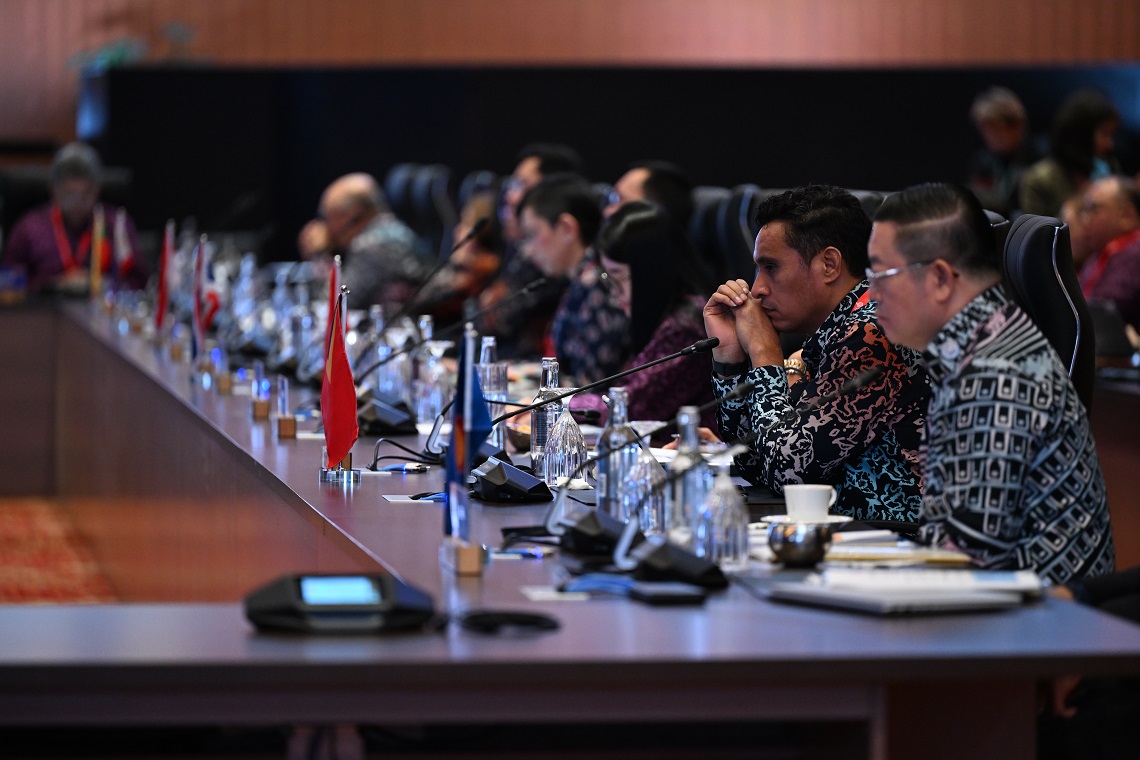
ASEAN Finance Ministers & Central Bankers Warn of Global Risks Amid Middle East Tensions
On April 10, 2026, ASEAN finance ministers and central bank governors meeting in Manila warned of escalating global risks. The joint statement highlights critical concerns over Middle East tensions and their direct threats to global trade, urging member states to maintain vigilance against external economic shocks to ensure regional resilience.
The fragility of the global supply chain is once again under the microscope. When volatility spikes in the Middle East, the shockwaves do not remain localized; they ripple through the shipping lanes of Southeast Asia and penetrate the balance sheets of enterprises across the ASEAN bloc. This isn’t just a diplomatic concern—We see a systemic financial threat.
Vigilance is no longer optional.
The gathering in Manila and the accompanying virtual sessions involving International Financial Institutions, served as a stark reminder that the economic security of Southeast Asia is inextricably linked to geopolitical stability thousands of miles away. The 13th ASEAN Finance Ministers and Central Bank Governors Meeting (AFMGM) was not merely a routine check-in. It was a strategic alignment intended to shield the region from a storm that is already gathering.
The Anatomy of Global Risk: Middle East Volatility
The primary catalyst for the current alarm is the continued tension in the Middle East. For the ASEAN region, this translates into a dual-threat scenario: the potential for surging energy costs and the disruption of vital trade corridors. These “geopolitical risks” mentioned in the joint statement create a climate of uncertainty that discourages long-term investment and complicates monetary policy for central banks.
When trade threats loom, the cost of doing business rises. Insurance premiums for shipping increase, delivery timelines stretch, and the cost of raw materials fluctuates wildly. For businesses operating within the ASEAN framework, these external pressures can quickly erode profit margins and destabilize local markets.
The regional leadership is recognizing that “business as usual” is a dangerous gamble in 2026.
To combat this, the finance ministers and central bank governors are emphasizing a shift toward “resilience.” This involves more than just stockpiling reserves; it requires a sophisticated level of policy coordination to ensure that one member state’s reaction to a crisis does not inadvertently destabilize its neighbor.
Strategic Response Framework
The 13th AFMGM focused on a specific set of pillars to mitigate these risks. The goal is to move from reactive crisis management to a proactive stance of integration. The following table outlines the primary risks identified and the corresponding strategic responses proposed by the ASEAN leadership.
| Identified Global Risk | ASEAN Strategic Response | Intended Outcome |
|---|---|---|
| Middle East Geopolitical Tensions | Enhanced Vigilance & Monitoring | Early detection of economic shocks |
| Global Trade Disruptions | Strengthening ASEAN Integration | Reduced reliance on volatile external corridors |
| External Economic Shocks | Policy Coordination & Financial Cooperation | Regional financial stability and resilience |
| Domestic Economic Risks | Integrated Risk Assessment | Balanced internal growth despite global headwinds |
The Role of the ASEAN Secretariat and Leadership
The coordination of this effort has been spearheaded by the Secretary-General of ASEAN, who led the Secretariat’s delegation through a series of high-stakes videoconferences and in-person meetings. The involvement of the Secretary-General underscores the political weight of these financial discussions. This is no longer just about interest rates; it is about the geopolitical survival of the regional economic model.

By convening with International Financial Institutions, the ASEAN Finance Ministers and Central Bank Governors are attempting to build a financial firewall. The focus on “enhancing financial cooperation” suggests a move toward more integrated liquidity arrangements and shared risk-management strategies.
“We, the ASEAN Finance Ministers and Central Bank Governors… Reaffirm the importance of strengthening ASEAN’s integration and resilience through strengthening policy coordination [and] enhancing financial cooperation.”
This commitment to integration is a direct response to the reality that isolated national policies are insufficient against global systemic failures. When the Middle East destabilizes, a single country’s central bank cannot stop the tide of inflation or the collapse of a trade route. Only a coordinated regional response can provide the necessary buffer.
Navigating the Economic Minefield
For the private sector, these high-level warnings are a signal to audit their exposure. The “external and domestic economic risks” cited by Reuters indicate that the volatility is not just coming from abroad, but is being amplified by internal regional vulnerabilities.
Companies are now facing a complex logistical and financial puzzle. Managing the risk of trade threats requires more than just diversifying suppliers; it requires a legal and financial overhaul of how international contracts are structured. Many firms are currently engaging international trade lawyers to rewrite force majeure clauses and shield themselves from the fallout of geopolitical disruptions.
Simultaneously, the volatility in global markets is forcing a rethink of corporate treasury management. To survive these fluctuations, businesses are increasingly relying on specialized financial advisors to hedge against currency swings and energy price spikes that typically accompany Middle East tensions.
The operational reality is that the “just-in-time” supply chain is dead. It has been replaced by “just-in-case” logistics.
This shift toward redundancy and resilience is expensive. To manage the transition without collapsing under the cost of overhead, organizations are consulting corporate strategy consultants to optimize their regional footprints and identify more stable, integrated ASEAN-based alternatives to traditional global trade routes.
The warnings issued from Manila on April 10 are not a prediction of an inevitable crash, but a call for an urgent architectural upgrade of the regional economy. The 13th AFMGM has laid the groundwork for a more resilient ASEAN, but the execution of these policies will determine whether the region merely survives the coming volatility or thrives in spite of it.
As geopolitical tensions continue to reshape the map of global trade, the ability to find verified, expert guidance will be the difference between those who are swept away by the tide and those who learn to navigate it. Whether you are securing your supply chain or restructuring your financial risk, the tools for resilience are available through the World Today News Directory, connecting you with the professionals equipped to handle the complexities of a volatile world.