
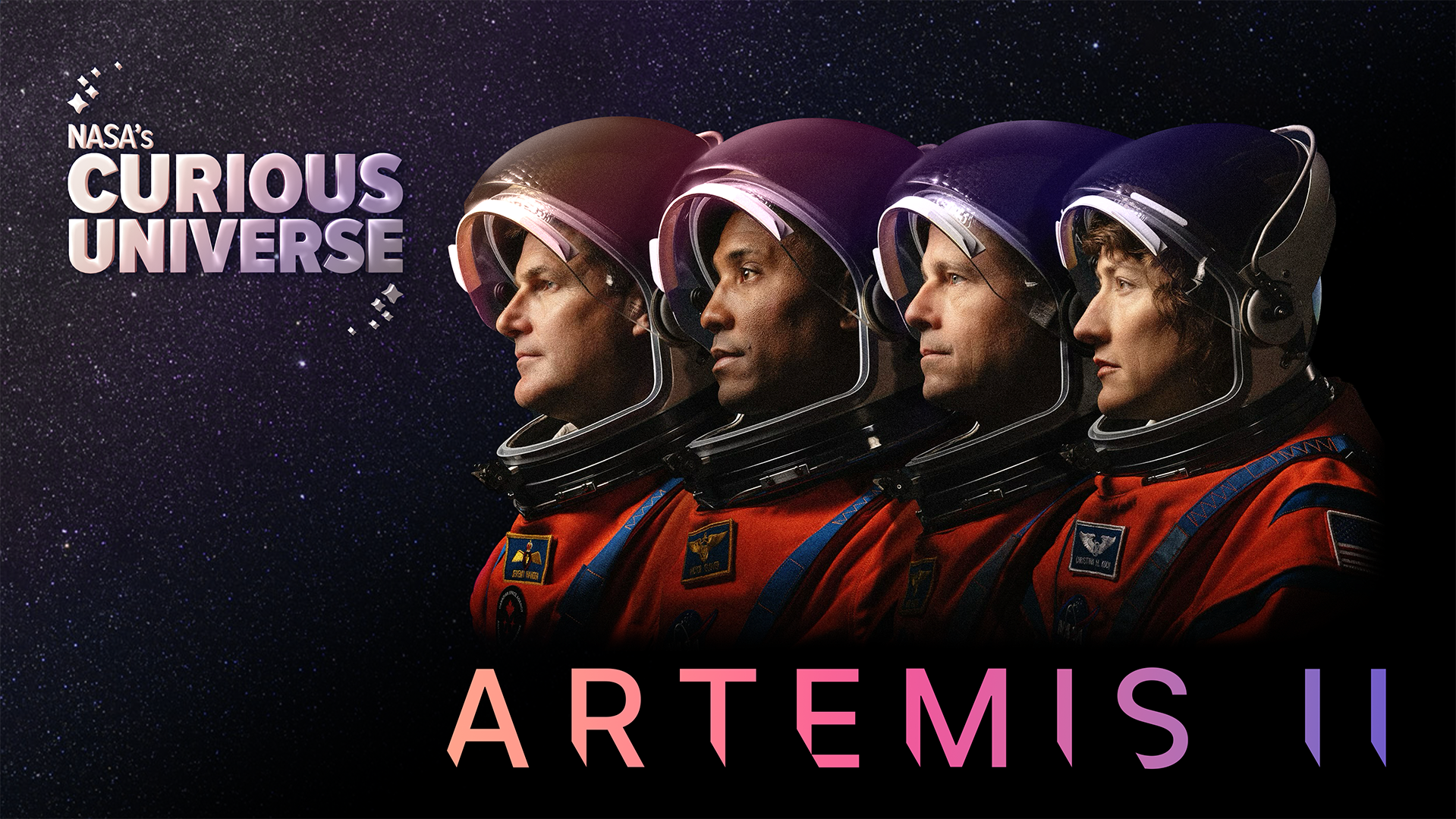
Artemis II: NASA’s Historic Lunar Flyby Mission
Artemis II just closed the loop on its lunar flyby, and while the press is obsessing over the “Earthset” photography, the real story is the telemetry. We’re talking about a massive exercise in long-range networking, radiation-hardened compute, and the absolute limit of signal-to-noise ratios in deep space.
The Tech TL;DR:
- Deep Space Networking: Validation of high-bandwidth telemetry over lunar distances, stressing the limits of the Deep Space Network (DSN) and optical communication prototypes.
- Rad-Hardened Compute: Real-world stress test of flight computers against solar particle events and cosmic radiation during a free-return trajectory.
- Edge Processing: Shift toward autonomous onboard data curation to mitigate the latency bottlenecks inherent in Earth-Moon communication.
For those of us in the trenches, the “historic” nature of this flight is secondary to the architectural nightmare of maintaining a stable link at 238,000 miles. The problem isn’t just the distance; it’s the latency. When you’re dealing with a round-trip time (RTT) of roughly 2.5 seconds, traditional TCP/IP handshakes are useless. NASA is effectively running a specialized version of Delay-Tolerant Networking (DTN), a protocol suite designed to handle the “store-and-forward” reality of interplanetary gaps. If this were a standard enterprise deployment, the packet loss would be catastrophic, and the timeouts would trigger a total system collapse.
As we scale these capabilities, the terrestrial equivalent is the move toward extreme edge computing. Companies are no longer just looking for “cloud” solutions; they need managed service providers capable of deploying low-latency infrastructure in environments where connectivity is intermittent or hostile.
The Hardware Stack: Radiation Hardening vs. COTS Performance
The tension in the Artemis II architecture is the trade-off between “Rad-Hard” (Radiation Hardened) components and COTS (Commercial Off-The-Shelf) hardware. Traditional space-grade CPUs are essentially relics—think PowerPC 750s running at clock speeds that would make a Raspberry Pi 1 look like a supercomputer. To handle the complex guidance, navigation, and control (GNC) algorithms required for a lunar flyby, NASA has had to integrate more modern, high-performance compute modules while implementing aggressive redundancy.
Following the logic of the Ars Technica deep-dives into space-grade silicon, the system relies on Triple Modular Redundancy (TMR). Three independent processors execute the same instruction; if one flips a bit due to a cosmic ray (a Single Event Upset, or SEU), the other two outvote it. This is the ultimate fail-safe, but it introduces a massive overhead in power and thermal management.
| Metric | Traditional Rad-Hard (Legacy) | Modern Hybrid Flight Stack | Enterprise Edge (Comparison) |
|---|---|---|---|
| Clock Speed | ~100-200 MHz | 1.2 – 2.4 GHz (Multi-core) | 3.0 GHz+ |
| Memory Protection | ECC / Hard-wired | Advanced ECC / TMR | Standard ECC |
| Tolerated Dose | 100k+ rads (Si) | 50k-100k rads (Shielded) | Minimal (Consumer Grade) |
| Latency (RTT) | ~2.5s (Lunar) | ~2.5s (Lunar) | <50ms (Regional) |
The Cybersecurity Threat Vector: Signal Hijacking and Telemetry Spoofing
From a security perspective, the Artemis mission is a high-value target for signal interception. While the general public sees a “NASA stream,” the actual command-and-control (C2) links are encrypted. However, the risk of “command injection” or telemetry spoofing remains a theoretical vulnerability in any RF-based system. The shift toward optical (laser) communication, which NASA is incrementally testing, significantly reduces the “blast radius” of an intercept because the beam is incredibly narrow compared to traditional radio waves.
“The move to optical communications isn’t just about throughput; it’s about the physical layer of security. You can’t easily ‘sniff’ a laser beam from a thousand miles away without being directly in the line of sight.” — Lead Security Researcher, Space-Comm Systems
This mirrors the current enterprise push toward Zero Trust Architecture (ZTA). Just as NASA cannot trust the vacuum of space to protect its packets, CTOs cannot trust their internal networks. This is why we’re seeing a surge in demand for certified cybersecurity auditors to validate that “internal” doesn’t mean “trusted.”
Implementation Mandate: Simulating Latency for DTN Testing
For developers trying to build applications that can survive “lunar-grade” latency, you can simulate these conditions on a Linux environment using tc (traffic control). This is how you test if your application’s timeout logic is robust enough to handle a 2.5-second RTT without crashing the session.
# Add 1.25 seconds of latency to eth0 to simulate a one-way trip to the moon sudo tc qdisc add dev eth0 root netem delay 1250ms # To simulate packet loss (common in deep space RF) sudo tc qdisc change dev eth0 root netem delay 1250ms 100ms 25% loss 1% # Clear the simulation and return to normal speeds sudo tc qdisc del dev eth0 rootThe Software Lifecycle: From Ground Control to Lunar Orbit
The deployment of the Artemis II flight software followed a rigorous V-model development lifecycle, far removed from the “move fast and break things” ethos of Silicon Valley. Every line of code underwent formal verification—a mathematical proof that the code does exactly what It’s supposed to do and nothing else. This is the antithesis of the current LLM-generated code trend, where “hallucinations” are an acceptable risk in a beta app but a death sentence in a lunar module.
The integration of the Orion spacecraft’s systems required a level of containerization and modularity that allows for “hot-patching” certain non-critical systems without rebooting the core flight computer. This is essentially the space-borne version of a Kubernetes cluster, where high availability is not just a KPI, but a survival requirement. For firms struggling with their own deployment pipelines, the move toward specialized software development agencies that understand CI/CD for mission-critical systems is becoming a necessity.
Looking at the published IEEE whitepapers on Delay-Tolerant Networking, the goal is clear: the creation of an “Interplanetary Internet.” This will require a fundamental rewrite of the OSI model’s transport layer. We are moving away from the chatty nature of TCP and toward a more asynchronous, bundle-based protocol.
The Artemis II flyby proves that the hardware can survive the trip and the telemetry can make it back. But as we move toward Artemis III and permanent lunar bases, the bottleneck won’t be the rocket—it will be the network stack. The future of space exploration is essentially a massive DevOps challenge. If you’re not thinking about the latency of your data, you’re already obsolete.
Disclaimer: The technical analyses and security protocols detailed in this article are for informational purposes only. Always consult with certified IT and cybersecurity professionals before altering enterprise networks or handling sensitive data.