
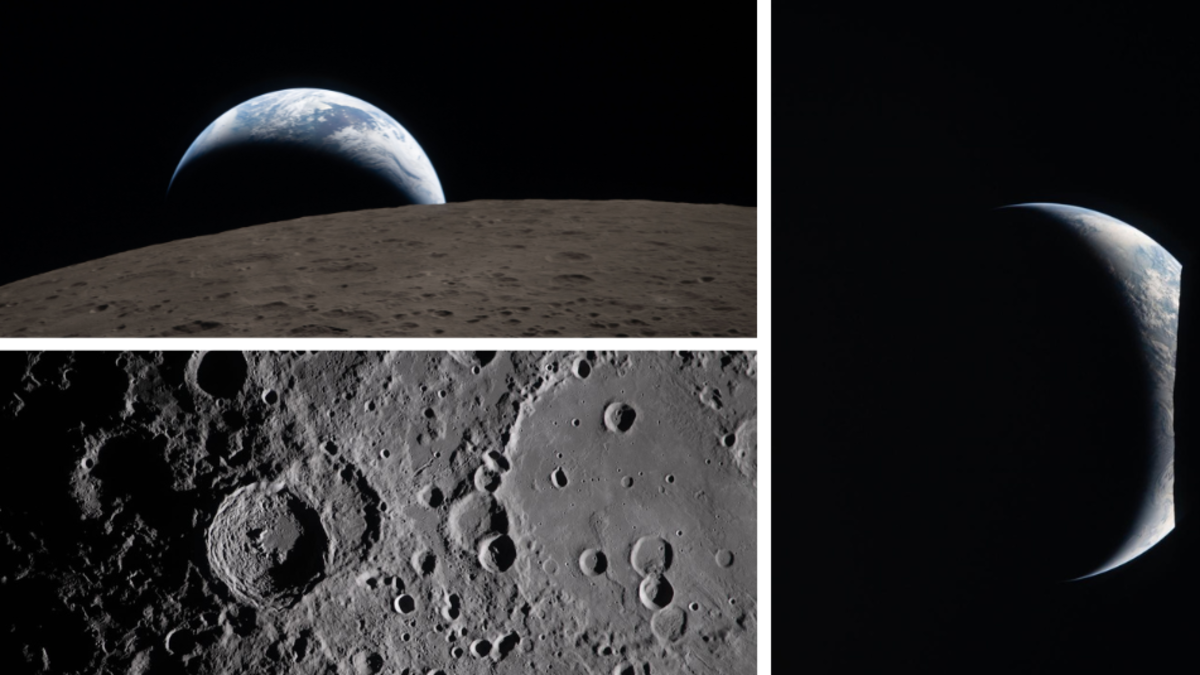
Artemis II Mission: Stunning New High-Definition Images of the Moon’s Far Side
The crew of the Artemis II mission has captured high-definition imagery of the lunar far side, documenting visual phenomena and color variations previously unseen by human observers. The images, transmitted from the Orion spacecraft, reveal a complex landscape of flashes and chromatic shifts on the surface of the Moon’s hidden hemisphere.
Visual Discoveries from the Lunar Far Side
During the flyby of the lunar far side, the Artemis II crew reported observing visual elements that differ significantly from the lunar face visible from Earth. The mission’s high-resolution photography has documented unexpected “flashes” and a palette of colors that challenge previous visual understandings of the lunar surface. Crew members described the experience as seeing things no human had ever witnessed before, emphasizing the distinct geological and visual characteristics of the region.
These images were captured using the advanced imaging systems aboard the Orion spacecraft, providing a level of detail that exceeds previous orbital photography. The data focuses on the specific lighting and reflective properties of the lunar crust in areas that remain permanently turned away from Earth.
Mission Parameters and Orbital Objectives
The Artemis II mission was designed as a crewed flight test to validate the systems required for deep-space habitation and lunar proximity. Unlike subsequent phases of the Artemis program, the current mission profile did not include a lunar landing. The crew remained within the Orion capsule, executing a trajectory that allowed for a close-approach flyby of the Moon.

The decision to maintain an orbital path rather than landing was a deliberate operational constraint of the mission’s testing phase. The primary objectives centered on the performance of the spacecraft’s life-support systems and the crew’s ability to navigate the far side of the Moon while maintaining communication links with Earth.
Technical Documentation and Next Steps
The high-definition imagery is currently being analyzed by mission specialists to determine the exact nature of the colors and flashes reported by the astronauts. This data will be used to refine the landing site selection and geological surveys for future missions that intend to put boots on the lunar surface.
NASA and its partners are now processing the telemetry and visual data gathered during the flyby to verify the atmospheric and surface conditions encountered by the crew. The mission’s technical findings will inform the final preparations for the Artemis III landing sequence.