
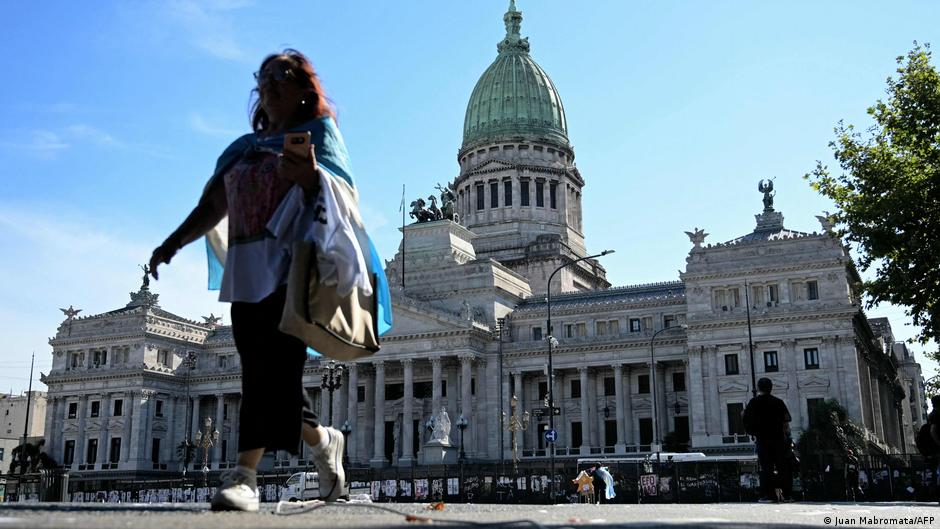
A 24-hour general strike called by unions against labor reforms proposed by the government of President Javier Milei has largely paralyzed Argentina on Thursday, February 19, 2026, as tens of thousands of workers march toward Congress, where the bill that would fundamentally alter labor conditions is being debated.
The strike, the fourth general strike during Milei’s administration, began at midnight. Argentina’s largest labor federation, the General Confederation of Labor (CGT), is leading the protest. “The level of adherence is incredibly important, starting last night sectors of factories with night shifts began to exit their jobs,” Jorge Sola, one of the three general secretaries of the CGT, told Radio Rivadavia.
Thirteen labor unions and the Argentine Workers’ Central (CTA) have joined the strike, with partial disruptions also reported in public health services. The Argentine Chamber of Airlines (JURCA) reported the cancellation of more than 400 flights, affecting over 64,000 passengers and cargo clients. Trains, subways and most bus lines are not operating.
The Ministry of Labor has called on train and bus workers to refrain from any direct action. The government has also announced it will deduct the striking day’s wages from the salaries of public employees – a practice previously uncommon in Argentina.
The strike coincides with signs of a slowdown in manufacturing activity, with over 21,000 companies having closed in the last two years and an estimated 300,000 jobs lost, according to union sources. Fate, Argentina’s leading tire manufacturer, announced Wednesday the closure of its Buenos Aires plant and the layoff of over 900 workers, citing a loss of competitiveness due to unrestricted import liberalization.
Protests are occurring across the country, and access to the capital, Buenos Aires, is under heavy guard by the Gendarmerie, creating a tense atmosphere. The University of Argentina and the Enterprise (UADE) estimates the economic cost of the strike to be between $400 and $600 million, though the final figure will depend on the level of participation.
The proposed labor reforms received Senate approval on February 12, sparking clashes between police and protesters near Congress. The Chamber of Deputies will now debate the bill, with a session expected to begin at 2:00 PM local time (5:00 PM GMT) and potentially extend into the following day. The reforms aim to ease firing procedures, reduce severance pay, allow for extended workdays (8 to 12 hours), broaden the definition of essential services during strikes, and permit the fragmentation of vacation time.
Major port terminals, including Rosario, one of the world’s largest agro-export hubs, are also paralyzed by the strike. Cristian Jerónimo, a co-secretary general of the CGT, stated Wednesday, “We want to tell the government that the people did not give it a vote to take away their rights,” predicting a “forceful” demonstration.
