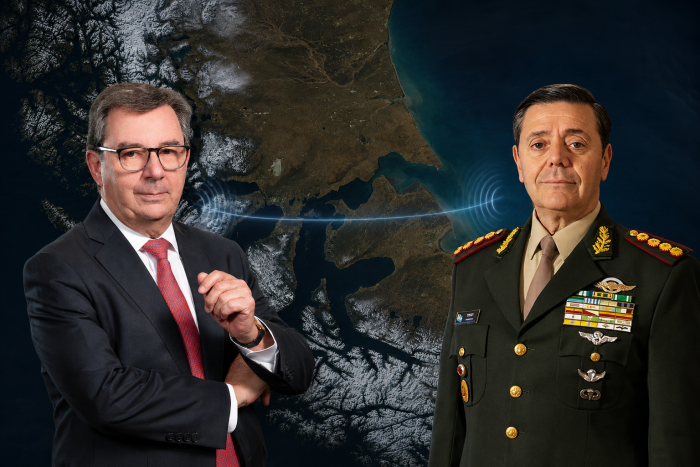
Argentina Recognizes Chilean Sovereignty Over Strait of Magellan After Diplomatic Tension
Argentine Defense Minister Carlos Alberto Presti telephoned Chilean Defense Minister Fernando Barros at 19:00 to clarify remarks made by a senior Argentine air force commander regarding the Strait of Magellan, assuring Santiago that Argentine sovereignty claims do not extend to the Chilean waterway.
Diplomatic Friction Erupts Over General’s Comments
The diplomatic crisis unfolded after the head of the General Staff of the Argentine Air Force, Brigadier General Gustavo Javier Valverde, asserted in a public interview that Magallanes, the south, and the Drake fell under Argentine sovereignty.

Local lawmakers, including members of the Chamber of Deputies, condemned the statements as a systematic provocation and formally demanded an extraordinary legislative session to review bilateral security protocols in the deep south.
To evaluate the operational readiness of national defenses amidst the friction, political figures such as José Antonio Kast planned visits to observe military exercises conducted by the Amphibious Force of the Chilean Navy in the Magallanes and Chilean Antarctic Region, as detailed by La Tercera.
Ministerial Intervention and De-escalation
Seeking to defuse mounting bilateral tensions, Minister Presti reached out to his Chilean counterpart, Fernando Barros, on Wednesday evening.

Presti assured Barros that the brigadier general was fully conversant with international legislation, bilateral treaties, and established legal rulings governing the region. Crucially, the Argentine defense chief stated that there was no debate concerning national boundaries in the south, affirming directly that “there is no discussion that the Strait of Magellan is Chilean.”
Minister Barros publicly accepted the explanation. Speaking prior to the call, Barros had noted that while individuals possess freedom of expression, undisciplined commentary from military leadership offers no constructive value to cross-border ties. Following the telephone exchange, however, the Chilean defense portfolio confirmed that Barros valued the frank communication and willingness of the neighboring government to resolve the friction rapidly.
Both officials officially declared the incident closed.
Operational Context and Regional Stability
Maintaining security, unimpeded commercial navigation, and clear jurisdictional boundaries in the southern channels remains a primary operational requirement for maritime logistics providers and regional authorities. Commercial operators and infrastructure planners working in the far south rely heavily on unambiguous legal frameworks to manage maritime transit safely. When cross-border rhetoric challenges established boundaries, logistics firms and commercial enterprises frequently consult Maritime Law Specialists to evaluate navigational permissions and regulatory compliance.
Furthermore, managing institutional responses to sudden geopolitical friction requires structured administrative oversight. Local governments and municipal agencies dealing with international border zones often engage Public Relations and Crisis Consultants to maintain clear channels of public communication and safeguard regional economic stability during diplomatic standoffs.